.png)
China’s economy is paying the price for its economic crisis, with exports the last hope
Published: 02:05 PM, 11 August 2026
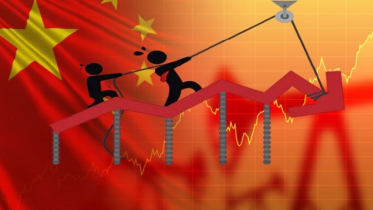
Beijing is propping up factories with state subsidies as its growth slows. China's economy is structurally much weaker than it appears from the outside, and is largely dependent on government-subsidized exports.
China looks set to post another year of a trade surplus of more than $1 trillion. Exports rose 24 percent year-on-year last month, data showed Friday.
But signs of long-term weakness in China's domestic economy are clear. According to the government's own dubious estimates, China's growth in the second quarter of 2026 is set to slow to 4.3 percent, the slowest in three years. Home prices are plummeting, and homebuilders and local governments are struggling under a mountain of debt. Youth unemployment is also at a record high, hovering around 15 percent.
China is heavily subsidizing its exports to keep growth going as domestic demand remains weak. Electric car makers, steel companies and other industrial firms are receiving easy, low-interest loans, tax breaks, free or low-cost land in government industrial parks and, in some cases, direct cash assistance.
This is not new. According to the Organization for Economic Co-operation and Development (OECD), companies in 15 sectors in China received three to eight times more government support than companies in other major economies between 2005 and 2024.
Chinese citizens have always been savers. But the stagnant economy has made them even more reluctant to spend. Retail sales fell in May for the first time since the pandemic lockdown. In addition, investment in fixed assets—such as factories, buildings and machinery—fell 4.1 percent from January to May.
China’s leaders have been talking for decades about the need to reshape the economy to reduce its reliance on exports and boost consumer spending. In 2007, then-premier Wen Jiabao described China’s economic growth as “unstable, unbalanced, uncoordinated and unsustainable.” But little has changed in the two decades since.
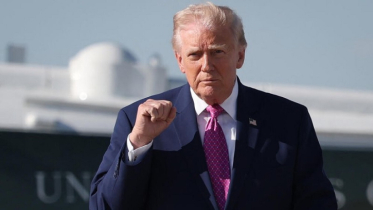
President Donald Trump made “structural reforms” of China’s economy part of his “phase one” trade deal during his first term in office in an effort to defuse the trade war. But the key demand—that China limit state subsidies—was pushed to the next phase, and never materialized. And Beijing has shown no interest in complying with that condition.
Whatever the rhetoric, China’s leaders may not truly want to move toward a consumer-centric economy. The main obstacle to this is political. Ordinary Chinese save so much because the country’s public pensions, health insurance, education funds and basic income systems are woefully inadequate.
The Chinese save as a precaution in the absence of a social safety net. Increasing consumer spending means transferring wealth from the state sector and state-backed producers to the hands of ordinary people. No totalitarian government would want to do this, because it would threaten their power.
That is why Chinese President Xi Jinping has blocked many reforms that economists say would encourage people to spend more and save less. Xi Jinping is also a fierce critic of “welfareism”; that is, the state’s excessive social safety net for its people.
Xi Jinping is scheduled to visit Washington on September 24. In such a situation, China’s export dependence will give the United States additional leverage in trade negotiations. It is true that the United States also needs rare-earth elements and important minerals from China. But this need is actually two-fold.
.png "Advertisement")