Landslide in Cappadocia, Turkey: 3 Dead
Published: 02:03 PM, 31 October 2026
Three people have died following a landslide triggered by heavy rain in the tourist destination of Cappadocia, Turkey, which caused a massive rock formation to collapse. The victims include one foreign national and two Turkish citizens. Five others were injured in the incident.
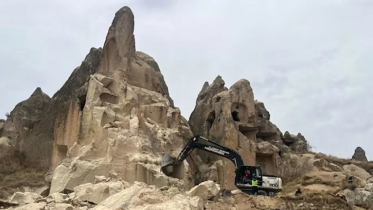
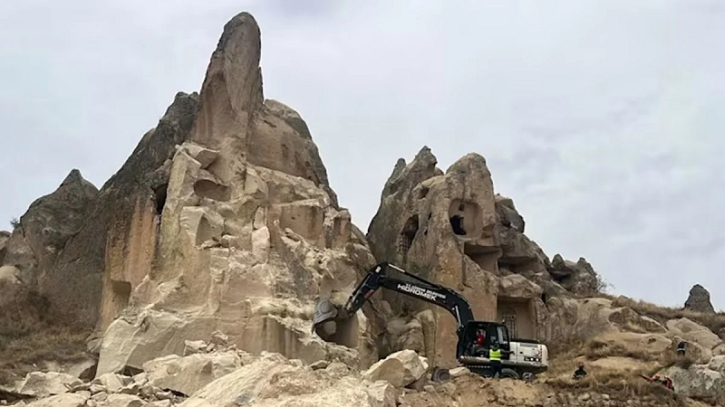
The accident occurred at 3:15 PM local time on Thursday (October 29) in the town of Göreme, Cappadocia. A rock formation located near a car parking area—close to the town’s open-air museum—collapsed as a result of the landslide.
Turkish Minister of Justice Akın Gürlek stated in a post on the social media platform X that initial reports indicated two deaths and five injuries. Subsequently, rescue workers recovered another body from the debris, bringing the total death toll to three.
Hüseyin Aksoy, the Governor of Nevşehir Province, confirmed that one of the victims was a foreign national, while the other two were Turkish citizens.
Eyewitnesses reported hearing a loud crash as the rock formation collapsed, with the surrounding area instantly engulfed in dust.
Immediately following the incident, the area was closed to the public for safety reasons. Throughout the night, rescue teams—utilizing powerful lighting and excavation machinery—searched through the debris.
Upon the conclusion of the rescue operation, Governor Hüseyin Aksoy announced that all search and recovery efforts had ended. The rescue teams have been withdrawn following the completion of necessary inspections and assessments; no further operations are required at the site.
He further stated that an investigation into the incident, led by the Office of the Chief Public Prosecutor, will commence on Friday. Additionally, experts will examine the circumstances and causes of the collapse.
Notably, the Cappadocia region in Turkey is a highly popular destination for tourists from around the world. A UNESCO World Heritage site, the region is renowned for its cone-shaped rock formations, which were created by ancient volcanic activity. Locally, these formations are called ‘fairy chimneys’.
Source: CNA