.png)
CM Vijay makes 3 demands to Modi over Lok Sabha seats
Published: 09:04 PM, 14 August 2026
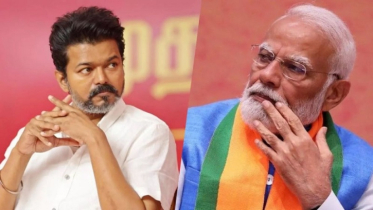
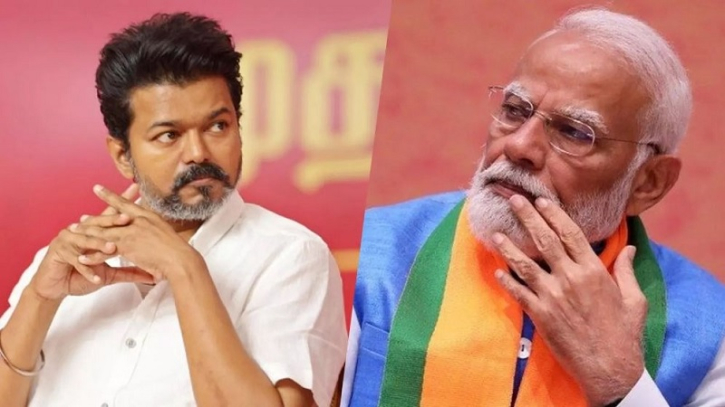
Amidst the renewed political debate over the redrawing of seats in India's Lok Sabha, Tamil Nadu Chief Minister C Joseph Vijay (Thalapathy Vijay) has made three demands to Prime Minister Narendra Modi.
He has demanded that the total number of Lok Sabha seats be kept at 543 permanently and the current seat distribution among the states be kept unchanged. At the same time, the Tamil Nadu Chief Minister has called for ensuring that one-third of the seats are reserved for women in the next Lok Sabha and subsequent assembly elections.
Vijay made these demands in a letter sent to Prime Minister Narendra Modi on Thursday (August 13). A copy of a resolution passed in the Tamil Nadu Assembly on Wednesday has also been sent with the letter. The resolution passed in the Tamil Nadu Assembly states that the southern Indian states may face major political losses if the Lok Sabha seat boundaries are redrawn based on population after the next census. Tamil Nadu feels that this will be unfair, especially to those states that have been successful in controlling population for a long time.
Vijay said in his letter that the total strength of the Lok Sabha should be fixed at 543. At the same time, the number of Lok Sabha seats currently allocated to each state should also be kept unchanged. He requested the Prime Minister to consider bringing the necessary constitutional amendments for this.
During the discussion in the Tamil Nadu Assembly, fears were expressed that if the seats are redrawn based on the new population figures, the Lok Sabha seats of the southern Indian states may decrease. On the other hand, there is a possibility of increasing the seats of the northern Indian states with a large population.
The Assembly also cited the past example of Tamil Nadu in this regard. It was mentioned that the state's Lok Sabha seats were reduced from 41 to 39 in 1967 due to the delimitation of boundaries.
Tamil Nadu argued that if the Lok Sabha seats are redrawn based on the population figures after 1971, the southern states would suffer politically in the long run. Because these states have made significant progress in various fields, including education, health, economic development and public welfare, in addition to population control.
The Tamil Nadu government says that instead of rewarding states that have succeeded in controlling population, it would not be fair if their political representation is reduced by redistributing new seats. Meanwhile, Vijay has also raised the issue of increasing political representation of women in addition to the re-arrangement of Lok Sabha seats with the Prime Minister.
He has demanded that 33 percent reservation for women be implemented in the next Lok Sabha elections and the next assembly elections. In the letter, Vijay urged the central government to consider the proposal of the Tamil Nadu Assembly and bring the necessary constitutional amendments.
After this stand of the Tamil Nadu Chief Minister came to the fore, the issue of re-arrangement of Lok Sabha seats has regained importance in national politics. Especially the states of South India have been expressing fears for a long time that their political representation may decrease if seats are re-arranged on the basis of population.
Vijay's three-point demands include fixing the total number of Lok Sabha seats at 543, keeping the current state-wise seat distribution unchanged, and ensuring 33 percent seats for women in the next Lok Sabha and assembly elections. Now, the main focus is on the central government's position. Because the question of delimitation of Lok Sabha seats is not just a matter of changing electoral boundaries, but also involves the balance of representation of different states in national politics.
.png "Advertisement")