The world has no trust in the United States even after Trump’s defeat
Published: 09:22 AM, 8 November 2026
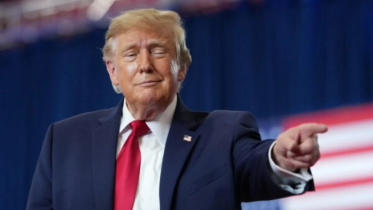
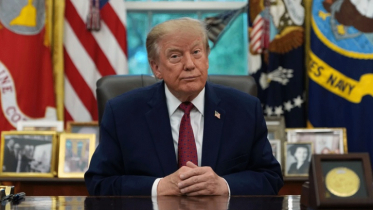
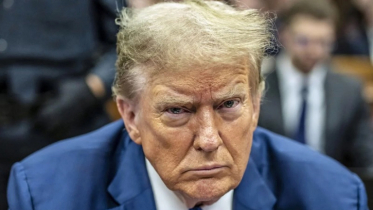
After the major defeat of President Donald Trump's Republican Party in the US midterm elections, a new equation has been created in the country's political system. Republicans have lost control of both houses of Congress. As a result, the opposition Democrats have gained the opportunity to monitor and control the power of the president. However, even this election result has not ended the crisis of trust in the United States around the world.
People and leaders from around the world who are hostile to Trump have welcomed the results of the US election, but are skeptical about whether there will be any major changes in Washington's policies.
Joe Reeve, founder of a London startup, was also initially optimistic about the election results. But that optimism quickly faded. According to him, the world has now understood that the US political system can change quickly and dramatically. The country can change positions in an instant and disappoint others.
"What everyone has learned now is that there is an opportunity for such dramatic change in the US system. We now know that the US can change its position in an instant and slam the door in our face," Reeve said.
The Associated Press spoke to people around the world after the election. "One election doesn't change everything," said Kim So-jung, a 49-year-old office worker in Yongin, South Korea. "We need to see what the United States actually does. We need to see if they're doing something different to restore some trust."
What happens now is the most important thing.
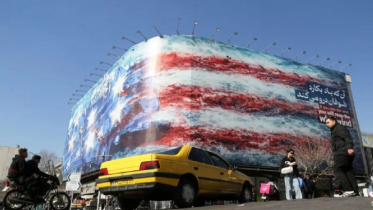
The vote of 77 million Americans in favor of Trump's second term, his administration's tariff war, Israel's actions in Gaza, immigration policy, and stance on Iran - all of which have dealt a major blow to trust in the United States around the world.
After the election results were announced, leaders and ordinary people in countries from Europe to Australia realized that despite losing control of Congress, Trump still had vast power.
"To be honest, Trump has largely bypassed Congress in the last two years and run the country. Why would he change now?" German Chancellor Friedrich Merz said hours after the election results were announced.
Trump's aloofness and preoccupation with construction projects before and after his big election defeat have raised new questions about his governance. Some observers believe he could become completely isolated. Others fear he could become more focused on foreign policy and more uncertain in his decisions.
"The key question for the country's allies is not whether the United States is back or not," wrote Ian Bremer, president and founder of the Eurasia Group, in Think China. "The question is, to what position is the United States returning and for how long will it remain in that position?"
The results of the midterm elections are not enough to change the policies that have strained the global economy and financial system. At the same time, the hopes of many people dreaming of building a new life in the United States remain uncertain.
Trump's tariff war has destabilized global markets and economies. He has cut off humanitarian aid to millions of people and upended the post-war world order. Under his administration, US immigration policies have become violent and deadly, making the country a place to avoid for many.
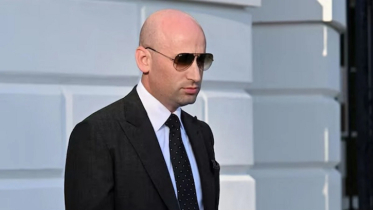
Trump's policies show no signs of softening. On Friday, he named longtime aide Stephen Miller as White House chief of staff. Miller, who replaces Susie Wiles, has been a key architect of Trump's tough immigration policies.
"I don't think all is forgiven," said Jane Gerson, editor of Canadian media outlet ReadTheLine.ca. "Trump's control over the power of the presidency over two terms should serve as a warning signal to Canada and all allies of the United States."
Political and economic uncertainty in the United States could also affect businesses in other countries, a business development manager at Indonesian technology company Cinetica has expressed this concern.
"To me, regaining trust means the United States must consistently demonstrate respect for democratic institutions, the rule of law and international partners," Aditya Surya, 40, of Yogyakarta, Indonesia, told the AP. "The election is a good start. But what happens after that is more important."
The big test to restore trust is the withdrawal of tariff policy.
The new US Democratic majority has pledged to repeal Trump's costly tariffs in its first 100 days. Many are now watching to see how well they can deliver on that promise and whether Trump will accept or veto the proposed changes.
Australian beef producer Hamish McIntyre is not optimistic. The Iran war has pushed up diesel prices as the country's southern spring harvest season gets underway, putting farmers in a difficult position. The government has forecast that profits for large farms could fall by 39 percent.
McIntyre, president of the National Farmers Federation, an agricultural advocacy group, said the midterm election results are unlikely to fundamentally change the trajectory of U.S. tariff policy. He added that the election results will not prevent the administration from continuing to implement broader trade programs.
Ivan Slatkin, president of the Federation of Romandy Enterprises, a Swiss business association, said the election results highlighted the strong position of US companies, which gave him some reassurance.
But he warned, "We must not be naive. The America First concept will not be abandoned anytime soon. I also don't think the new majority will reverse all the decisions the president has made."
Hong Kong businessman Danny Lau, however, sees some hope in the election. More than 30 percent of the total orders coming into his aluminum coating factory in Dongguan, southern China, come from US customers. But his business faces tariffs of about 81 percent.
"Trump started the tariff war," Lao said. "Now that his influence has diminished, will there be any change in the tariff situation? At least I hope he won't raise tariffs again."
Michael Lu, chief executive of BrothersBox, a gift box maker in southern China, said political tensions are still high, especially after Washington's previous trade war with China. But he doesn't think Washington's overall stance on China will change much, regardless of which party wins the midterm elections. About 20 percent of his company's business comes from the United States.
Yoshinobu Tsutsui, chairman of Japan's business association Keidanren, said it was essential for Japan to strengthen its alliance and economic ties with the United States despite political changes. He said Trump could become stronger rather than weaker with the Democrats taking control of Congress.
The 'American Dream' is still elusive for many
Ambika, an Indian national, has long dreamed of living permanently in the United States. She currently works in the IT sector there. But Trump's strict immigration policies and recent restrictions on obtaining a green card have given her new thoughts. She only revealed her last name to protect her identity.
"Recent changes in visa policy have me concerned," he said, recently visiting India to visit family. "I don't know if the results of the midterm elections will bring any policy changes for people like us who are interested in going to the United States."
The most reliable way to understand change in the United States is through its elections. This election marked the biggest shift in the balance of political power in the country since the Watergate scandal.
"We have had opportunities for change time and time again, but greed has snatched defeat from the brink of victory. Will it be different this time? That depends on the American people. It worries me, given past experience," said Martin McSweeney, a UK-based political commentator, the day after the election. Source: AP