Eisenkot on the path to ousting Netanyahu, will have to overcome 7 difficult obstacles
Published: 09:35 AM, 8 November 2026
The opposition has made significant progress in its political battle to remove Israeli Prime Minister Benjamin Netanyahu from power, a major political setback for the prime minister.
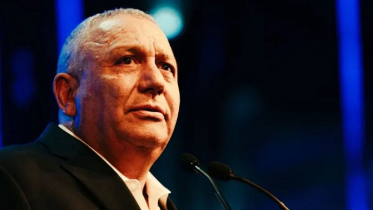
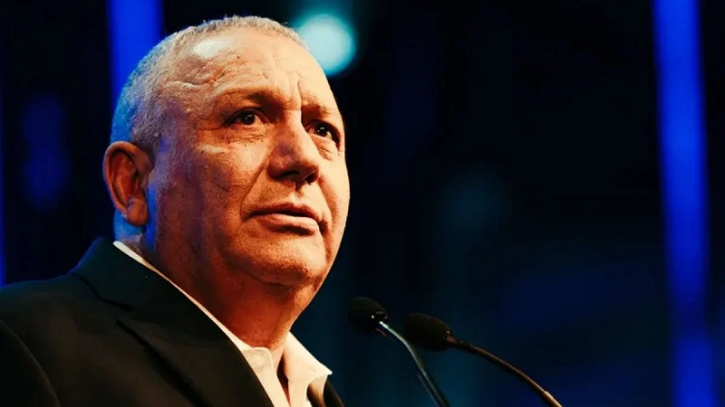
The president is set to give his main rival, Gadi Eisenkot, the task of forming a new government, a step closer to unseating Netanyahu, Israel's longest-serving leader. But the road to forming a new government remains difficult.
Eisenkot, who led the moderate Yashar Party in the October 27 elections, is being given a maximum of six weeks to form a new government. 67 members of the new Knesset have recommended him to form a government, compared with 46 for Netanyahu. But this support has not yet translated into a permanent parliamentary coalition. As a result, Eisenkot faces uncertainty even if he is given the task of forming a government.
Ensuring a majority is the biggest challenge
There are 120 seats in Israel's Knesset. Although a simple majority is required to form a government, the four parties in Eisenkot's proposed coalition have only 48 seats. That is, they have fewer seats than the 61 seats required to form a government.
To fill this gap, he must rely on the support of Arab parties. Eisenkot has been recommended by 67 members of the new Knesset, including 19 members from Arab parties. He wants to form a minority government with support from outside these parties.
But there is no guarantee that a government with the support of Arab parties will last long. Because there are differences of opinion within the opposition coalition on the issue of cooperation with these parties, Eisenkot's first big test will be securing the necessary support in parliament.
Disagreements in opposition camp over support for Arab parties
One of the biggest obstacles to Eisenkot's plan is opposition leaders' objections to the support of Arab parties. Avigdor Lieberman in particular is not willing to form a government dependent on such support.
Lieberman, a former Israeli defense, foreign, and finance minister, fears that a minority government formed with the support of Arab parties will not last long. Rather, such a government could ultimately provide Netanyahu with an opportunity to strengthen his position politically.
In a post on social media X on Friday, he warned that if things continue like this, Netanyahu could return to power with 70 seats and rule the country for another four years.
Lieberman's stance poses a major political problem for Eisenkot, because to form a government, not only will he have to calculate the number of parliamentary seats, but he will also have to get the key partners in the opposition coalition to agree.
Complications also arise over the compromise with ultra-Orthodox parties
Lieberman has put forward another alternative plan: to try to reach an agreement with the ultra-Orthodox Jewish parties Shas and United Torah Judaism, rather than relying on the support of Arab parties.
If these two parties get support, there is a possibility of forming a 61-member coalition. In addition, if three or four Likud Party MPs leave the party and join the new coalition, the path to forming a government may be made easier.
However, this plan conflicts with one of the opposition coalition's key election promises: ending the existing exemption from compulsory military service for ultra-Orthodox youth.
Religious parties favor making the exemption permanent, while opposition leaders including Eisenkot and Lieberman have pledged during the election to ensure mandatory military, national or civilian service for all citizens.
This means that in order to gain the support of the ultra-Orthodox parties, Eisenkot may have to compromise on important policy positions in his coalition. Without that concession, it will be difficult to achieve the necessary majority.
Participation of Arab parties uncertain due to government formation conditions
Eisenkot set four conditions for the formation of a national emergency government. These include recognizing Israel as a Jewish, democratic, liberal, and egalitarian state; committing to the values of the Declaration of Independence; ensuring compulsory service for all; and recognizing Hamas as a terrorist organization.
In particular, the requirement to recognize Hamas as a terrorist organization has become a major obstacle for Arab parties, which may choose to support the government from outside rather than directly joining the cabinet.
But providing support from outside is not the same as participating in the government. If there is disagreement over important policies or political decisions, it may be difficult to maintain the support of these parties. This will also raise questions about the stability of the government.
Netanyahu's political and administrative counter-strategy
In addition to Eisenkot's efforts to form a government, Netanyahu has also been active in breaking up the unity of the opposition coalition. He is trying to prevent the opposition from cooperating politically with Arab parties.
Netanyahu has challenged the election results, claiming that Arab parties stole the vote through bribery and foreign funding. The report also mentions that Shin Bet chief David Zini, known to be loyal to him, is also investigating Arab politicians. However, there is no public evidence to support these allegations.
In a video message on Saturday, Netanyahu warned that Israel would never survive if a minority government was formed with the support of Arab parties. Instead, he called for the formation of a national unity government with his own political alliance.
Netanyahu's position presents another challenge for Eisenkot, as he will have to deal with Netanyahu's political campaign and internal divisions within the opposition coalition in addition to negotiating government formation.
Taking control of the Knesset will be the first major test
Eisenkot and his allies want to strengthen their political position in the new Knesset before forming a government. On the day the new members of parliament are sworn in, the opposition parties want to remove the current speaker and give him the position to someone of their choice.
If control of the speakership can be established, it may be easier to reduce Netanyahu's political influence in the Knesset and advance various opposition initiatives.
This includes the formation of a state commission of inquiry to investigate the failures of Israel's security system prior to the Hamas attack on October 7, 2023.
However, even initiatives such as changing the speaker or forming an investigation commission require parliamentary support. As a result, Eisenkot's opposition coalition will have to prove its strength and unity in the Knesset before forming a government.
The deadline pressure is also not low.
After receiving the responsibility from the president, Eisenkot will initially have 28 days to form a government. During this time, he will have to negotiate with various parties and reach an agreement on the distribution of cabinet positions, budget and policy issues. He can extend the time by another 14 days if necessary.
If they fail to form a government within this period, responsibility could return to Netanyahu, who would then have another four weeks.
In other words, Eisenkot doesn't have much time. He has to complete everything within the stipulated time frame: reaching an agreement within the opposition coalition, securing the support of Arab parties, and possibly negotiating with religious parties.
What could happen in the end?
Overall, Eisenkot faces three major challenges—ensuring the necessary support in parliament, resolving internal differences within the opposition coalition, and countering Netanyahu's political counter-strategy.
Receiving the endorsement of 67 MPs is a politically significant step forward, but translating this support into an effective government requires policy and political compromise among the various parties.
While Eisenkot has spoken of a quick national emergency government, ensuring its sustainability may be more difficult. The possibility of ending Netanyahu's long political rule depends largely on how much the opposition camp can unite, especially on the support of Arab parties and relations with ultra-Orthodox parties.
So while receiving the responsibility of forming a government from the president is a great success for Eisenkot, the most difficult path still lies ahead in the fight to remove Netanyahu from power.
Source: CNN