US Midterm Elections: A Test for Trump, a Battle for Congress
Published: 11:30 AM, 22 October 2026
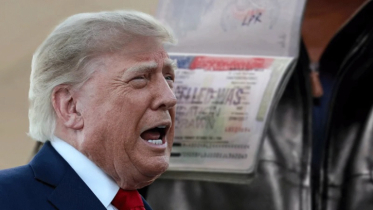
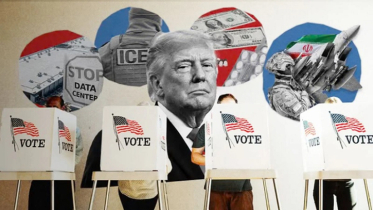
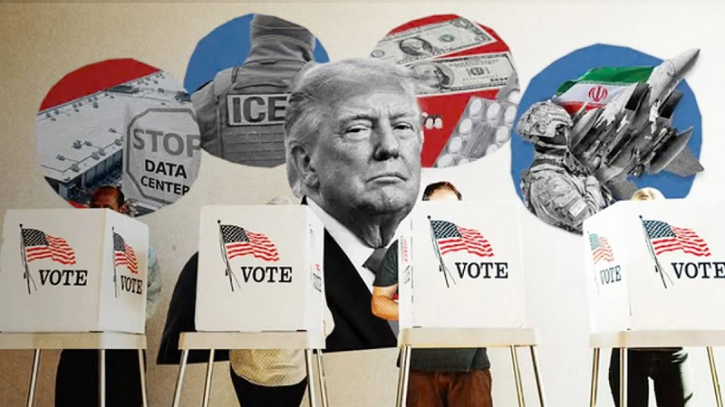
The United States is set to hold its midterm elections on November 3. These elections will determine the composition of the House of Representatives and the Senate, as well as the governorships in various states. Tensions are already mounting surrounding these elections, which take place midway through President Donald Trump’s term. Democrats are determined to wrest control of Congress from the Republicans, while Trump’s party is fighting to retain its grip on power.
Early voting has been underway for several weeks. If voter turnout mirrors that of the 2022 midterm elections, more than 100 million people could cast their ballots. Massive sums are being spent on campaigning; according to AdImpact, a firm that tracks advertising, a record $3.8 billion had been spent on political advertisements as of October 12.
Spending is particularly high on Senate races in states such as Texas, Ohio, and Michigan. Campaign finance records indicate that billionaire Elon Musk alone has contributed approximately $366 million in support of the Republicans.
Securing control of both chambers of the US Congress—the House of Representatives and the Senate—is a primary objective of this election.
Currently, Republicans hold 218 seats in the House of Representatives, compared to 214 for the Democrats. Additionally, two seats are vacant, and one independent member aligns with the Republicans. To gain control of the House, the Democrats would need a net gain of four seats.
Republicans also hold the advantage in the Senate, with 53 seats against the Democrats' 47. To take control of the Senate, the Democrats would likewise need a net gain of four seats.
Highly contested races in at least 10 states—including Maine, Ohio, North Carolina, Iowa, and Georgia—could prove decisive in determining the final outcome in the Senate.
Will the midterm elections impact Trump’s hold on power? These elections take place midway through a president’s four-year term. While the presidency itself is not on the ballot, these elections are politically critical for the incumbent president and their party.
Voters generally view midterm elections as an opportunity to evaluate the president’s performance. A poor outcome can pressure the president to alter their policies and approach.
For Trump and his Republican Party, this election serves as a major test. Losing control of Congress could make it difficult to pass legislation, approve budgets, and implement the administration’s policy agenda. Furthermore, the results could influence the campaign strategies of potential candidates for the 2028 presidential election.
**Decline in Trump’s Popularity in Polls**
According to a September poll by Reuters/Ipsos, support for Trump’s performance has fallen to 32 percent—the lowest level recorded for him.
Domestic issues, such as rising prices and the cost of living, are likely to have a significant impact on the election. These factors could potentially erode voter support for the Republicans.
Meanwhile, there are indications that Democratic supporters are more motivated to vote in this election than their Republican counterparts. If this trend in early voting persists, it could work to the Democrats' advantage.
It is also speculated that some Hispanic or Latino voters—who supported Trump in the 2024 presidential election—might shift back toward the Democrats. Dissatisfaction with the economy and the Trump administration’s anti-immigration policies could be contributing factors.
However, a decisive victory for the Democrats is not guaranteed. Factors such as a lack of trust among some voters, the Republicans' greater capacity for campaign spending, and the success of left-leaning candidates in certain primary elections could heighten concerns among moderate voters.
**What Do Past Elections Tell Us?**
In recent U.S. history, there have been instances where the party in power suffered significant setbacks in midterm elections. In 2010, during President Barack Obama’s administration, the Republicans secured a major victory in the midterm elections, gaining 63 seats in the House of Representatives. At the time, the U.S. economy was not performing as expected, and support for Obama’s healthcare reform was weak. Consequently, the Democrats lost control of the House. Although they lost six seats in the Senate, they managed to retain their majority.
Obama described the outcome as a "shellacking." Following this, the Republicans demanded significant cuts to government spending, excluding the defense sector.
In 2018, while Donald Trump was president, the Democrats saw a reversal of fortune, gaining a net total of 40 seats in the House of Representatives. However, they lost a net of two seats in the Senate.
This time, gubernatorial elections will be held in 36 of the 50 states. Additionally, elections for various seats in state legislatures will take place across nearly every state. According to Ballotpedia, Republicans currently hold approximately 55 percent of the seats in state legislatures nationwide, while Democrats hold 43.8 percent.
If Democrats win, Hakeem Jeffries could become Speaker.
Should the Democrats secure a majority in the House of Representatives, Hakeem Jeffries—a representative from New York and the current leader of the House Democrats—could become the Speaker.
The Speaker of the House is third in the line of presidential succession, following the Vice President. If Jeffries were to become Speaker, he would be the first Black American to hold this significant position.
As Speaker, he would oversee the various committees of the House of Representatives...