The United States is intensifying economic intelligence operations against China.
Published: 11:14 AM, 22 October 2026
The Trump administration views economic warfare as a critical instrument of statecraft and diplomacy. As part of this strategy, the U.S. is employing measures such as imposing tariffs, enforcing export controls, managing investments in vital resources and technologies, and coordinating more closely with private investors to safeguard essential inputs for the defense industry. Simultaneously, there is an increased focus on gathering economic intelligence.
In a speech last September, CIA Deputy Director Michael Ellis stated that the United States is stepping up intelligence surveillance against China—specifically targeting Chinese firms involved in artificial intelligence (AI), biotechnology, and advanced semiconductor technologies.
While U.S. intelligence agencies have long monitored major Chinese corporations, it is rare for high-ranking officials to so openly discuss a shift in their agencies' priorities.
David S. Cohen, Ellis’s predecessor, has gone a step further regarding the use of economic intelligence. In an article for *Foreign Affairs* magazine, he argued that the long-standing policy of strictly protecting the confidentiality of economic intelligence should be reconsidered. He suggested that such information could potentially be shared with U.S. companies working on advanced technologies to help them maintain a competitive edge.
In an interview, Cohen remarked, "We have been collecting economically sensitive information for years. We shouldn't be conflicted about whether to provide a commercial advantage to U.S. companies." However, he cautioned that robust oversight mechanisms must be in place to prevent favoritism and corruption. Cohen also noted that he had no information regarding the Pentagon’s new "NOC" (non-official cover) program.
A New Unit for Economic Defense
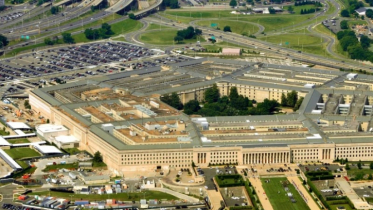
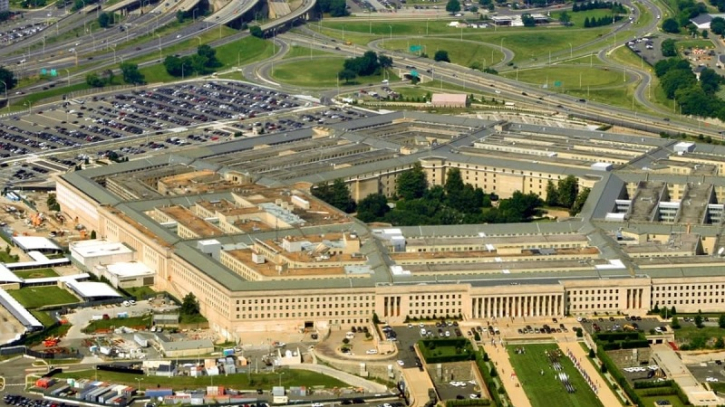
Some of the Pentagon’s economic warfare initiatives have already come to light. Earlier this year, Steve Feinberg announced the formation of an "Economic Defense Unit" (EDU). In a memorandum sent to senior Pentagon officials, Feinberg noted that the primary objective of this unit is to use economic means to obstruct adversaries, thwart their plans, and defeat them. The memorandum was first reported by *DefenseScoop*, a news outlet covering U.S. defense affairs.
Last February, Feinberg appointed George Kolaitis—a former colleague and senior Pentagon advisor—to head the Economic Deterrence Unit (EDU). Since then, the unit has announced hundreds of millions of dollars in government investment in domestic and foreign mines and refineries.
Under one such agreement, the Pentagon has initiated a plan to invest $750 million to secure a major reserve of rare earth minerals in Brazil.
In addition to these overt economic activities, Rakusan is overseeing the covert development of a new intelligence branch.
According to several individuals familiar with the plans, the EDU was initially considered as a potential base for this clandestine unit. However, that idea was abandoned due to concerns that the EDU’s activities and investments might attract increased scrutiny from the media and Congress.
It is anticipated that oversight of Pentagon operations could intensify further, particularly if the Democrats manage to strengthen their position in Congress following the upcoming elections in November.
The Challenge of Learning from Past Failures
The history of the CIA’s "Non-Official Cover" (NOC) intelligence program—which employs operatives under deep cover—includes both successes and failures. While large-scale initiatives of this nature have been attempted in the past, many failed due to inadequate training and poor oversight.
In the 2000s, a program known as the "Global Deployment Initiative" was launched with the backing of the U.S. Congressional intelligence committees. The initiative ultimately failed, however, due to the rapid recruitment of a large number of undercover operatives without sufficient oversight. In the end, many of these young intelligence officers were forced to either return to CIA headquarters or resign from the agency. The Pentagon has long faced various challenges in conducting intelligence operations under deep cover. Although the Defense Intelligence Agency (DIA) and the Joint Special Operations Command (JSOC) have attempted to carry out intelligence activities using commercial cover, the results have not always been positive.
Following the September 11, 2001, attacks, members of JSOC—posing as employees of a mining company—were deployed on an operation in a remote part of Africa. Their cover was blown when they encountered actual geologists and engineers with expertise in mining; the operatives lacked even a basic understanding of the field.
While they managed to escape that situation, JSOC subsequently began sending personnel—tasked with operating under commercial cover—to specialized institutions for training in their assigned fields.
According to former officials, conducting such deep-cover intelligence operations is exceptionally difficult for the Pentagon. It is not easy to completely conceal a background of military service. Furthermore, the advent of modern biometric identification systems and digital databases has made it increasingly challenging to maintain a false identity over an extended period.
Moreover, the mannerisms, behaviors, and physical posture—ingrained in individuals accustomed to military life—can often reveal their true identity.
Is the Pentagon willing to take greater risks than the CIA?
The Pentagon’s new initiative also signals a shift in the power dynamics and influence within the Trump administration. Currently, the Pentagon is seeking a record-breaking budget of $1.5 trillion.
Meanwhile, CIA Director John Ratcliffe...