.png)
What might a possible US invasion of Canada look like?
Published: 08:30 AM, 4 October 2026
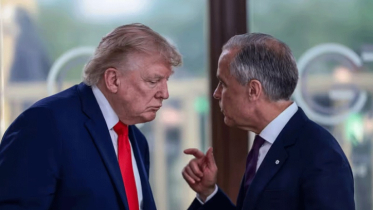
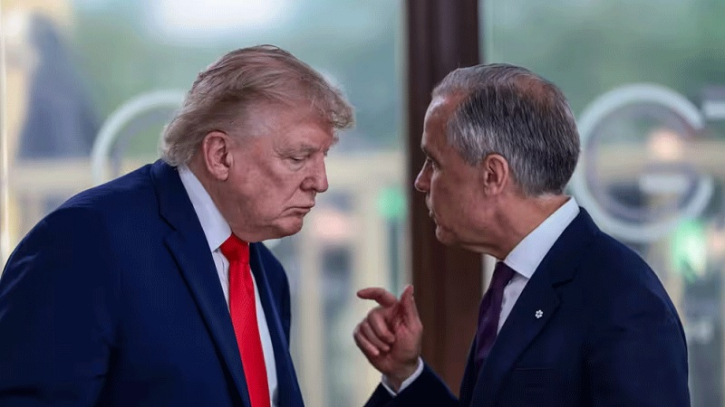
Canadian Prime Minister Mark Carney has said that all preparations are being made in case the United States invades Canada. Although analysts believe that the risk of such an attack is very low, analysts have expressed their opinions on the scale of the attack if the United States does indeed invade Canada.
Matthew Schmidt, an associate professor of national security at the University of New Haven in Connecticut, believes that the risk of a US invasion of Canada is extremely low. Yet the fact that Canadians are so prepared demonstrates how radically the world order has changed.
He added that Canadian leaders now face some tough questions — such as how closely they want to continue working with the U.S. military, which provides the United States with vital information that could be used to harm Canada.
"This is damaging relations with the United States and there is a kind of rational fear about it," he said.
He added that Americans may not have taken Trump's comments about making Canada the 51st state of the United States seriously, but Canadians have taken it seriously and are prepared to defend themselves if necessary.
So what might the situation be like if such an event occurred? The first phase of the war could be quite short.
Earlier this year, a report in the Globe and Mail newspaper cited a model used by the Canadian military that predicted that Canada's strategic positions could be overwhelmed within a week of a US attack.
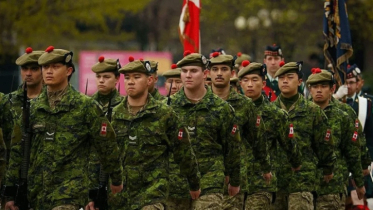
Then the Canadian military would be greatly outnumbered and the Canadian forces would have to resort to guerrilla warfare tactics to repel the enemy.
The report, published in January, quoted senior government officials as saying that Canada would need to turn to allies like France and Britain for assistance and protection.
It is believed that this is the first time in a century that Canada has drawn up a plan against a possible attack by the United States.
Coates said that this model is a relatively low-intensity or early-stage plan in terms of military war planning.
He said Canada had lagged behind other NATO allies in developing a specific plan to counter a ground invasion; but in these uncertain geopolitical times, they are now trying to fill that gap.
Evidence of this can be found in a recent call by Canada's defense chief, which calls for a massive increase in the size of the military—including a proposal to include up to 300,000 lightly-trained citizen-soldiers.
From the US perspective, an invasion of Canada may not be an easy task. Schmidt said that despite its massive military power, it would be difficult for the US to garner the necessary support or consent to go to war against Canada.
"I think a large number of US officials would resign if an order was given to invade Canada. They would consider it an illegal and immoral order," he said.
He also said that Canadian and US troops regularly conduct joint training and respect each other.
However, if relations deteriorate into a situation of direct conflict or war—which is highly unlikely—the United States will likely focus on seizing Canada's valuable resources, such as oil and minerals, as well as overthrowing or disabling the country's political leadership.
"Then we might see a kind of operation similar to what happened in Venezuela," he said.
Acknowledging that the US military capabilities are much greater, he said that, in terms of comparative strength, Canadian troops would also be able to mount a very good resistance.
.png "Advertisement")