.png)
New fears in immigrant-friendly cities
Published: 10:59 AM, 3 October 2026
The most important topic of discussion among the immigrant community in the United States is the new immigration regulations and the methods and procedures for their implementation. Since the vast majority of Bangladeshis living in this country have obtained legality through the asylum application process, and a significant number of applications are under consideration and are living illegally, they are constantly worried about being arrested, handcuffed and sent back to Bangladesh by the US Immigration and Customs Enforcement Agency (ICE), the immigration law enforcement agency of the Department of Homeland Security. Their concerns have increased manifold since President Donald Trump entered the White House for a second term in January 2025. Nearly 300 Bangladeshi immigrants have been deported from the United States since last July after the Trump administration's 'zero tolerance' policy against illegal immigrants was implemented. In the three and a half decades from the 1990s to 2025, not so many Bangladeshis have been subject to deportation.
An estimated 300,000 Bangladeshis of Bangladeshi origin live in the United States, including American citizens, green card holders, work permit holders, student visa holders and other categories of visa holders, and undocumented or illegal immigrants. This is an estimate by the Pew Research Center. According to the American Community Survey, the number of Bangladeshi immigrants in the United States was 287,664 as of 2023, which is only 0.6 percent of the 46.2 million immigrant population living in the United States. Almost half of Bangladeshi immigrants live in New York City. The second largest number of Bangladeshi immigrants live in Los Angeles, California's most populous city. The rest live scattered in other major cities. Most of these cities are controlled by the Democratic Party, and illegal immigrants can live in those cities without any problems, if they are not involved in any crime. The city administration issues them ID cards; Those who are not allowed to work without a work permit can also work in these cities, receive medical benefits, and their children can study in public schools. These Democratic-controlled cities are considered 'sanctuary cities' or 'sanctuary cities' for immigrants. Law enforcement officers of the US federal immigration authorities do not receive any cooperation from local law enforcement agencies in the sanctuary cities in identifying and detaining illegal and criminal immigrants. In this situation, the Trump administration has decided to increase the manpower of immigration law enforcement agencies to strengthen and speed up the detention of illegal and criminal immigrants in the main sanctuary cities. For this, panic has spread among the immigrant community as a whole, including illegal Bangladeshi immigrants in New York, which is home to the largest number of immigrants.
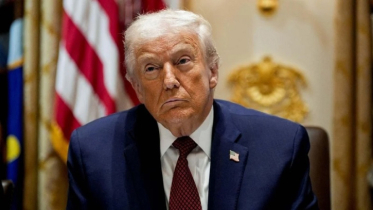
Since Donald Trump took office as president, he has become a terror for all types of immigrants, both legal and illegal. His executive order has determined which countries' citizens can apply for asylum in the United States. In addition, the application process and screening procedures have also been tightened. As a result, the asylum applicant application approval rate has decreased significantly during the Trump era. In the 1990s, the asylum application approval rate was around 5,000 per year on average. Along with the increase in the number of asylum applications, the approval rate has also increased since the 2010s and in 2023, more than 54,000 asylum applications were approved. But the Trump administration's strict screening process has led to a significant decrease in the asylum approval rate. As a result, the number of applications under consideration is increasing. This number would have increased further if the Trump administration had not stopped the tide of immigrants entering the United States by crossing the Mexican border after taking office. According to the claims of 'US Customs and Border Protection', immigrant immigration into the United States has decreased by more than 90 percent in 2025 and 2026 compared to previous years. In the five years from 2020 to 2024, 110,000 foreigners entered the United States through the Mexican border; but after President Trump was sworn in and issued his new executive order against illegal immigration in January 2025, border crossings decreased to 8,347 in February.
According to Homeland Security statistics, the number of asylum applications currently pending in the US Citizenship and Immigration Services (USCIS) and immigration courts is more than 3.9 million as of September 2025. Of these, about 1.5 million are in USCIS and 2.28 million are in immigration courts. Although the administration has not been able to do anything to resolve this backlog, the backlog is increasing every year. Not only asylum applications, but refugee quotas have also been tightened for considering applications from war-torn and riot-torn countries, and refugee admissions to the United States have been limited. The Trump administration has decided that the United States will not accept more than 7,500 refugees in 2026, which is the lowest in refugee admissions in 45 years. As much as Trump is interested in accepting white residents of South Africa as refugees, he is not as interested in accepting refugees from any other war-torn country in the world. The Biden administration accepted more than 100,000 refugees in 2024. In the same year, USCIS and immigration courts approved nearly 70,000 asylum seekers. In 2023, nearly 52,000 asylum seekers were approved. But in 2025 and 2026, after President Trump entered the White House for the second time, the asylum application approval rate was historically low.
According to the 'State of Immigration Report' and 'TRAC' (Transactional Records Access Clearinghouse), the fate of 30 to 40 percent of asylum seekers depends entirely on the immigration court judges; the nationality of the applicant and the political situation in their country, the nature of the application, the timing of the application, and the strong evidence to prove the validity of the reasons for asylum mentioned in the application. According to the Transactional Records Access Clearinghouse, in the case of Bangladeshi asylum seekers, 1,427 Bangladeshi asylum applications were considered in the six years from 2012 to 2017. Of those who allowed immigration lawyers to represent them, 44.9 percent of their applications were rejected. On the other hand, 89.8 percent of those who could not appoint a lawyer to represent them were rejected. Most Bangladeshi asylum seekers are unable to hire a lawyer to represent them due to the high fees of lawyers. They apply directly and face an asylum officer in an interview. In most cases, they do not do well in the interview due to their lack of English knowledge or their inability to understand the American accent due to their recent arrival in the United States. Asylum officers immediately reject the application or refer it to immigration court. The same scenario is repeated at the court hearing and the asylum seeker faces deportation.
The US Department of Homeland Security said that since the Trump administration returned, more than 527,000 immigrants have been deported in 2025, of which 340,000 were deported by ICE. Trump is determined to deport about 2 million illegal and criminal immigrants in his second term. It is worth noting that there are currently more than 120,000 undocumented immigrants in the United States.
.png "Advertisement")