.png)
Why is the US in a state of arms shortages in the midst of a war with Iran?
Published: 09:11 PM, 9 August 2026
The months-long war with Iran has put a huge strain on the US arsenal. US officials have warned that stocks of key missiles and air defence systems have fallen to levels that would put Washington at risk if it were to engage in another major war.
The dwindling stockpiles have forced the Pentagon to move weapons and military equipment from Europe and Asia to the Middle East. At the same time, deliveries of some weapons and defence systems to allied countries have been delayed and defence companies have been ordered to dramatically increase production.
According to The New York Times, the US has used thousands of expensive missiles and other precision-guided munitions in the war against Iran launched under President Donald Trump. As a result, supplies have also had to be drawn from stockpiles of weapons kept for US forces deployed in Europe and Asia.
Senior US officials, who spoke on condition of anonymity, told the New York Times that top Trump administration officials are personally concerned about the depletion of air defense missiles and other key weapons. The shortages have also forced some countries in Europe and Asia to postpone deliveries of some defense systems.
The Pentagon has rapidly sent ships, planes and air defense units from Europe and Asia to the Middle East. According to officials, this is having a knock-on effect on equipment maintenance, troop morale and overall US military power in those regions.
The situation has raised concerns in US military and intelligence circles about the ability to maintain long-term US deterrence in Europe and the Indo-Pacific region.
More than 1500 Patriot missiles have been used
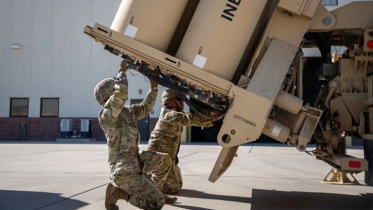
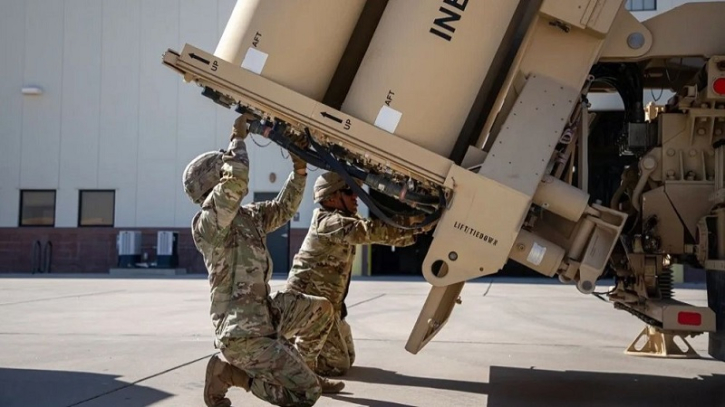
One of the most serious concerns is about the ‘Patriot’ air defense system. The New York Times reported that the United States has used more than 1,500 Patriot interceptor missiles in the war with Iran. Two people familiar with the US arsenal said the US currently has fewer than 1,700 of these missiles.
Even with efforts to increase production, it could take more than two years to replenish the stockpile of more than 1,500 Patriot missiles used in the war.
Patriot missiles are a key part of the US air defense network. The system is particularly important for US forces and allies in Asia and Europe, which are at risk of missile attacks.
Growing concerns in Asia and Europe
The withdrawal of US military assets to the Middle East has raised concerns about Washington's ability to protect allies in other regions.
The New York Times reported that some US officials fear that if the weapons shortage continues, South Korea and Japan could question the reliability of America's conventional military defenses.
US forces in South Korea operate 12 Patriot batteries. These batteries include two types of systems - PAC-2 and PAC-3. Some of these units are deployed in various areas, including Osan and Pyeongtaek.
The Patriot system works in conjunction with higher-altitude missile defense systems such as THAAD and South Korea's Cheongung-II. Hundreds of advanced air defense interceptors from South Korea and other parts of Asia have reportedly been moved to the Middle East due to the conflict with Iran.
Japan's Marine Expeditionary Unit has also been deployed to the Middle East. This unit could be reinforced if necessary if a military situation develops on the Korean Peninsula.
The Pentagon has also moved some strategic surveillance or intelligence-gathering capabilities to the Middle East. It has also withdrawn some air defense capabilities from Asia. As a result, US forces in the region are likely to be more vulnerable if a conflict breaks out with North Korea.
Last year, the US and South Korea also reached an agreement to move some Patriot batteries to the Middle East. The decision has raised concerns domestically in South Korea about the potential shortfall in its air defenses.
Not only are Patriot missiles being depleted, but other weapons are also being depleted. According to the report, the stockpiles of high-powered long-range missiles such as the Army Tactical Missile System (ATACMS) and the Precision Strike Missile (PrSM) have also been depleted due to their extensive use against Iran.
The United States could have to use a larger amount of ammunition in a potential war with China. The scope and intensity of the war, especially in the Pacific, could be much greater, requiring a large number of missiles and other precision-guided weapons.
The decline in the US weapons stockpile also has broader geopolitical implications. US officials told the New York Times that Russian and Chinese military officials are closely monitoring how quickly Washington is using missiles, ammunition and other weapons in a war with Iran.
US officials fear that Moscow and Beijing could take this information into account when developing their own military plans. Analysts have warned that a prolonged war with Iran would be a threat to Europe and
.png "Advertisement")