.png)
Trump’s top general seeks way out of Iran war, military options limited
Published: 08:48 PM, 8 August 2026
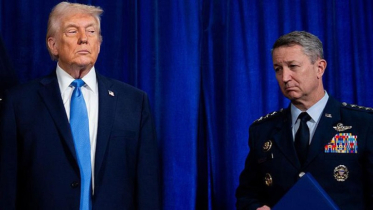
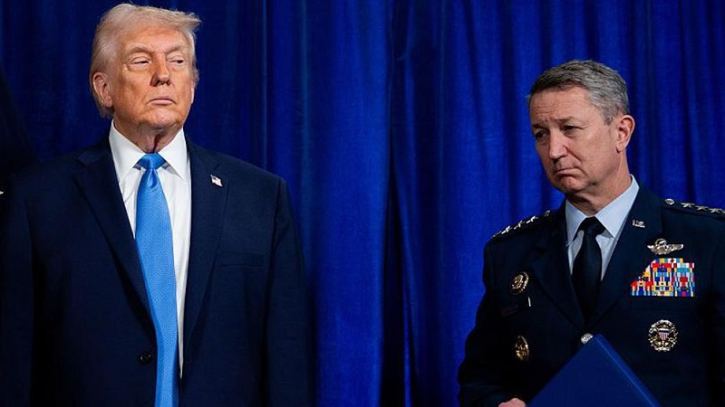
General Dan Kaine, the chairman of the US Joint Chiefs of Staff, has taken a stance in favor of finding a diplomatic way out of the ongoing war with Iran. He has personally warned some top Trump administration officials that the options available to the US military to escalate the war could backfire.
CNN, citing three sources familiar with the matter, reported that Kaine has made it clear in recent weeks that the US needs to find an 'exit' or off-ramp from the Iran war. He fears that it may not be possible to achieve President Donald Trump's declared goal with air strikes alone.
One source directly said, 'Kane is looking for a way out.'
General Kaine is not alone. He has also discussed the next steps in the war with several key Trump administration officials, including CIA Director John Ratcliffe, Secretary of State Marco Rubio and Vice President J.D. Vance.
According to the sources, the purpose of these discussions was to coordinate the positions of various government agencies before meeting with President Trump and to highlight the limitations and potential risks of military options. According to one source, the main purpose of Kaine's initiative is to protect the military.
'Air power also has its limits'
Trump has repeatedly indicated that it is possible to force Tehran to agree to his terms through air strikes instead of sending ground forces to Iran. However, some administration officials, including Kaine, believe in private discussions that such an outcome is unlikely to be achieved.
Kaine himself said in a hearing before lawmakers late last month, 'air power has its limits.'
CNN reported that although plans for a larger attack on Iran were discussed in late July, Kaine and some administration officials were concerned about the potential consequences. The plan considered launching a major military operation.
One source claimed that parts of Central Command were mainly in favor of the operation. Israel also favored escalating the conflict overall, the source said.
Trump ultimately backed down from the strike after talks with his Middle Eastern allies. These countries had expressed concern about possible Iranian retaliation, especially against their energy infrastructure.
However, Trump did not completely rule out future attacks.
Concerns about weapons stockpiles
The possibility of a significant reduction in US ammunition stocks if the war drags on is also a major concern. Several CNN reports have said that some key US weapons stocks are now dangerously low.
Sources say that Kaine raised the issue of ammunition shortages in at least two meetings with Trump about the options for further strikes against Iran.
At the same time, officials from Gulf countries have also warned US officials that it could be difficult to prevent an Iranian retaliation if they lack advanced air defenses.
Doubts about attacks on energy infrastructure
Trump has repeatedly threatened to attack Iran's energy infrastructure. However, according to military officials, there is no guarantee that Iran will surrender. Rather, in response, the risk of Iran's counterattack on the energy infrastructure of the Gulf countries may increase.
Similarly, it is reported that the issue of attacking Iranian bridges has also been considered. However, those concerned believe that such an attack will not have much effect.
Searching for 'new and unconventional' strategies
Almost six months after the start of the war, the United States is still having to find new strategies against Iran. Recently, a senior military officer at Central Command sent an e-mail to military analysts asking for 'new, creative and unconventional' ways to put pressure on and punish Iran. According to relevant sources, seeking new ideas like this after so long into the war indicates that the current strategy is not yielding the desired results.
One source said that thinking about these options before the war starts is one thing, but having to find new options in the middle of the war reveals the harsh reality of the situation.
Kaine warns Trump without directly opposing him
However, Kaine is moving cautiously to present his position without damaging his relationship with President Trump. Sources say that while he raised the risk of military action in his meeting with the president, he also made it clear that if Trump decides to attack, US forces are capable of inflicting massive damage on Iran.
In other words, he is publicly raising the issue of military capabilities, while in private discussions he is more direct about the limitations of air strikes and the potential dangers of escalating the war.
Is a ground operation the last option?
According to relevant officials, a major ground operation may be necessary to completely defeat Iran militarily. However, it risks the loss of thousands of US troops. Therefore, no one in the administration is currently taking a position in favor of such a major step.
For this reason, a solution is now being sought within the Trump administration that allows the president to claim at least a symbolic victory while at the same time keeping the path to a diplomatic settlement open. According to relevant people, this could potentially start with an agreement on reopening the Strait of Hormuz.
The report says the nearly six-month-old war has now reached a point where Trump faces a
.png "Advertisement")