.png)
Kashmir issue and Trump’s anger: Why India is hesitant to join the Board of Peace
Published: 09:51 PM, 26 January 2026
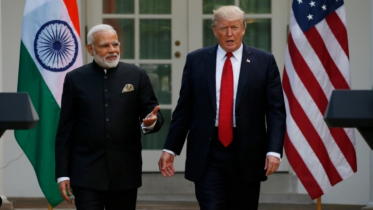
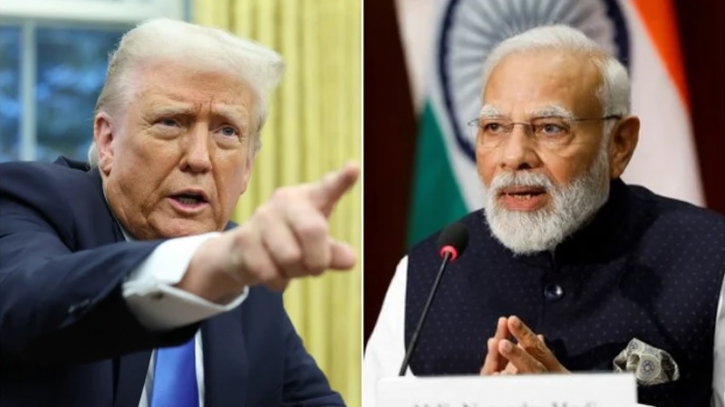
US President Donald Trump and Indian Prime Minister Narendra Modi.
The United States is recently forming a 'Board of Peace' to resolve various crises and establish peace around the world. And many countries have been invited to join it. Despite receiving an invitation to join the 'Board of Peace' formed by US President Donald Trump, India has not yet officially responded. Many analysts believe that New Delhi is hesitant, fearing that joining this new initiative to establish peace could bring the Kashmir issue to the international discussion.
Pakistani media outlet The Dawn says that despite receiving an invitation to join the 'Board of Peace' formed by President Donald Trump, India has not yet officially participated in it. Although 20 world leaders, including Trump and Pakistani Prime Minister Shehbaz Sharif, signed the charter of the board at an event held in Davos, Switzerland, India's absence was noticeable.
Many believe that India's reluctance is due to deep concerns over the Kashmir issue. It is feared that joining this board may increase international or US surveillance of Indian-administered Kashmir.
President Trump has said that the main goal of this board is to make the ceasefire between Israel and Hamas in Gaza permanent and oversee an interim government there. Trump said, "This is not just for America, it is for the whole world. If we want, we can spread it to other places, as we have successfully done in Gaza."
However, some quarters in India fear that Trump is trying to establish this board as an alternative to the United Nations in the future. In such a case, disputed regions like Kashmir may also come up for discussion under this framework.
In addition, Trump has repeatedly offered to mediate on the Kashmir issue in the past, especially after the bloody conflict between India and Pakistan in May last year. But New Delhi has strongly rejected these proposals every time.
A BBC Hindi report said that the ‘Board of Peace’ is being formed at a time when the US is withdrawing from several UN bodies. This raises the question, is this new initiative an attempt to make the UN irrelevant?
Another fear is that this board will further strengthen a unipolar world order, where US influence will remain dominant.
In an editorial on this issue, the influential Indian daily The Hindu referred to Pakistan’s inclusion in Trump’s Board of Peace as a ‘warning signal’ for India. The newspaper said that Trump likes to present himself as an ‘ambassador of peace’ and has already claimed to have resolved many regional and global conflicts in his first year.
The editorial said that if Trump includes the Kashmir issue in his peace plan, the board will try to resolve it. Once it joins the board, it will become difficult for India to raise objections against the deployment of international peacekeeping forces.
Former Indian Ambassador to the UN Syed Akbaruddin wrote in an article in the Times of India that the Security Council has decided that the board will have a term of office until December 31, 2027, and will have to report to the Security Council every six months. The aim is to prevent this temporary arrangement from becoming a permanent global framework.
However, he said that Trump's peace plan has no fixed term and can be used beyond Gaza. Some UN officials have already indicated that the framework can be applied to other conflict zones.
Ranjit Roy, a former Indian diplomat and ambassador to Nepal and Vietnam, believes that it will not be easy for India to decide on this issue. "India's hesitation has increased. Acceptance will have an impact, rejection will have an impact. I think the risks of joining the board are very high. First of all, Trump himself is its chairman, and it is difficult to expect justice from his transactional politics," he added.
He also said that it is not clear whether all countries will have equal status on this board. When the Security Council approved it, its work was limited to Gaza. But if the situation changes, it could expand beyond Gaza.
The Hindu also wrote that the tense US-India relations and the sensitive situation regarding trade talks may not allow Delhi to reject Trump's invitation outright at this time. Because, as happened in the case of the French president, India could face Trump's displeasure.
.png "Advertisement")