5 reasons why Trump’s team lost badly
Published: 12:30 PM, 5 November 2026
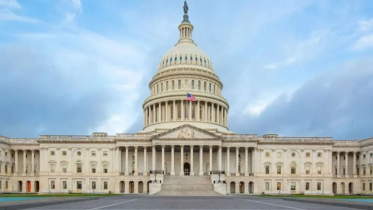
Democrats have taken control of the US Congress in a landslide victory in the midterm elections. While midterm elections are always a tough time for the incumbent president's party, the Republicans' big defeat is being seen as a strong rejection of Donald Trump's two years in the White House.
A BBC Bangla report highlights five reasons, ranging from angry voters to the president's declining popularity.
Rising cost of living
Voters from one end of the United States to the other are struggling with skyrocketing prices for basic necessities. That anger was evident on the ground in key contests.
"Gas prices, grocery prices, everything is going up," a North Carolina voter told the BBC ahead of the election, adding that he voted for Democrats instead of Republicans in this election.
Prices rose 3.7 percent in the year to September, driven by rising fuel prices across the board. The average retail price of diesel in the United States at the start of October was slightly below the $6.52 (£4.83) per gallon recorded in September, according to government data.
According to voter survey data, nearly eight in ten voters (79 percent) said that they and their families have suffered severe or moderate hardship due to inflation in the past year.
And more than six in ten respondents blamed Trump for this, saying they believe the president's policies have caused higher-than-normal prices.
The unpopular Iran War
A major reason for the price hike is the US and Israel's war with Iran in February. In retaliation, Tehran effectively closed the Strait of Hormuz, blocking a vital route for the world's oil and liquefied natural gas (LNG) movement, sending fuel prices skyrocketing.
Since then, American voters have been paying the price at the gas pump. The war has proven to be wildly unpopular with most Americans. Even among hardline Republicans, it has been seen as a breach of Trump's "America First" campaign promise, in which he pledged to have no more wars.
Nearly six in ten (63%) voters in a poll said the United States made the wrong decision to take military action against Iran.
On the other hand, three-quarters of voters (74%) said that the conflict was an important or main factor in voting for Congress.
The morning after the election, Trump acknowledged the role of the war in his defeat, but insisted in an interview with Fox News that he had no choice but to intervene to prevent Iran from acquiring nuclear weapons.
A well-ordered message from the Democrats
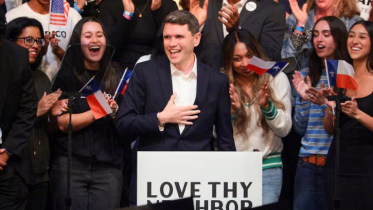
The breadth and breadth of this wave of Democratic victories was made possible by a few strong candidates who were able to present themselves as genuine and sincere candidates, especially in Republican strongholds.
They maintained a disciplined message about the cost of living and access to healthcare. Former teacher James Tallarico and pastor Adam Hamilton also spoke about their faith in ways that left a deep impression on people in Texas and Kansas, respectively.
Democrat Annie Andrews has won a surprise victory in South Carolina. The former pediatrician's promises to make healthcare affordable have resonated with many in the country, as the system is seen as flawed.
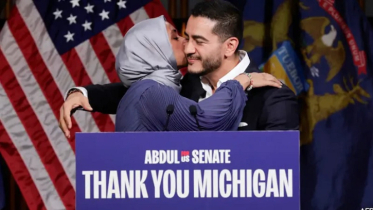
Former public health official Abdul El-Sayed, who won the Michigan Senate seat and kept it in the hands of Democrats, made the slogan "Get money out of politics, put money in your pockets" a cornerstone.
Democratic Senator John Ossoff, who was re-elected in Georgia, has made the cost of living and corruption his main message. The 39-year-old's easy victory in a state Trump has won twice will fuel speculation he could run for president in 2028.
Even Trump himself praised the Democrats, telling Fox News that they had "done a good job." On the other hand, some Republican candidates, such as Ken Paxton of Texas, were criticized for weak campaigns that did not pay enough attention to voter concerns.
Trump's unpopularity is a burden for Republicans
Two of the issues voters were most unhappy about, such as skyrocketing prices of essential goods and the Iran war, were directly linked to the president.
His popularity had even declined among Republican voters, making some states that supported him particularly vulnerable in 2024. In an effort to galvanize his supporters, he urged voters to imagine that he was the one on the ballot.
But after more than a decade at the center of American politics, some see the results as evidence of Trump's declining popularity.
In a context of growing anger, bringing himself to the center of the Republican campaign was risky and appears to have backfired.
In the months leading up to the vote, polls showed that many Americans wanted Trump to pay more attention to their concerns about skyrocketing prices.
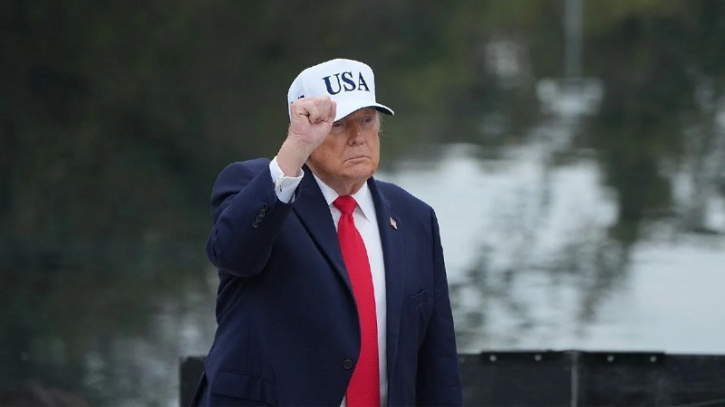
In his final campaign speech in Washington, D.C. on Monday, he spoke in detail about the controversial renovation project for the reflecting pool behind him.
Hispanic and black voters' opinions are changing again
Two years ago, the shift of some Hispanic and black voters toward Republicans helped Trump win a decisive victory. The tide appears to have turned in these midterm elections.
Democrats won all three House seats in the predominantly Hispanic congressional districts along the Texas-Mexico border.
According to a New York Times analysis, Hispanic-majority counties voted against Republican Senate candidates by more than 22 percent compared to the 2024 presidential election. That's a larger shift than any other major demographic group in the country, said data reporter Jeff Adelson.
The change comes amid widespread anger against immigration enforcement, with a majority (56 percent) of Americans holding an unfavorable view of ICE (Immigration and Customs Enforcement), according to data from the Pew Research Center.
Black-majority counties also leaned significantly toward Democratic candidates in Senate elections.
The Senate race is fiercely contested in Mississippi, where black voters make up the largest percentage of any state in the United States, at nearly 37 percent. If Scott Colomb wins, he would be the first Democrat elected to the Senate from Mississippi since 1982.