Trump, angry at the election, may plunge the world into a new crisis to avenge his defeat
Published: 12:04 PM, 5 November 2026
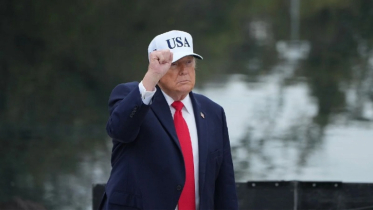
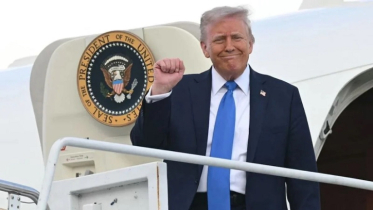
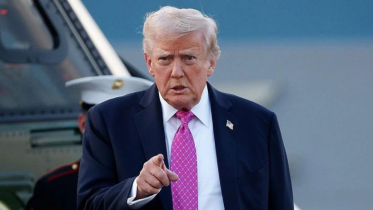
The US presidential election always generates global attention. But this is the first time in recent memory that the country's midterm elections have attracted so much international interest. The main reason for this is Donald Trump. Since returning to the White House less than two years ago, his words and actions have not only destabilized the US political and social system, but also disrupted the global order that was established after World War II. As a result, uncertainty and economic suffering have been created around the world. So it is not unusual for Trump's heavy defeat in Tuesday's election to be met with relief and satisfaction from his critics at home and abroad.
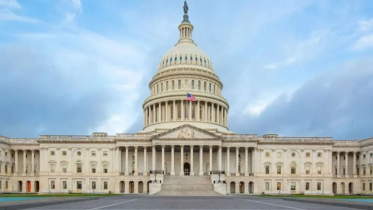
Polls had predicted that the Republican Party would lose control of both houses of Congress—the Senate and the House of Representatives. But Democrats did not expect such a large and sweeping victory.
With all votes counted, Democrats are projected to lead by about 13 percentage points in the popular vote. A Republican defeat would be the party's biggest defeat in a congressional election since the 1974 midterm elections, which came shortly after President Richard Nixon's Watergate scandal.
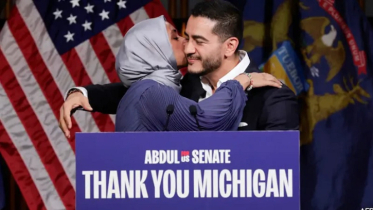
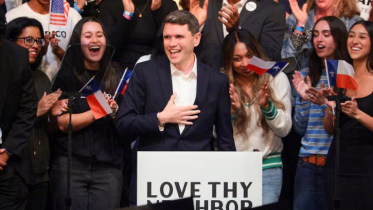
Some of the Democrats' successes are truly astonishing. The party won a Senate seat in Kansas after nearly 100 years. The last time a Democrat was elected to the Senate from the state was in 1932, when Franklin Roosevelt was president. In Michigan, Democrat Abdul al-Sayed became the first Muslim U.S. senator. And another candidate from the party, Keisha Lance Bottoms, became the country's first black female governor.
The election results were a humiliating disaster for Trump and a clear message of rejection of Trumpism. During the campaign, he repeatedly urged voters to consider himself the candidate on the ballot, turning the election into a referendum on himself. Voters effectively did just that.
Republican candidates tried to distance themselves from Trump, but it didn't work. Even veteran Republican Senator Susan Collins of Maine was not spared. Democrats have tried to defeat her for 30 years without success. This time, however, the party's candidate, Troy Jackson, defeated her. Jackson is a former state legislator. He was nominated a few months ago after the Democratic candidate withdrew from the race due to a scandal. Despite all this, he won. However, instead of repenting, Trump claimed that the Republicans lost because his name was not on the ballot.
Change of power in Texas
One of Trump's most humiliating defeats came in Texas, a Republican stronghold, where Democrats won both the Senate seat and the governorship after nearly four decades.
Trump pushed the scandal-plagued state's Attorney General, Ken Paxton, as his candidate for the Senate seat, ignoring objections from local Republican leaders. Paxton ultimately lost, as did incumbent Governor Greg Abbott. Abbott, a three-term Republican governor, was defeated by Hispanic candidate Gina Hinojosa.
Texas, which has the largest Indian-origin population in the United States after California, was unpopular with the state. Earlier this year, he suspended new H-1B visa applications, which directly affected Indians. As a result, Indian voters are believed to have played a partial role in the Republican defeat in Texas.
Candidates who tried to emulate Trump's political style also lost. Among them was Ohio gubernatorial candidate Vivek Ramaswamy. With Trump's endorsement, Ramaswamy ran an offensive ad featuring the estranged mother of his rival, Amy Acton. In the ad, Acton's mother accused her daughter of lying about her upbringing and urged voters not to vote for her.
But the ad has drawn widespread criticism across the country. Acton's mother lost custody of her children decades ago after her stepfather was accused of raping her when she was a child. The revelations have thrown Ramaswamy's political future into doubt. He had previously run for the Republican presidential nomination, but later dropped out of the race to endorse Trump.
Trump in the politics of division
Trump was able to increase support beyond the Republican vote in the 2024 presidential election. A portion of Hispanic, black, and Indian voters leaned toward him. About 30 percent of Indian-Americans supported him. However, the latest election results show that a large portion of these populations have now left the Republicans and turned to the Democrats. The same trend has been seen among traditional Republican voters.
According to a New York Times analysis, about 30 percent of Hispanic and 17 percent of Asian voters supported the Democrats this time. Indians are the second largest group of Asian-Americans after the Chinese. Trump's immigration and visa policies, the growing hostility of his MAGA supporters, and the tariffs imposed on India have frustrated many Indian-Americans. As a result, they have turned to the Democrats, the party they have traditionally supported.
No president in modern history has divided the United States as much as Trump has. The country's society already had racial, cultural, social, and economic disparities. But Trump has exacerbated and exploited these divisions for his own political gain.
He has tarnished the prestige of the presidency by using vulgar language against critics, even journalists. Such behavior has never been seen from any US president before. While ordinary people have been pressured by Trump's tariff policies and inflation caused by the Iran war, his family members and close friends have become owners of vast wealth. Despite allegations of corruption against him, he has not paid attention to the criticism. He has also continued to accept expensive gifts from foreigners. Voters angry at these incidents allege that Republican leaders have caved in to Trump and failed to protest his actions.
Impact of the Iran War
Foreign policy is not usually a major issue in US elections. However, because of Trump, the Iran war has become a major election issue. Vice President JD Vance admitted that the Iran war is what caused Republicans to lose the election. Although he opposed the war from the beginning, he publicly supported Trump's position.
The war was also deeply unpopular with some of Trump's supporters. The conflict is estimated to have cost $47 billion so far. The economic impact of the war was more direct for ordinary voters. The cost of living increased as gasoline and diesel prices rose. Diesel prices rose by 60 percent, hitting Republican voters in rural areas hardest. Republicans could have lost the election anyway, but the war is believed to have compounded their defeat.
The Iran war has also dented Israel's popularity in a country where the Jewish lobby has traditionally been strong. The victory of Democrat Abdul El-Sayed in Michigan is also seen as a major blow to that influence. El-Sayed, a fierce critic of Israel, won the party's primary and then Tuesday's main election. The pro-Israel lobby group, the American Israel Public Affairs Committee (AIPAC), reportedly spent $32 million on a campaign against him.
Voters are also believed to have rejected Trump's campaign against el-Sayed, calling him a jihadist and a sympathizer of terrorism.
Will the election results change Trump?
With the Democrats taking control of both houses of the US Congress, the path ahead will not be easy for Trump. So far, he has made many decisions through executive orders. But now it will not be as easy as before. The Congress, which is under the control of the opposition party, could block funding for the Iran war or take back the power to impose tariffs from the president.
Trump can veto these initiatives. However, Democrats need a two-thirds majority to override his veto, which they do not have. As a result, there is a risk of conflict between the two parties. Trump has been able to act almost unhindered so far because Republicans control Congress. Democrats have promised to investigate allegations of misconduct against the Trump administration. Allegations of corruption against his family members and close friends may also come under investigation.
But the situation is different in foreign policy. Even a president in his final years of office has considerable power in this area. Trump has used his authoritarian style to impose his will on the world by using the power of the United States. Since returning to the White House, this has distanced the country from its allies. This situation is unlikely to change.
Rather, Trump may express his anger over his election defeat by increasing military intervention abroad. He does not like to see himself as a loser; therefore, he will try to achieve some victory. He is the commander-in-chief of the most powerful military in the world, with a military budget of almost a trillion dollars. That is why he is considered more dangerous.
Trump may also take the initiative to attack Cuba with the aim of regime change. Marco Rubio has made no secret of his desire for regime change in the country.
But the United States and the world should be more concerned about Trump's next steps with Iran than Cuba. Both Israel and the United States are planning new attacks on Iran. Benjamin Netanyahu may need another military operation to remain prime minister after last week's election defeat.
In recent weeks, the US has increased its military equipment and capabilities in the Gulf region. US troops have also been evacuated from several bases in the Gulf region due to fears of a possible Iranian counterattack. Iran has already warned that its response will be more severe this time.
Many countries around the world, including the oil-dependent Gulf states, are worried about the possibility of a new conflict. Such a situation would not be good news for JD Vance, who still hopes to succeed Trump in the White House. He has already called for an end to hostilities and has also called for a "change" in the US relationship with Israel. But Trump will now be more concerned with his political legacy, no matter how risky it may be.
Ukraine, Russia and India
Russia launched an attack on Ukraine when Joe Biden was the president of the United States. But Trump, who has blamed Biden for many of the United States' problems and even the war, has reduced US support for Ukraine. Everyone knows about his behavior with Ukrainian President Volodymyr Zelensky in the White House in 2025. Trump has publicly said that his relationship with Russian President Vladimir Putin is better than Zelensky's.
Trump has recently lifted some sanctions on Russia. He has also signed a diesel supply deal with Moscow. He could put more pressure on Ukraine to reach an agreement that would end the war and present it as a victory for him. In this case, an attempt could be made to force Kiev to accept the terms of giving up territory to Russia.
India has benefited from the lifting of some sanctions on Russia. However, Delhi should not expect a major change in US policy. While Trump has imposed tariffs on most countries in the world, it is unlikely that he will lift them in principle.
A trade deal between the US and India may be signed soon, as Trump will want to portray the deal as his own success. However, it is more likely that the strict immigration and visa policies that also affect Indians will remain in place, as these policies are popular with many US voters.
But Democrats will now push for a relaxation of ICE (Immigration and Customs Enforcement) policies, and party leaders have called for an investigation into the agency's harsh crackdowns and conditions in detention centers.
The biggest challenge facing the world is that the foreign policy of the president of the world's most powerful country is not being guided by the advice of experienced and prudent advisors. Rather, Trump's personal instincts are dominating his policymaking. Instead of experienced US diplomats, his son-in-law Jared Kushner and business friend Steve Witkoff have been included in foreign policy discussions.
On the other hand, Secretary of War Pete Hegseth, who is in charge of the Pentagon, is seen as a Trump loyalist rather than a military expert. All in all, Trump, who was politically wounded in the election, may now be more dangerous than before.
Source: NDTV