.png)
Nor’easter heading to East Coast this weekend: Latest forecast
Published: 10:46 PM, 23 September 2026
Rhode Island, Massachusetts and Maine will face the brunt of the storm.
Millions brace for nor’easterChief Meteorologist Ginger Zee tracks the powerful storm closing in on the Northeast and how long it will stick around.
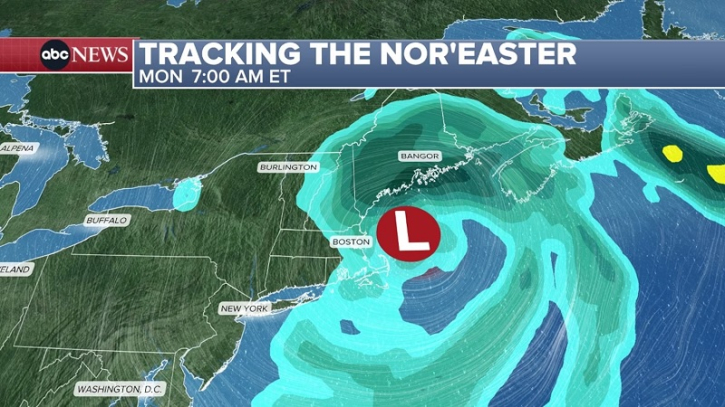
A system developing off the East Coast is forecast to strengthen into a nor'easter this weekend, bringing rain, wind, huge waves, coastal flooding and beach erosion from the Mid-Atlantic to New England.
The exact forecast is still subject to change, but the nor’easter will most likely focus on New England, where the rain will begin Friday and last through Monday. Rhode Island, Massachusetts and Maine will face the brunt of the storm, with widespread rain and winds gusting up to 50 mph throughout the weekend.
Eastern Massachusetts, Boston, Cape Cod and parts of Maine could see at least 5 inches of rain through Monday. The flood threat for Boston is low.
New York City will likely avoid the bulk of the wind and rain but could see about 1 inch of rain from passing breezy showers throughout the weekend.The other major threat from this nor'easter is large waves, which are already pounding the Mid-Atlantic coast.
Waves between 6 and 15 feet are forecast from North Carolina's Outer Banks through the New Jersey shore from Wednesday to at least Saturday. Wind gusts could reach up to 50 mph from North Carolina to New Jersey.
Coastal flood alerts are in place from Virginia to New Jersey, where the combination of large waves and an astronomically significant high tide can create water inundation 1-to-3 feet above ground level.
Nor'easter headed to East Coast: What to know about this type of storm
Dangerous rip currents are also expected from the Mid-Atlantic to New England through the weekend.
The nor'easter could spark flight disruptions this weekend, especially from New York City to Boston.
Nor'easters get their name because winds over the coastal area are typically from the northeast. These storms may occur at any time of year but are most frequent and most violent between September and April.
or'easters nearly always bring precipitation in the form of heavy rain or snow, as well as gale-force winds, rough seas, and coastal flooding.
.png "Advertisement")