.png)
Will High Oil Prices Fail to Save the Gulf States?
Published: 12:15 PM, 15 October 2026
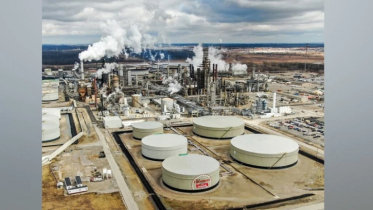
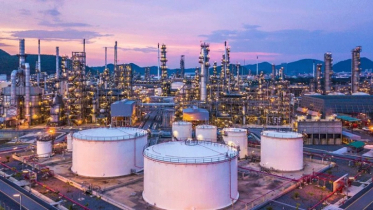
IThe International Monetary Fund (IMF) has forecast a significant economic contraction for Gulf nations this year, driven by prolonged disruptions to energy production and the transport of goods through the Strait of Hormuz. Although oil and gas prices have risen in the international market, the disruptions to production and exports have prevented these countries from capitalizing on the price surge.
The IMF’s October ‘World Economic Outlook’ report indicates that hydrocarbon-dependent economies will be the hardest hit by these disruptions to energy production and transport. Among them, the economies of Kuwait, Qatar, and Bahrain are projected to shrink by double-digit percentages.
This situation highlights a critical aspect of the regional crisis: even when global energy prices climb, the benefits are limited if producing nations are unable to maintain normal production levels or successfully deliver their products to buyers.
The impact extends beyond the energy sector. Business activities are being hampered by declining trade, rising costs, and heightened uncertainty. Simultaneously, efforts to diversify these Gulf economies are becoming increasingly challenging.
Smaller Gulf States Face Greater Risks
According to the IMF’s projections, Kuwait’s economy could contract by 16.7% in 2026. Qatar’s economy is forecast to shrink by 15.6%, and Bahrain’s by 11.3%.
The economies of Saudi Arabia and the United Arab Emirates are also expected to contract. However, due to differences in their economic structures and the specific nature of the disruptions to their export logistics, the rate of contraction may be lower.
The IMF projects that Saudi Arabia’s economy could contract by 3.3% this year—a stark reversal from the 1.7% growth forecast issued just last July. In the span of only three months, the outlook has deteriorated by five percentage points. However, the organization has projected a 7.9 percent growth for Saudi Arabia’s economy in 2027—an upward revision from its previous forecast of 5.5 percent. This suggests that if the situation improves, some of the economic activity lost this year could be recovered next year.
The United Arab Emirates (UAE) economy is projected to grow by 7.7 percent in 2027, following a 3.9 percent contraction in 2026.
Outside the six-member Gulf Cooperation Council (GCC), Iraq’s economy may also face a significant contraction, with forecasts indicating a decline of 16 percent. This highlights the profound impact of the ongoing crisis on regional energy-exporting nations.
It should be noted that these figures do not represent final annual outcomes but are instead projections of real annual economic output. The actual results will depend on the trajectory of the conflict and the time required for commercial activities to return to normal.
Why is the situation deteriorating?
The IMF’s latest projections indicate a notable deterioration in the economic outlook compared to last spring.
Last April, the organization had forecast a 2 percent growth for the combined economies of the GCC member states for 2026. At that time, it was projected that the economies of Qatar, Kuwait, and Bahrain would contract by 8.6 percent, 0.6 percent, and 0.5 percent, respectively.
Those earlier projections were based on the assumption that the conflict would be relatively short-lived, with commercial activities resuming and production returning to normal levels by the middle of the year.
However, as the disruptions have persisted, a key assumption underlying the previous forecast is no longer valid. Consequently, these nations are facing prolonged economic pressure due to reduced production and bottlenecks in supply chains.
Geographical location also plays a significant role. In its regional review published in April, the IMF noted that the projected economic decline for Oman might be relatively limited, as the country’s access to the sea lies outside the Strait of Hormuz. This disparity demonstrates how, alongside factors like the size of financial reserves or global oil prices, the availability of alternative export routes can significantly influence economic outcomes.
Rising fuel prices fail to offset production shortfalls
On October 1, IMF Managing Director Kristalina Georgieva warned the finance ministers and central bank governors of the Gulf nations that their economies face the risk of contraction, driven by a sharp decline in hydrocarbon production and a slowdown in growth outside the energy sector.
She noted that the near-stoppage of maritime traffic through the Strait of Hormuz, disruptions in the Red Sea, and damage to energy infrastructure are placing immense pressure on export and production capacities.
Economic activity outside the energy sector is also being hindered by declining trade, weakened business confidence, and rising prices for essential commodities.
For energy producers, the volume of production and sales is just as critical as the price. While an increase in the price per barrel of oil can boost revenue from sales, a shortfall in actual output—or an inability to transport the product—cannot be compensated for by higher prices alone.
Real GDP measures economic output by adjusting for the effects of price changes. Consequently, a rise in the price of exported goods is insufficient to prevent an economic contraction, especially when actual production volumes are falling.
This is why a crisis in energy supply can simultaneously drive up import costs for other nations and dampen economic activity within the countries that supply these commodities.
.png "Advertisement")