.png)
Cargo Ship Sinks in Strait of Hormuz; iPhones Found Floating at Sea
Published: 12:09 PM, 15 October 2026
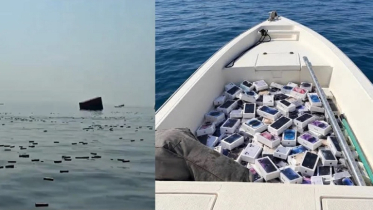
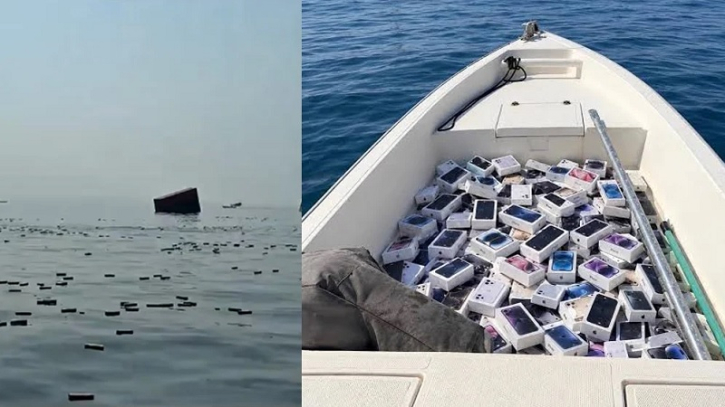
Following the sinking of a cargo ship in the Strait of Hormuz, boxes of iPhones and packages of expensive perfume were seen floating in the water. A video circulating on social media shows individuals in small boats collecting these items from the sea. There is a discrepancy between the account provided by Iran and the statements from maritime authorities regarding how the vessel sank.
According to a report by the Indian news outlet India Today TV, the Singapore-flagged container ship 'GFS Pride' was transporting cargo from Dubai. The vessel caught fire after being attacked last Wednesday and subsequently sank in the Strait of Hormuz. However, the news outlet could not independently verify the authenticity of the video circulating on social media.
The Maritime and Port Authority of Singapore stated that all 21 crew members were safely evacuated, and no injuries were reported.
A report by the British newspaper The Sun indicates that the ship was carrying approximately 2,500 containers, which held various goods, including iPhones and high-end perfumes. Following the sinking, some of the cargo drifted into the sea, where people in small boats were seen retrieving the items.
Conflicting Accounts Regarding the Cause of the Sinking
Iran’s Islamic Revolutionary Guard Corps (IRGC) claims that the ship sank after striking a naval mine while traversing the Strait of Hormuz via an unauthorized route. Conversely, maritime authorities suggest that the vessel was struck by an unidentified missile or projectile. Consequently, the exact cause of the sinking remains unconfirmed.
This incident occurs amidst heightened tensions between Iran and the United States concerning the Strait of Hormuz. The United States is a key security partner for the United Arab Emirates.
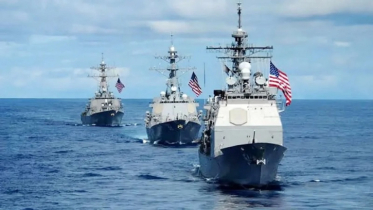
Previously, on October 6, U.S. forces carried out an operation against a small vessel linked to Iran in the Gulf of Oman. According to the U.S. Central Command, the vessel was monitoring U.S. Navy ships and attempting to target them. The crew was evacuated before the vessel was destroyed. U.S. authorities reported that there were no casualties.
Meanwhile, an Antigua and Barbuda-flagged bulk carrier named 'Cape Daw' has also sunk near the Strait of Hormuz. According to a Reuters report, the ship went down weeks after being damaged by a missile strike on September 23. One crew member was killed in that attack, while the rest were safely evacuated.
At least five attacks on commercial vessels in 48 hours
Attacks on commercial vessels in and around the Strait of Hormuz are on the rise. The United Kingdom Maritime Trade Operations (UKMTO) has recorded at least five attacks on commercial ships—including tankers—within the last 48 hours in this waterway, which is critical for the global supply of oil and liquefied natural gas (LNG). These incidents include drone attacks.
The intensity of attacks on commercial vessels in the region has also escalated over the past 10 days. Iran claims that it is intensifying these attacks in response to U.S. port blockades and the stringent sanctions imposed last month.
Growing concerns over global energy supplies
International concern regarding the security of the Strait of Hormuz is mounting. Prior to the outbreak of conflict, approximately one-fifth of the world's total oil and liquefied natural gas supply passed through this waterway. Since the attacks by the United States and Israel on February 28, Iran has sought to tighten its control over the Strait of Hormuz, restricting vessel traffic as a means to exert pressure on Washington.
Two senior Iranian officials told Reuters that Tehran is employing new tactics against ships transiting the Strait of Hormuz. They indicated that these measures are aimed, in part, at keeping oil prices high and influencing the upcoming U.S. midterm elections on November 3.
.png "Advertisement")