.png)
Oil reserves are running out, the global economy is under pressure
Published: 04:09 AM, 13 October 2026
The International Monetary Fund (IMF) has warned that the global economy could reach its limits if a new crisis hits, as oil reserves dwindle and government debt and budget deficits rise.
The agency's latest World Economic Outlook report said the global economy has weathered the impact of the Middle East conflict better than feared over the past six months, but the emergency buffers and policy space used to deal with the situation have now been significantly reduced.
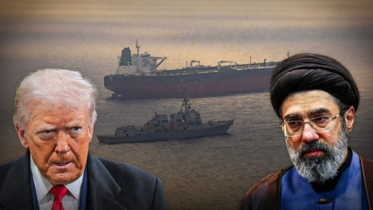
According to the IMF, the impact of the US-Iran war on global markets has been somewhat contained by the provision of alternative oil supplies and the release of oil from strategic reserves, but it could be difficult to manage if geopolitical tensions flare up again in the future.
The report says that without increasing energy supply capacity and rebuilding the necessary financial and policy preparedness to deal with future crises, the global economy could soon be forced to test the limits of its resilience. As energy markets become depleted, any new conflict or supply disruption could quickly spread through price increases.
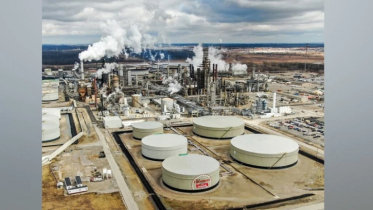
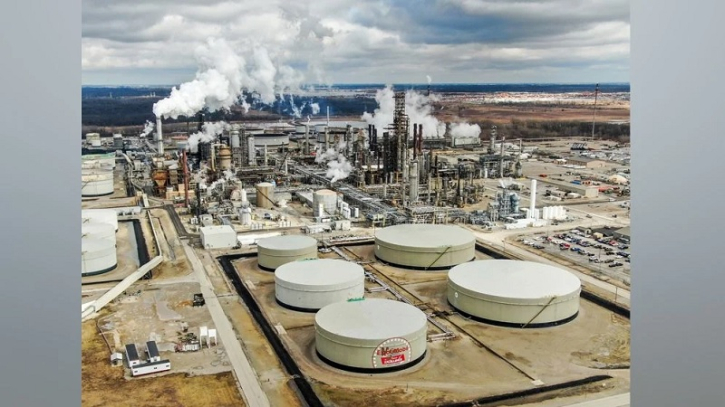
In March, the International Energy Agency (IEA) announced the largest release of emergency oil reserves in history to boost global oil supplies, and a meeting of energy ministers last month promised to accelerate the process.
However, concerns are growing about the weakness of the emergency stockpile system. Recently, it was reported that the US Strategic Petroleum Reserve has fallen to its lowest level since 1982.
Meanwhile, in an effort to lower fuel prices, US President Donald Trump and Russian President Vladimir Putin reached an agreement last week that temporarily eased a ban on Russian diesel imports into the US. However, analysts say the move is unlikely to significantly change diesel prices at the US pump.
IMF raises global growth forecast
The IMF's World Economic Outlook was released on Tuesday in Bangkok, Thailand, where the IMF and World Bank are holding their annual meetings this week, bringing together finance ministers and central bank officials from various countries.
The report slightly raised its global economic growth forecast for this year to 3.1 percent, up from 3 percent in July. However, the growth forecast for 2027 has been left unchanged at 3.4 percent.
The IMF has forecast US economic growth of 2.3 percent this year. Growth is also forecast at 2.3 percent for 2027, up from the previous forecast of 2.2 percent.
For the UK, the growth forecast for this year has also been raised to 1.3 percent. This is 0.3 percentage points higher than the July forecast. However, the agency said that the country's growth could slow to 1.2 percent next year. Earlier, the growth forecast for 2027 was 1.3 percent.
IMF economic adviser Silvana Tenreiro said in a report to the bank that the global economy is still showing resilience, but that resilience is becoming increasingly limited. According to her, policymakers must not only deal with the current crisis; they must also strengthen the economic foundation for the future.
IMF Managing Director Kristalina Georgieva has emphasized spending control as government debt continues to rise around the world.
He warned governments that they should no longer delay taking the necessary policy action. The means and tools to deal with the crisis are in their hands, and now is the time to use them wisely.
The IMF fears that governments may not have enough money to protect ordinary consumers if energy or food prices rise again, as debt and budget deficits in many countries increase.
.png "Advertisement")