.png)
Iraq’s economy under US ’control’, trying to pressure Iran too
Published: 02:05 PM, 30 September 2026
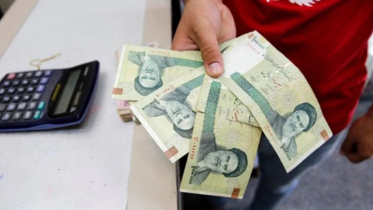
For more than two decades, Iraq's oil sales have been channeled through a regulated financial system, centered thousands of miles away in New York. The system was set up after the US-led Iraq war in 2003. The aim was to protect Iraq's oil revenues from creditors' claims and to finance post-war reconstruction.
But over time, this system has created a kind of dependency for Iraq. Because the bulk of the country's oil revenue comes in US dollars, that money reaches Iraq through the US Federal Reserve in New York. As a result, the US has significant influence over Iraq's access to its own currency.
The United States has been accused of using this financial system in recent times to increase pressure on Iran and Iran-affiliated armed groups.
The issue came up again in April when Washington blocked the transfer of nearly $500 million in cash to Iraq as it pressured the Iraqi government to crack down on armed groups close to Iran. The money was later allowed to flow through.
Muayan al-Kadhimi, a member of the parliament's finance committee at the time, criticized the decision, citing US control over Iraqi funds as a threat to the country's financial and political sovereignty.
Why doesn't Iraq move money to other countries?
Iraq's oil is primarily priced in US dollars, and the country is also heavily dependent on the dollar for international trade and imports.
In addition, Iraq's foreign debt of about $40 billion is still outstanding. As a result, removing money from the current system risks exposing Iraq's assets to demands from various creditors.
According to Ahmed Saddam, associate professor of economics at the University of Basra, there are several advantages to keeping Iraq's central bank accounts in New York.
He said one of its benefits is to protect Iraq's oil revenues from creditors of the former government. In addition, the account simplifies the payment of oil sales and international trade, and reduces the cost of transferring money. The use of the dollar is also important here, as it is the most widely used currency in international transactions.
However, according to Saddam, this system has made Iraq vulnerable to US pressure.
How easy is the way out of the dollar?
Iraq can sell oil in euros or Chinese yuan if it wants, if the oil sales contract does not include an obligation to transact in dollars. However, this will not completely end its dependence on the dollar.
Saddam said that since the price of oil is linked to the dollar in the international market, even if the payment is made in another currency, the final calculation will have to be made using the dollar exchange rate.
In addition, Iraq will need dollars for a large portion of its international trade. A rapid transfer to another currency could also create financial losses due to exchange rate fluctuations and the risk of political pressure from the United States.
He also said that multiple sovereign accounts could be opened outside the United States. In addition, a current account in New York could be maintained. He also mentioned opening accounts in the European Central Bank and various central banks in East Asia.
Financial pressure surrounding Iran
The importance of this financial system in Iraq has increased as US efforts to increase economic pressure on Iran and target Tehran-linked armed groups in Iraq have intensified.
Iran has close political, economic, and security ties with Iraq, and several powerful armed groups are active within the country.
The United States alleges that some Iraqi banks, currency exchange institutions and financial networks are using the country's financial system to transfer dollars to sanctioned individuals and entities.
As a result, where Iraq's oil revenues will be kept and how they will be used in international transactions is now not just an economic issue; it has also become an important part of Iraq-US relations.
Source: NDTV
.png "Advertisement")