.png)
Houthis’ rapid military campaign sparks renewed unrest in Yemen
Published: 01:56 PM, 30 September 2026
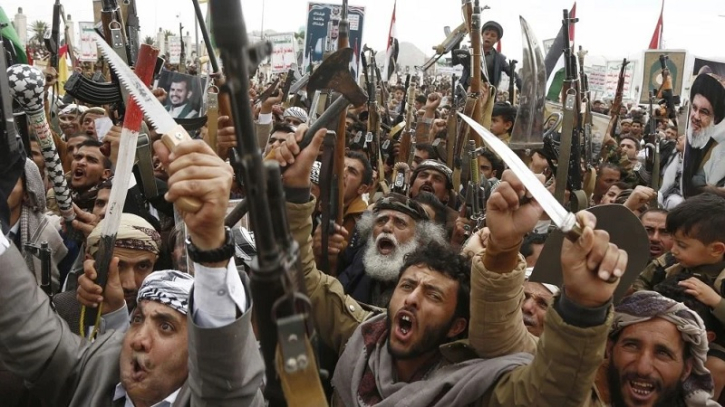
The Houthis' rapid military campaign in Yemen has complicated the country's long-running civil war, and has also had an impact on global oil markets. The Houthis have controlled large parts of northern Yemen for more than a decade, and have recently seized new territory from pro-government forces.
They also pose a threat to shipping in the vital Bab al-Mandeb Strait, which connects the Gulf of Aden to the Red Sea and the Suez Canal. Ships associated with Saudi Arabia are particularly at risk from Houthis.
In terms of military structure, the Houthis were once seen as a rather informal and isolated armed group. They have also been described in the international media as a 'ragtag fighting force' or unplanned armed force. However, the Houthis' military capabilities have grown significantly in the past two decades.
Now, just as they are using missiles and drones to attack inside Yemen, they have also launched attacks against the occupying powers, Israel, Saudi Arabia, and the United Arab Emirates.
It is not known exactly how many weapons the Houthis have, but some idea of their military capabilities is available.
Who are the Houthi group?
The official name of the Houthis is Ansar Allah. It means 'Helpers of Allah'. The organization was founded in 1994 by religious leader Hussein al-Houthi. The group, based on Zaidi Shia ideology, seeks greater autonomy for northern Yemen.
Led by Hussein's brother, Abdul-Malik al-Houthi, the Houthis fought several wars against the government of then-President Ali Abdullah Saleh in the 2000s.
Their slogans are: 'Allah is the greatest, death to America, death to Israel, curse on the Jews, victory of Islam.'
During the height of Yemen's civil war between 2014 and 2016, the Houthis seized control of a large part of the country's northwest, including the capital Sanaa. They were fought by pro-government forces, supported by an international coalition led by Saudi Arabia.
The Houthis have attacked more than a hundred commercial ships in the Red Sea and Gulf of Aden since 2023, primarily targeting ships affiliated with the Israeli occupation. The Houthis say the attacks were carried out as part of an effort to pressure Israel after the war in Gaza began. Ships affiliated with Saudi Arabia have also been targeted.
The Houthis are not directly under Iranian control, but Iran has tried to develop them as a regional partner since at least the late 2000s.
Qassem Soleimani, the former head of Iran's Quds Force, is believed to have overseen much of this assistance. He was killed in a US strike in January 2020.
According to UN experts, the Houthis also have contacts with other Iranian-backed organizations, including Hezbollah. There have also been reports of Houthi leaders meeting with Hezbollah members in Iraq and Syria.
There is no evidence that the Houthis possess long- range
missiles, including intercontinental ballistic missiles, which limits their ability to strike outside the Middle East and Africa.
However, they have the capability to use medium-range missiles. With these missiles, they have attacked various targets in northern Israel, including Ben Gurion Airport in Tel Aviv. It is about 2,000 kilometers from Sanaa.
Medium-range ballistic missiles are complex and expensive to produce. Analysts say it is unlikely that the Houthis in Yemen have the capability to produce such missiles themselves. Rather, they may have been supplied by Iran.
.png "Advertisement")