.png)
Why Bangladesh wants to postpone LDC transition for 3 years
Published: 12:21 AM, 22 February 2026
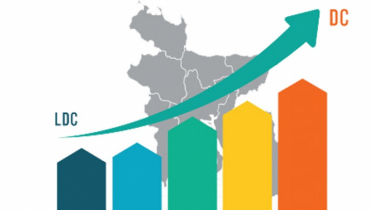
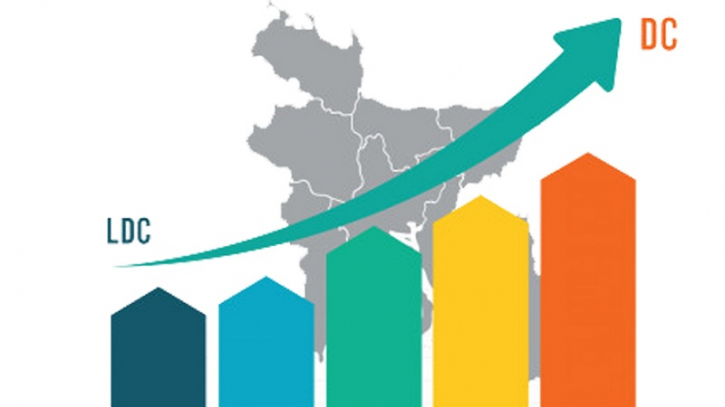
According to the regulations, Bangladesh is supposed to graduate from the LDC list on November 24 this year. But Bangladesh wants to graduate from LDC after another three years. A letter has also been sent to the United Nations on behalf of the new government with various arguments in this regard.
Tarique Rahman's new government has given several arguments in its letter to postpone LDC transition. It is said that extending the deadline will provide the necessary policy space to stabilize the macro economy, consolidate ongoing reforms, and complete priority activities under the Smooth Transition Strategy (STS).
On Wednesday, Economic Relations Division (ERD) Secretary Shahriar Quader Siddiqui sent the letter to José Antonio Ocampo, Chairman of the Committee for Development Policy (CDP) under the United Nations Economic and Social Council (ECOSOC).
The letter also mentioned the growing uncertainty about post-LDC trade benefits. These include potential complications for Bangladesh in obtaining the European Union's GSP Plus benefits in the ready-made garment sector, the imposition of countervailing duties by the United States, changes in bilateral trade agreements, and new free trade agreements with competing countries.
Meanwhile, there has been a downward trend in product exports in recent times. Bangladesh is highly dependent on the ready-made garment sector amid energy and infrastructure constraints. In this situation, the government has warned that losing trade benefits in a short period of time could weaken competitiveness and development momentum.
The letter sent by the ERD also said that although progress has been made in the modernization of the customs system, energy reform, export diversification, and development of industrial compliance infrastructure, they are lagging behind the scheduled time due to one crisis after another. In this regard, the government has requested to give importance to the results of the independent 'Graduation Readiness Assessment' conducted by the Office of the United Nations High Representative for the Least Developed Countries, Landlocked Developing Countries and Small Island Developing States.
The letter further states that the five-year preparation period for LDC transition has been ‘seriously disrupted’ by a series of domestic and international crises. The domestic crises include irregularities in the financial sector, political changes in the 2024 mass uprising, and the unresolved repatriation of Rohingyas to Myanmar. The global crises include the long-term impact of the Covid-19 pandemic, the slow global economic recovery, the Russia-Ukraine war and its impact on energy and food markets, tightening of the global financial system, delays in trade recovery, instability in the Middle East, and increasing uncertainty in the global trading system. These shocks have created macroeconomic instability. Such as reduced GDP growth, increased inflation, reduced private and public investment, and a decline in the tax-GDP ratio. For these reasons, the government said, it has not been possible to use the preparation period for LDC transition as planned.
The letter highlights various domestic and international challenges. It is said that the LDC transition preparation period needs to be extended until November 24, 2029. As per the previous decision, Bangladesh's LDC transition will be on November 24 this year. The third review process is also underway before the final transition.
Sources said that the recently departed interim government had recommended taking initiatives to extend the time till 2030 in coordination with countries that were in transition at the same time like Nepal and Laos. The final decision in this regard was left to the elected government. Based on that, a request for a three-year delay has been made.
.png "Advertisement")