.png)
AL government has taken 78 percent of the country’s total foreign debt since independence
Published: 03:32 PM, 14 May 2026
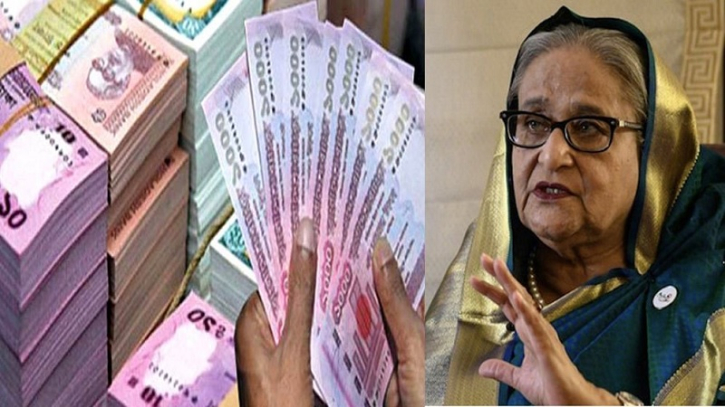
The Awami League government took 862 million dollars in new loans in the name of development projects in 15 and a half years. In addition to high interest rates, a large part of the loan was trapped in a trap of difficult conditions. The pressure to repay foreign loans will increase in the next fiscal year, and 4 billion dollars have already been repaid until March this year. The Awami League government has taken 78 percent of the country's total foreign debt since independence.
According to the Central Bank report, when the Awami League government came to power in early 2009, the dollar was worth 69 taka. However, when it left power in August 2024, the price increased to 120 taka. Even the dollar was sold at 132 taka in banks. The interest rate on foreign loans has also increased over the same period. In early 2009, the interest rate on foreign loans was 4 to 5 percent.
Even lower in some sectors. Now the interest rate on loans has increased to 7 to 9 percent. This rate was even higher during the global recession from 2022 to 24. According to the agreement, 75 percent of the total loan will have market-based interest and exchange rates. That is, when the loan is repaid, the interest rate and dollar price will have to be paid at the market rate. The dollar price has increased by 51 taka in the 15 and a half years of the Awami League government. This has reduced the value of the taka at the same rate. As a result of extending the loan term, in addition to regular additional interest, penalty interest or service charges have to be paid.
This has increased the amount of loan repayment, which has put pressure on the reserves. About 76 percent of the total loan is high-interest and difficult-term loans. Even while implementing these conditions, the government has had to increase pressure on consumers. All this combined has put pressure on the people due to the misuse of foreign loan money.
Due to reckless foreign loans taken during the Awami League government, the pressure to repay all those loans is now higher. There is a guarantee from the state or the central bank or a commercial bank against every loan in the government or private sector. As a result, many borrowers now have to repay those loans to the relevant bank, even if they have fled the country or are in jail. The loan is being repaid by buying dollars from the market at high prices by creating force loans in the name of private sector borrowers.
According to sources, the Awami League government has taken 78 percent of the country's total foreign debt since independence. The remaining 22 percent was taken during the tenure of other governments.
The interim government has repaid about $5.5 billion of the debt during the Awami League government since coming to power. Until March of the current fiscal year, $4 billion in debt has been repaid in the public sector alone. The largest amount of foreign debt will have to be repaid in the next fiscal year.
From then on, debt repayment will continue to decrease. The rule for repaying foreign debt in the public sector is that the government will provide money from revenue income or related organizations. The debt will be repaid with that money by buying dollars. Now, due to low revenue income in the economic recession, it is not possible to provide money from revenue income to repay foreign debt. As a result, the government has to borrow locally and use it to buy dollars to repay foreign debt.
The report shows that the amount of foreign debt per capita of the country's people has also increased during the period in question. During the last term of the Awami League government, the per capita foreign debt increased to $607. However, it was $169 at the beginning of 2009. Accordingly, the per capita foreign debt increased by $438 during the period under discussion. 70.51 percent of the total per capita foreign debt increased during the Awami League government. The remaining 29.49 percent increased during the period of other governments. In December 2025, the per capita foreign debt stood at $657.
Meanwhile, according to the information available from the Bangladesh Bank report, the country's total foreign debt at the beginning of the Awami League government, that is, 2009, was $22.79 billion. By the time it left power in June 2024, it had increased to $103.41 billion. During the period under discussion, the country's foreign debt increased by $86.2 billion.
The recently published report of the Central Bank shows that the country's foreign exchange reserves are under pressure to repay the foreign debt of the public sector. The war in the Middle East has further increased this pressure. Because the price of fuel oil and other products has increased due to the war, import costs have increased.
As a result, now there are no extra dollars after paying import costs, service sector expenses, and private sector debts with the foreign currency that comes from remittances, export earnings, foreign investments, foreign loans and grants. As a result, money has to be taken from the reserves to pay off public sector debts. This has increased pressure on the reserves. Whereas earlier, public sector debts were repaid with the surplus that remained after meeting those expenses from the dollars that came in daily.
Even during the last period of the Awami League government, foreign debt repayments used to be between $1.5 billion and $2 billion annually. Now, the repayments have increased so much that about $4.5 billion had to be repaid in the last fiscal year alone. The repayment amount will exceed $5 billion in the current fiscal year.
According to the report, due to the high increase in foreign debt and the country's reserves not increasing in that proportion, the ratio of reserves against debt is now very low. This ratio has now dropped to 23 percent. In 2020, it was 60 percent.
Those concerned said that if foreign loans were taken and spent on development, there would have been some benefit. But a part of the loan money was laundered abroad. As a result, nothing was done in the country with the foreign loan money. Rather, the country's liabilities have increased due to laundered money from the country. Generally, if foreign loans are spent on projects that generate foreign currency income, then the risk of repayment is low. But almost all the loans taken during the Awami League government were spent on local currency-based projects. As a result, those loans have created risks in the economy in two ways.
.png "Advertisement")