
.png)
Palau: The country whose flag is similar to Bangladesh!
Published: 07:15 PM, 4 May 2026
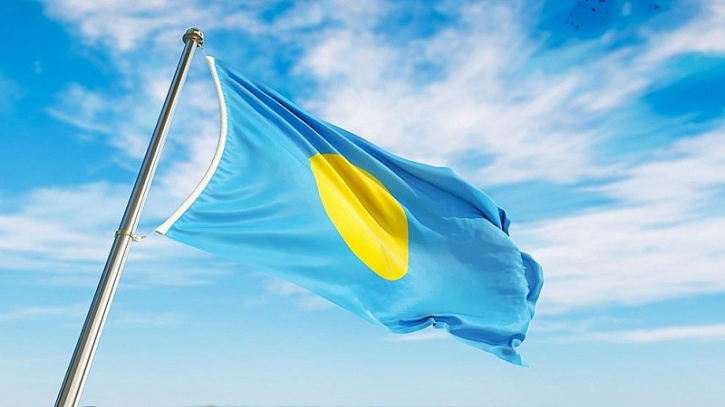
Palau is a small and beautiful country located in the western Pacific Ocean. Although the name of the country may seem unfamiliar to many, the eyes of any Bangladeshi are bound to be caught when they see its national flag. The flag of Palau is exactly like what it would look like if you replaced green with blue and red with yellow. But is this similarity just a coincidence, or is there another story behind it?
Bangladesh Sangbad Analysis
Same Design, Different Meaning
The design of the flag of Bangladesh was created in 1971, and Palau officially adopted their current flag on January 1, 1981. That is, Palau is much later than us in terms of design. However, despite the similarity in design, the meanings of the colors of the two flags are completely different.
How this design came about
In 1980, when Palau was moving towards autonomy, a national flag design competition was organized. Out of thousands of applications, the design of a person named John Blau Skebong was selected as the winner. Skebong wanted to create a flag that would stand out from other Pacific nations and reflect Palau's identity.
Blue Sea and Yellow Moon: The Glory of Colors
Each color of Palau's flag has a deep meaning:
Blue Background: This deep blue color represents the Pacific Ocean. This vast ocean is the main source of life, economy, and culture for Palau. It is also a symbol of peace and stability.
Yellow Circle (Moon, Not Sun): While the red circle on the Bangladesh flag symbolizes the rising sun, Palau's yellow circle is actually the full moon.
Why the moon, not the sun?
Palau's agriculture and lifestyle are regulated by the phases of the moon. Their ancestors believed that the full moon symbolized a new beginning. Everything from fishing to social and religious ceremonies were performed according to the lunar calendar. Skebong chose the moon instead of the sun to honor this tradition.
Comparison with the Japanese flag
Many believe that Palau imitated their flag (Hinomaru) during World War II, when it was occupied by Japan. However, designer Skebong directly rejected this idea. He explained that the red circle on the Japanese flag represents the sun, while Palau's yellow circle represents the moon—which have completely different meanings and philosophies.
A symbol of identity through uncertainty
After a long period of Spanish, German, Japanese, and American rule, Palau became a proud symbol of its independence in 1981 when it formed its own republic (Republic of Palau). When this blue-and-yellow flag flies on the global stage today, it carries the identity of a self-confident nation in the Pacific Ocean.
.png "Advertisement")