Protests Across Europe: What Do the Youth Want?
Published: 02:36 AM, 19 October 2026
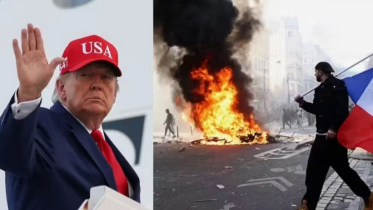
Young people have taken to the streets in France, Spain, Portugal, Italy, and Albania, with protests spreading across these nations. Demonstrators are voicing their grievances over various issues—ranging from the poor state of education systems and teacher shortages to rising housing costs, the high cost of living, corruption, and a lack of employment opportunities. In France, a movement initially led by students has evolved into broader anti-government protests. In some countries, what began as peaceful demonstrations has escalated into violence.
Anger in France Over the Education System and Rising Costs
In France, student protests began in late September, a week into the new academic year. Clashes have occurred between high school students and the police. Students are frustrated by long school hours, a shortage of teachers, dilapidated classrooms, and opaque university admission processes.
Due to unfilled teaching positions, many students have gone months without regular instruction. Others have since joined the movement, expressing anger over the rising cost of living—particularly the surge in fuel prices. Concerns regarding fuel supply and costs have intensified following the effective closure of the Strait of Hormuz in the wake of a U.S. bombing.
The General Confederation of Labour (CGT), one of France’s largest trade unions, has extended its support to the protests. The organization is demanding lower commodity prices, increased pensions, and higher wages.
French President Emmanuel Macron is currently in the final phase of his two-term presidency. The next presidential election in France is scheduled for April 2027.
Protests in Spain Against Rising Rents and Evictions
In Spain, activists took to the streets last September to protest against soaring housing prices and rents. The movement was sparked by the attempted eviction of 87-year-old Maricarmen Abascál from her home, after an investment fund raised her rent by 230 percent. He passed away two weeks after being admitted to the hospital.
Protesters have demanded a reduction in house rents, an end to evictions, and a ban on the purchase of residential properties by investment funds.
Spanish Prime Minister Pedro Sánchez, a socialist, sought to pass emergency housing legislation to protect tenants. However, the bill failed to pass due to opposition from right-wing and far-right parties in parliament. Following this, Sánchez called for a snap election on November 29, stating that he requires a broader progressive majority to implement his reforms.
Protests in Spain might subside if certain housing-related ordinances can be enacted through the parliament’s standing committee ahead of the election. Both Sánchez’s Socialist Party and the conservative People’s Party have pledged to prioritize the construction of more homes and address the housing crisis should they win the upcoming election.
Housing prices in Portugal have risen by 124 percent.
In Portugal—Spain’s neighbor—protests against the housing crisis also took place on Saturday, with hundreds of people gathering in the central area of the capital, Lisbon.
According to government data, housing prices in Portugal surged by 124 percent between 2015 and 2024—a rate nearly double the European Union (EU) average. With both property prices and rents becoming unaffordable for the average person, the housing crisis has emerged as one of the country’s most pressing concerns.
Protests in Italy over the cost of living.
In Milan, Italy, protests erupted over the rising cost of living. While the march began peacefully on Saturday, it later turned violent. Masked protesters threw objects—including stones and paving blocks—at riot police, and set fire to barricades constructed from tables taken from bars and restaurants.
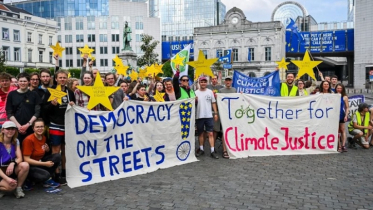
Saturday marked the first day of protests in Italy regarding the cost of living. Meanwhile, demonstrations also took place in Belgium, held in solidarity with the protest movement in France.
Allegations of corruption and a lack of employment opportunities in Albania.
In Albania, protests against Prime Minister Edi Rama entered their sixth day on Sunday. Protesters are expressing their grievances regarding corruption, a lack of employment opportunities, and the poor quality of education.
Last summer, protests erupted over a luxury housing project on the country's coast—a project reportedly backed by Jared Kushner, son-in-law of U.S. President Donald Trump.
What changes have the protests brought about?
In France, the government has announced the recruitment of 3,000 additional temporary teachers to address a shortage in the education sector. Plans have also been introduced to involve students in school management and decision-making processes. Furthermore, the government has scrapped a proposal—originally included in next year’s budget—to increase university registration fees. Following protests in mid-September over fuel prices, the French presidential office announced an increase in gasoline subsidies for specific industrial sectors.
However, these measures have not brought the protests to a complete end. French Interior Minister Laurent Nuñez has blamed far-left protesters and looters for the violence, signaling that the government is unwilling to offer further concessions.
The future trajectory of the protests in France will depend on how effectively the government addresses the demands of students and the general public.
In Spain, the pressure from protests might ease if certain housing-related proposals are passed through the parliament’s standing committee. Nevertheless, it remains unclear how quickly public frustration regarding rent, housing, and the cost of living will subside.
Overall, while the recent protests across Europe are rooted in the specific local issues of individual countries, they share several common themes—such as access to education for young people, employment opportunities, affordable housing, and the cost of living.