Which Salt Is Healthiest for Daily Cooking?
Published: 12:22 PM, 2 November 2026
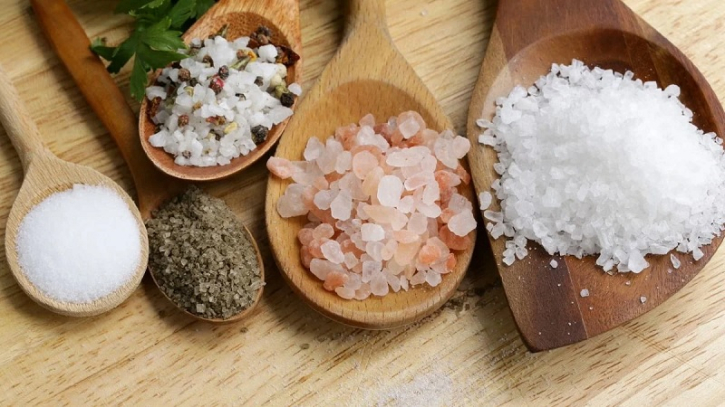
Salt is indispensable for enhancing the flavor of food. Beyond improving taste, it also plays a crucial role in meeting the body's iodine requirements. Today, the market offers various types of salt—including white salt, pink salt, black salt (bit laban), and sea salt—with many claims about their benefits circulating on social media. But which salt is truly the best for daily cooking?
Dr. Arjun Shankaran, a cancer surgeon based in Hyderabad, India, recently discussed the nutritional properties of different salts in an Instagram post. Let’s explore the characteristics of each:
White Salt
Many believe that white salt is whitened through various chemical processes; however, pure salt is naturally white. Most salt produced in India is harvested from seawater, then dried, refined, and fortified with iodine. Dr. Shankaran notes that iodized white salt is suitable for daily cooking.
Pink Salt, *Sendha Namak* (Rock Salt), and Black Salt
These salts are primarily derived from mineral deposits. While pink salt contains some additional minerals, their quantities are not significant enough to provide any meaningful health benefits. Similarly, black salt and *sendha namak* contain very little iodine.
These can be used occasionally for a change in flavor, but they are not ideal for regular, daily use.
Sea Salt
Sea salt is produced from seawater. However, it does not naturally contain iodine. It can be used only if the packaging explicitly states that it is "iodized" or "fortified with iodine." Iodized sea salt is suitable for daily cooking.
Low-Sodium Salt
Doctors typically recommend low-sodium salt for individuals with high blood pressure (hypertension). In this type of salt, potassium chloride is used to replace a portion of the regular sodium chloride. As a result, it is possible to reduce sodium intake while maintaining the flavor of the food.
How much salt should you consume daily?
According to Dr. Arjun Sankaran, whether or not the salt contains iodine is more important than its color. Iodine is essential for the proper functioning of the thyroid gland and plays a crucial role in the healthy brain development of children.
Therefore, he recommends using iodized salt in daily cooking. Furthermore, he advises limiting total daily salt intake—including salt from sources like pickles, papads, and chutneys—to no more than one tablespoon.
Source: NDTV