Confrontation Between Two Nations at the UN; Situation Managed by Khalilur Rahman
Published: 11:37 AM, 28 October 2026
During a debate at the United Nations General Assembly regarding the long-standing U.S. economic embargo against Cuba, representatives from the United States and Cuba engaged in a heated exchange.
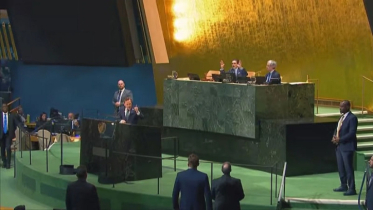
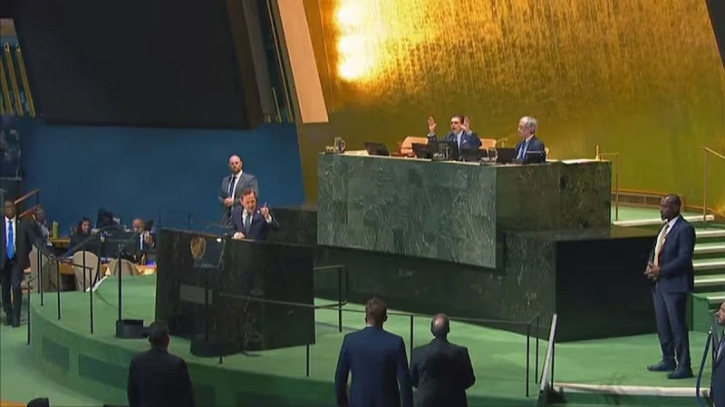
As the situation spiraled out of control, the President of the General Assembly—Bangladesh’s Foreign Minister Khalilur Rahman—temporarily suspended the session.
The incident occurred on Tuesday (October 27) during the annual General Assembly debate on the U.S. economic embargo against Cuba. According to a report by the American news outlet ABC News, tensions flared when the U.S. Ambassador to the UN, Mike Waltz, began his remarks by accusing Cuba’s socialist government of corruption and the misappropriation of wealth by those in power.
In protest against Waltz’s comments, Cuban Foreign Minister Bruno Rodríguez Parrilla and other members of the Cuban delegation began shouting. They banged on their tables to voice their objections. Khalilur Rahman repeatedly struck his gavel, calling for the delegation to calm down, but his efforts failed to restore order.
Waltz then remarked, "I hope, Mr. President, that everyone is now listening to the delegation’s remarks." He went on to criticize the political situation in Cuba, suggesting that one should consider the potential consequences for anyone who dared to raise such questions in Havana.
The exchange between Waltz and the Cuban Foreign Minister grew increasingly intense. Waltz declared, "This is America; this is the United Nations. This is not your communist dictatorship. You cannot silence me or my colleagues."
At one point, Rodríguez Parrilla moved toward the front of the assembly hall. Waltz demanded that he step away from the podium, shouting that no one could intimidate him in the United States, and emphasizing that he was a representative of the U.S.
Ultimately, to bring the situation under control, Khalilur Rahman temporarily suspended the session. Subsequently, after explaining the rules for conducting the session, the chair provided the Cuban Foreign Minister an opportunity to raise procedural objections—with the stipulation that the substance of Waltz’s remarks could not be addressed.
Returning to his seat, Rodriguez Parrilla voiced his protest against Waltz’s statements, dismissing the U.S. Ambassador’s allegations as "shameless lies."
Waltz then concluded his address without further significant interruption. He urged UN member states to vote against a resolution condemning the U.S. embargo on Cuba—a resolution scheduled for a vote on Wednesday.
Following the incident, Rodriguez Parrilla took to the social media platform X to criticize Waltz. He wrote that, blinded by arrogance and conceit, Waltz seemed to forget he was at the United Nations—not on the U.S. National Security Council, nor serving within a unit of the U.S. Army’s Special Forces (the "Green Berets") or any other operational group. The Cuban Foreign Minister further remarked that, in these contexts, Waltz had demonstrated his own incompetence and incapacity.
Waltz is a former member of the U.S. Army’s Special Forces, the Green Berets. He had previously been embroiled in controversy during his time serving as a national security advisor.
Last year, it emerged that a journalist had been mistakenly added to a messaging group intended for discussions regarding strikes against the Houthis in Yemen. That group included high-ranking national security officials, such as U.S. Secretary of Defense Pete Hegseth and Vice President JD Vance.
U.S. President Donald Trump nominated Waltz to serve as the U.S. Ambassador to the United Nations. At the same time, he announced that Marco Rubio would serve as National Security Advisor.
Each year, a resolution is introduced in the UN General Assembly condemning the decades-long U.S. economic embargo against Cuba. The recent debate once again brought the deep-seated conflict between the two nations to the fore, as they took opposing stances on Washington’s embargo policy.