China is desperate to build an alternative world order against the US
Published: 08:13 PM, 8 September 2026
As the existing US-led global order faces growing discord, China is expanding its sphere of influence by bringing Eurasian powers into the same diplomatic fold. Beijing aims to use bilateral diplomacy to build a multipolar system in which the US cannot single-handedly set the global agenda.
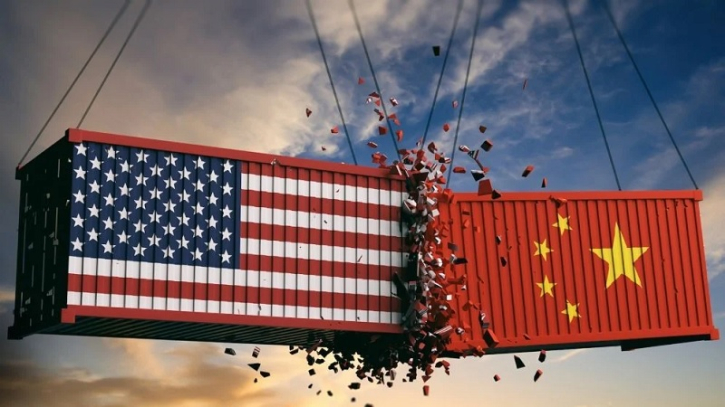
The recent Shanghai Cooperation Organization (SCO) summit and the G20 ministerial meeting witnessed a showdown between the two superpowers, with China's anti-US stance clearly evident.
According to The Week, the confrontation between China and the United States on the issue of global leadership became clear at the end of August, at the SCO summit in Bishkek, Kyrgyzstan, and the G-20 ministerial summit in Asheville, North Carolina, USA.
The two conferences seem to become two opposing platforms for the Sino-US rivalry, with the gathering of anti-Western powers led by China on one hand, and the US-led effort to maintain the existing global economic structure on the other.
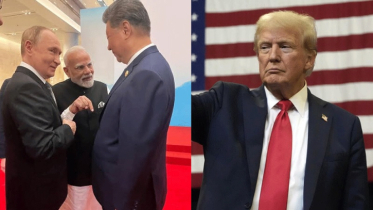
Chinese President Xi Jinping was seen engaging in close diplomatic engagements with the leaders of Russia and Iran at the SCO summit.
And Washington has been embroiled in an open dispute over China's economic policies at the G20 meeting. While the alliance's member countries supported the US position on trade imbalances and "non-market" policies, a unanimous joint statement was blocked by China's objections.
The two images from these two meetings seem to bring to the fore two opposing trends in the world order. The New York Times wrote that Russia is at the center of China's strategy. Moscow, which has been largely isolated from European markets due to Western sanctions after the Ukraine war, now sees Asia as its main alternative. As a result, China-Russia relations are gradually gaining a structure of economic dependence beyond strategic partnership.
In their meeting before the Bishkek summit, Xi Jinping and Putin reaffirmed their commitment to deepening ties. Discussions on the Power of Siberia-2 gas pipeline are a concrete example of that closeness.
As China's importance to Russia grows, Moscow is also an important strategic partner for Beijing. Russia's need for alternative markets and economic channels in the face of Western sanctions and China's long-term energy needs have brought the two countries' interests closer together.
A Reuters analysis says that a different reality is at work in the Iran-Russia-China equation. Under pressure from US sanctions and the US-Israel conflict, Iran is seeking to use the SCO as an important platform for political protection. At the same time, it is pushing forward nuclear energy cooperation and other economic projects with Russia.
In other words, for Iran, relations with China and Russia are not only ideological solidarity but also a practical strategy to survive outside sanctions.
In Bishkek, Putin also made clear Moscow's support for Iran. He praised the "courage and resilience" of the Iranian people and said Russia was trying to provide Tehran with the necessary support in difficult times. At the same summit, Putin described the SCO as "one of the independent and influential centers of the emerging multipolar world."
SCO is shaping up as an anti-US alliance
China wants to turn the SCO into one of the main platforms for creating an alternative political and diplomatic narrative to the US-led world order.
The Washington Post wrote that through a series of events, including the Tianjin conference, the Bishkek summit, and Beijing's Victory Day parade, Beijing is promoting the idea of a multipolar world order.
The presence of leaders from various countries, including Xi Jinping, Putin, Iranian President Masoud Pezizkian, Indian Prime Minister Narendra Modi, Turkish President Recep Tayyip Erdogan, and Pakistani Prime Minister Shahbaz Sharif, in Bishkek underscored the scope of the SCO.
China's message was clear—the center of world politics is no longer just Washington; powers in Asia and Eurasia can also play a role in determining the future of the international system.
Putin's speech also reinforced this message. According to the Russian president, "almost half of the world's population lives in the SCO member states—which indicates the global importance of the alliance."
China-US dispute in Asheville
Reuters writes that the China-US dispute was not hidden at the G20 finance ministers' meeting in Asheville. One of the main debates at the meeting was the global trade imbalance. The US wanted the G20 to take a stand against the "non-market" policies and excessive export dependence of countries with large trade surpluses.
Beijing objected to this. As a result, a unanimous joint statement could not be issued and a 'Chair's Statement' was issued under the chairmanship of the United States.
Beijing wanted the statement to avoid portraying China's state subsidies, overproduction and export-oriented economy as the cause of global imbalances. On the other hand, the United States and European countries complain that China's huge industrial production and cheap exports are putting pressure on their own industries and jobs.
The dispute was not limited to trade. Concerns were also raised about China's export controls on rare earths and other key minerals. Japan said such export restrictions were damaging to the global supply chain. As a result, the G20 economic forum has also become another stage for a larger geopolitical rivalry.
The influence of the anti-American Eurasian ring
The biggest impact of China's strategy could be the rapid multipolarization of the global order. While Washington seeks to maintain its influence through the G20, the Quad, and other existing structures, Beijing is expanding alternative networks through the SCO, BRICS, and bilateral diplomacy.
China's goal is to create a system in which Washington cannot single-handedly set the international agenda.
Its economic impact is also important. Russia and Iran are seeking alternative markets, financing, and energy cooperation outside of Western sanctions. An alternative economic ring in Eurasia could only be strengthened if China can add its vast market, industrial capacity, and financial power to this need.