Will the war in Ukraine engulf Europe?
Published: 12:30 PM, 24 November 2026
The Russia-Ukraine war is no longer confined to the territory of the two countries. Attacks, counterattacks, sabotage and military tensions are spreading across Europe. Despite more than six weeks of diplomatic efforts to end the war, the conflict is intensifying instead of bringing peace. There are fears that the situation may deteriorate further.
According to analyst Nick Patton Walsh, there are two major reasons why this war will become more dangerous in the coming months: first, the changing domestic political situation in the United States, and second, the growing fundamental differences in peace talks between Russia and Ukraine.
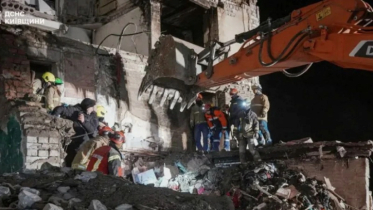
The events of the past week have illustrated the scale and intensity of the war. On Friday, Ukrainian President Volodymyr Zelensky described the Russian attack as the most intense this year. Russian forces carried out a nearly six-hour drone and missile attack. Earlier, in the past few weeks, attacks have targeted bridges in Kiev and electricity infrastructure in various parts of the country. These attacks have killed dozens of people. Power supplies have also been disrupted in various regions of Ukraine and in large areas of the capital.
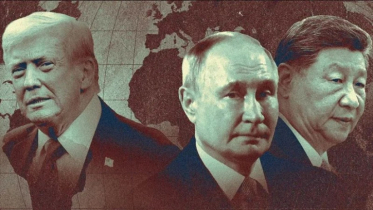
In response, Ukraine launched three attacks on the Kerch Bridge, which connects Russia with occupied Crimea, a key stronghold of Russian President Vladimir Putin. The attacks came before and after a trilateral meeting between Russia, China and the United States.
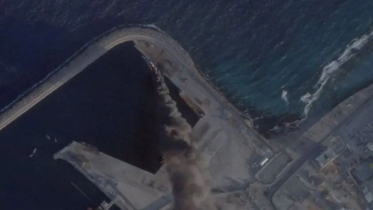
In addition, Ukrainian drones have targeted a Russian military ship near the Baltic Sea and Russian vessels near the port of Benghazi, Libya, sparking renewed debate about Ukraine's military capabilities and the scope of long-range strikes.
From the Baltic Sea to the Mediterranean Sea
Analysts are paying particular attention to the geographical scope of the Ukrainian attacks. Russia's Kaliningrad region is located between Poland and Lithuania. The region, cut off from the Russian mainland as a legacy of the Soviet era, has long been considered relatively safe. But the recent attacks are changing that perception.
Ukraine is being blamed for the attack on a Russian military ship, the Sparta-2, near Kaliningrad. It is believed that the attack was carried out by a drone launched from another ship or by a drone that crossed Russian territory and entered the Baltic Sea.
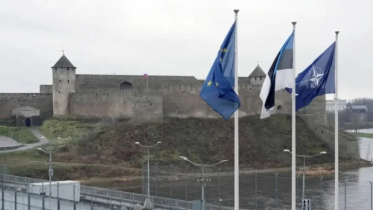
But Moscow has accused Lithuania of aiding Ukraine in the attack by allowing it to use its airspace. The accusation, which is a NATO member, has raised fears of renewed tensions between Russia and the Western military alliance.
According to the analyst, Russia has long been trying to establish the idea that the entire NATO alliance is behind the war in Ukraine. Such allegations could create a pretext for increasing Russian subversive activities in the Baltic region. At the same time, the risk of direct conflict with NATO is also increasing.
The Ukrainian attacks on Russian ships and cargo ships near the port of Benghazi on the Libyan coast are also embarrassing for Moscow. Russia has demonstrated its military influence and capabilities in Africa over the past decade. But now Russian ships stationed in various ports in the Mediterranean are also at risk of attack.
Even five years ago, it was difficult to imagine such a spread of the war. Initially confined to the territory of Ukraine, the conflict spread into Russia in 2024. Later, tensions also increased on NATO's eastern borders. Allegations of Russia-related sabotage also emerged in various countries of the military alliance.
New calculations surrounding the US midterm elections
Analyst Nick Patton Walsh sees the domestic political situation in the United States as the primary reason for the war's expansion.
According to him, the Kremlin has a limited time before control of the US Congress passes to pro-Ukrainian Democrats. If Democrats' influence in Congress increases after the US midterm elections, it could lead to tighter scrutiny of President Donald Trump's administration's policies on the Ukraine war.
This could expose various issues such as aid to Ukraine, military funding, and Washington's relationship with Russia to congressional scrutiny and review.
Analysts believe that the Trump administration's current soft stance toward Russia could be limited by political and institutional pressure. At the same time, political concerns may arise in Trump's inner circle about the possibility of Democrats returning to the White House in the future.
On the other hand, in negotiations with the United States, Russia has consistently tried to present the Ukraine war as a question of broader European security. Moscow's goal is to establish NATO's eastward expansion as one of the causes of the conflict and to start new discussions about the security architecture of Europe.
Is Putin not interested in a ceasefire?
Analysts have identified the growing distance between the two sides' positions as the second major obstacle to peace talks.
The trilateral meeting between Russia, China and the United States in Shenzhen, China, also failed to make significant progress. At the meeting, Russian President Vladimir Putin made it clear that Moscow was not interested in negotiating a ceasefire.
He also commented that if European countries want to join the talks, they will have to go to Moscow and present their positions. The Russian president said that he would then consider the matter.
According to the analyst, Putin is hardening his stance in the negotiations. Moscow's strategy seems to be to reduce the chances of a compromise and return the talks to their previous position.
The realities of the battlefield are also at work behind this. Capturing the rest of the Donbass region in eastern Ukraine is considered one of Putin's main military goals.
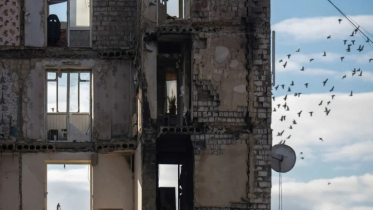
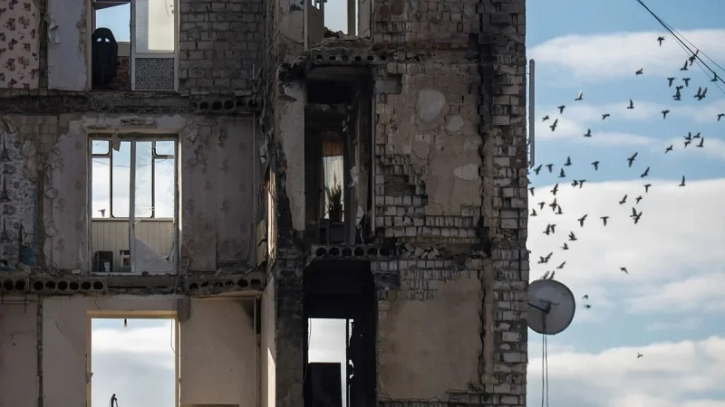
Ukrainian forces have held off Russian forces from taking over the town of Kostiantynivka for nearly two years. But Russian drones and airstrikes have left the nearby towns of Kramatorsk and Sloviansk in a state of disarray. Civilians are fleeing the area. Many roads and buildings have been reduced to rubble.
Putin claims that Ukraine's control over the remaining 10 percent of Donbass territory may also gradually weaken.
According to the analyst, Russia may want to reduce the remaining areas of Donbas to rubble through military operations and then seek a political settlement later. Then Moscow will have the opportunity to present control of the devastated territory as a victory.
According to his information, Russia's slow military advance is claimed to be killing or wounding at least 40,000 soldiers every month. The military successes achieved in exchange for such huge losses are also relatively limited.
Crisis of reality in peace talks
Analysts believe the long-term risk of a ceasefire failure is even greater. According to them, there is a huge gap in reality between the rhetoric of Russia and Ukraine, which is driving the two sides further apart in the talks, rather than bringing them closer together.
There are also differences in the US and Russia's stance on European participation. According to Jared Kushner, the US president's son-in-law, there may be a chance for Europe to participate in future multilateral peace talks. But the Kremlin is not acknowledging any such agreement at this time.
The two sides also have completely opposite positions on territory. Putin has claimed that Russia controls the city of Kostiantynivka. However, his statement about the city being under Ukrainian control is at odds with the reality on the battlefield. Similarly, on Thursday, Putin claimed that Ukraine had started the war. However, in February 2022, Russia launched a full-scale military operation in Ukraine.
The two sides also have opposing positions on NATO. Various reports have said that Russia may demand that NATO's military presence be moved further west. On the other hand, the possibility of Ukraine becoming a NATO member has also been discussed by the United States. As a result, the scope for compromise between these positions of the two sides is becoming limited.
According to the analyst, Moscow is using diplomatic talks as a tool to achieve military goals. Instead of creating an atmosphere of compromise at the negotiating table, Russia is trying to strengthen its own position. As a result, the initiative to stop the war through negotiations is becoming disconnected from reality.
Security risks are increasing for Europe
The past year of failed negotiations, the Trump administration's closeness to Putin, pressure on Ukraine, and European security concerns have all complicated Europe's largest military conflict since World War II.
Currently, Ukrainian drones are able to target various Russian military ships. On the other hand, Russian drones, missiles and military helicopters regularly enter or enter NATO airspace. NATO has not yet been directly involved in these incidents.
Analysts fear that the ongoing diplomatic process in the name of establishing peace has effectively become an effort to appease US President Donald Trump. In reality, there has been no significant progress in ending the war.
According to him, the spread of conflict across Europe, the stubborn stance of Russia and Ukraine, and failed diplomatic efforts are making the coming months even more uncertain. It is difficult to say at this time what the final outcome of the situation will be. However, a major setback in the military or political position of any side could further destabilize the security situation in Europe.