The US’s hypocrisy is over, the world system will be multipolar
Published: 12:01 PM, 23 November 2026
John J. Mearsheimer, a professor of political science at the University of Chicago, has witnessed the rise and fall of various international world systems for nearly eight decades. In a two-hour speech at the 'Margala Dialogue', he outlined the evolution of the unipolar world system to the evolving multipolar world and the return of great power politics. According to him, the US's pretense is over, and international politics is moving towards a multipolar world system. Geo News reported on his speech.
Explaining the outline of great power politics, the 78-year-old political scientist said that from 1992 to 2017, there was no great power politics in a unipolar world; because at that time the United States was the sole superpower. Describing that era of American dominance, he said, "We were like Godzilla, and we ran around the world and interfered in the politics of every country. That was the unipolar moment."
Professor Mearsheimer, who grew up in a bipolar world, recalls the era of the two superpowers between the United States and the Soviet Union, which ended with the collapse of the Soviet Union in December 1991. He likened the great powers to "gorillas" who "control the system and cause a lot of problems." The world should therefore pay attention to the competition between them.
US-China rivalry and Pakistan's position
The renowned realist theorist called the US-China rivalry the "major grand rivalry" for the rest of the 21st century. He said that for the first time, East Asia has become more important to the US than Europe, because China is now America's main threat. Referring to the concept of the "pivot to Asia", he said that its main purpose was to move US military bases to East Asia to corner China.
Highlighting how the US-China rivalry is affecting Pakistan, Professor Mearsheimer praised Islamabad's balanced relations with both countries. He said that Pakistan has very good relations with both China and the US. Pakistan has not yet been forced to choose a side, which is undoubtedly in Pakistan's interests.
From the perspective of a Pakistani strategist, he warned that both China and the United States are now engaged in intense security competition across Asia, so it is important to pay attention to what the future holds for Pakistan. Referring to China's development of a strong navy (blue-water navy), he said that like the Americans, the Chinese also want to acquire the ability to project significant military power.
The United States is under strategic pressure.
Mearsheimer noted that the US is currently stuck in the Persian Gulf and Ukraine, and is unable to focus on Asia. As a result, instead of a 'pivot to Asia' policy, it has become a situation of retreat from Asia. He said, "The US now does not want any crisis in East Asia or trouble with China because of its deep involvement in the Middle East and Ukraine."
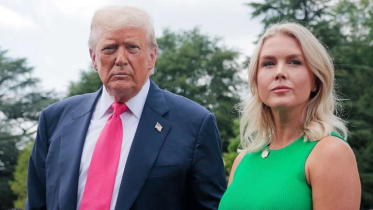
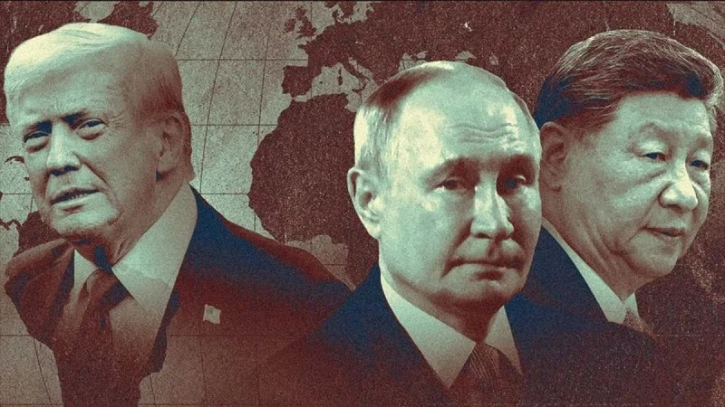
Noting that the US Navy is not as large as it used to be, he said that important fleets have been moved from East Asia to deploy extensively in the Persian Gulf. He believes that US President Donald Trump is being flexible towards Chinese President Xi Jinping because of strategic pressure. However, once the Iran and Ukraine wars are over, the US will once again focus on Asia and then Sino-US tensions will increase greatly—which will not be at all comforting for Pakistan.
Criticizing the United States' addiction to war, Professor Mearsheimer said, "The United States is addicted to war." Referring to the current Iran war as the second war (the first was last year's 12-day war) since President Trump took office, he said, "Despite the defeat in Afghanistan and the bloodshed in Iraq, we have been at war with Iran twice."
Calling the US war on Iran an "irrational decision," he said that Trump, at the instigation of Israeli Prime Minister Benjamin Netanyahu, has tried to change the Iranian regime by carrying out airstrikes alone. Citing historical examples, he said, "There is no precedent in history where regime change has been achieved solely through air power... This requires a ground operation." He believes that the US will lose this war and Iran will win. He also warned that Iran's retaliation would cause even greater damage to the international economy.
Massacre in Gaza and US involvement
Mearsheimer, who strongly criticized Israel's actions in Gaza, said that after October 7, 2023, Israel has used Gaza as an opportunity to ethnically cleanse it and that its military campaign has turned into genocide. He said, "This genocide was carried out as a way to expel the Palestinians and it failed. The Palestinians have not left Gaza. But the Israelis are still determined to expel them." He commented that efforts are also being made to expel Palestinians from the West Bank to Jordan and that another 'Nakba' (catastrophe) is being created by turning Gaza into a concentration camp. Stating that this genocide would not have been possible without US support, he said, "It is very important to understand that the US is an accomplice in this genocide."
Russia-Ukraine War and International Law
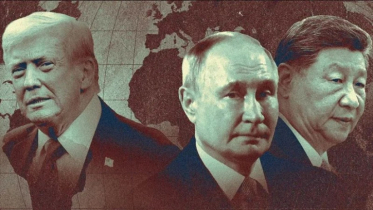
The political scientist believes that there are three major powers in the current multipolar world that began in 2017. According to him, “The United States is still the most powerful country; China is a close second; and Russia is the weakest of the three major powers.”
Regarding the Russia-Ukraine war, which is entering its fifth year, he said that Russia is struggling to occupy a small part of eastern Ukraine. Stating that the Russian army is not that efficient or dangerous, he ruled out the possibility of occupying all of Ukraine or Eastern Europe. However, by getting involved in the Ukraine war, the United States is effectively fighting against Russia, which he called "madness." Because it is causing Russia to lean towards China. According to the principle of balance of power, the United States should have kept Russia as its ally in confronting China.
Finally, describing international politics as a "disappointing issue," Professor Mearsheimer said that great powers create international institutions and laws for their own interests, but then disregard them when their interests conflict. According to him, international laws and rules are primarily more effective on weak states, not on strong ones.