The United States gave big good news to India
Published: 10:33 AM, 13 November 2026
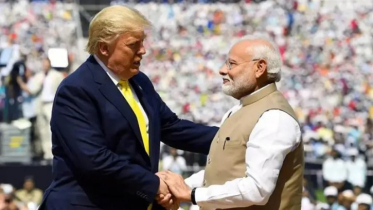
The United States has promised to give India preferential treatment over its competitors under the proposed trade deal, while also ensuring that the legal framework of the deal will not include additional tariffs after the deal is signed.
A senior Indian government official gave this information to the country's leading media outlet, the Indian Express , on Friday (November 13) .
The official said negotiators from both countries are continuing talks to finalize the trade agreement. The latest round of talks, held in the first week of November, resulted in agreement on several issues in the tariff and trade facilitation chapters.
He said, "US negotiators came to India for two days in the first week of November. The proposed trade agreement with the US has a chapter on tariffs and trade facilitation. Many of these issues have been resolved. The US has assured us of putting us in an advantageous position compared to our competitors. We will have to see how their tariff structure is finalized."
When asked about the possibility of imposing additional tariffs on India in the future, the official said that India also reserves the right to change the trade preferences it has granted if any tariffs are imposed in the future that go beyond the commitments made in the agreement.
He also said that India and the US are in the process of finalizing the first phase of negotiations for a bilateral trade agreement. However, this phase of the agreement will not include the services sector.
Uncertainty about tariffs
The US Trade Representative's Office is expected to release a second report on the country's final tariff structure when it releases its report on excess capacity in the industrial sector. Excess capacity is when a country or sector's production capacity exceeds market demand.
India is expecting a favourable outcome in the investigation. It has agreed with 14 countries, including Australia, Japan and the European Union, that structural overcapacity and production conditions in any country pose major challenges to other trading partners. These countries have also decided to take effective measures to address the challenges.
Earlier, in June this year, the US imposed a 10 percent tariff on India. This rate was lower than the 12.5 percent tariff proposed last March. The decision was taken after the ban on imports of goods produced through forced labor. Earlier, the US had launched the first phase of investigation into imports of such goods.
The Office of the Trade Representative is likely to release a report on its investigation into excess manufacturing capacity after the US midterm elections on November 3. This could resurface the tariff structure that US President Donald Trump's administration has been planning to create since early 2025.
The legal basis of several trade agreements was weakened after the US Supreme Court declared countervailing duties illegal earlier this year.
India's firm stance on agriculture and dairy sectors
Indian Commerce and Industry Minister Piyush Goyal announced on November 3 that India will not allow the import of genetically modified products or dairy products produced using veal.
The United States has been pushing for the export of genetically modified products under a trade deal with India. The country claims that India's restrictions on the import of certain dairy products act as non-tariff barriers. In a report on non-tariff barriers published in March 2025, the Office of the United States Trade Representative described the conditions for importing Indian dairy products as "onerous".
During an interaction with students at Kirori Mal College, Piyush Goyal said, "We are very sensitive about opening up the dairy sector. We have not opened this sector to any country so far. We are also careful not to allow any genetically modified product to enter India. We have not allowed it in the past and will not allow it in the future. The issue of religious sentiments is important to us. In foreign countries, calf meat or animal clotting factors are often used in making dairy products. We have not allowed it in the past and will not do so in the future. Strict certification must be ensured in this regard."
The report by the US Trade Representative's Office states that dairy products imported for use as food in India must come from animals that have not been fed with internal organs, blood powder or tissue from slaughtered animals or porcine sources. Exporting countries must also provide certification that this requirement is met.