Strike in Spain after 14 years, public life at a standstill
Published: 12:43 PM, 12 November 2026
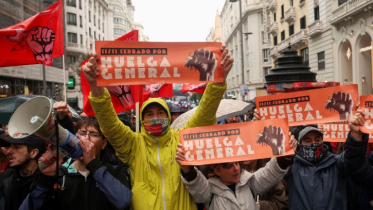
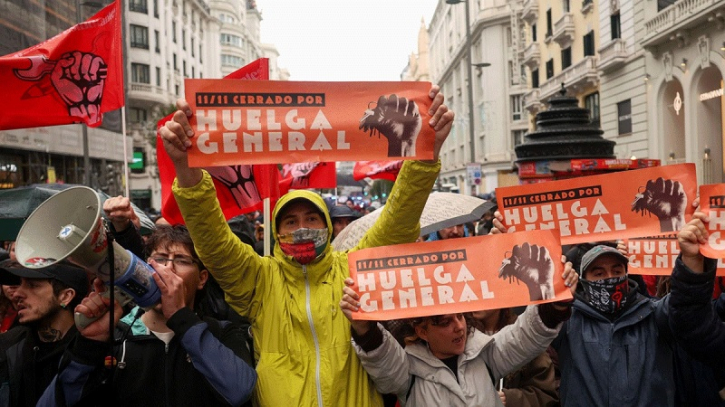
Spain's main labor unions have held their first general strike in 14 years to protest the housing crisis and rising living costs.
The strike on Wednesday (November 11) caused widespread disruption to various government and public service activities, including transportation, across the country.
Protests were also planned throughout Wednesday, with the largest demonstrations expected in the capital Madrid and Barcelona. The country is due to hold parliamentary elections on November 29.
Pepe Alvarez, head of the main labor union UGT, called the strike a success, saying a "massive" number of people had taken part. Unai Sordo, leader of another labor organization, CCOO, said the turnout was "very significant."
However, the Spanish Confederation of Business Organizations claimed that participation in the strike was "low and uneven", with participation rates varying by region and sector.
The worst disruption on Wednesday was in the main industrial areas of Madrid and northeastern Catalonia, with several major roads in these areas closed to traffic.
The country's interior ministry said dozens of people had been arrested in various incidents. Spanish media reported that several housing agency offices were also attacked.
The strike was called after widespread protests demanding affordable housing and protesting the rising cost of living. It began with the eviction of 87-year-old Maricarmen Abascal from a flat in Madrid where she had lived for seven decades. She died in hospital a few weeks after the eviction.
Rents in the capital Madrid have risen sharply in recent years. According to housing website Idealista, the average monthly rent for a 50-square-meter flat in Madrid was 1,170 euros in October. The average monthly gross salary in Spain is around 2,460 euros.
This means that almost half of the average salary is spent on rent, far exceeding the 30 percent threshold for affordable housing recommended by housing experts and government agencies.
Political debate before the election
Socialist Prime Minister Pedro Sanchez announced early elections last month after parliament failed to approve a housing reform plan.
There has been no general strike in Spain since the conservative government of Prime Minister Mariano Rajoy took office in 2012.
While previous strikes have caused problems for the ruling government, this time the situation is different. Prime Minister Sanchez and his ministers have instead encouraged workers to take a break from work and protest for affordable housing.
"Your eight-hour workday, pensions, public healthcare—all these are achievements of the collective movement," Sanchez wrote on social media, praising those who participated in previous strikes.
However, the conservative People's Party (PP) has accused the government of politically exploiting the strike to gain electoral advantage.
The party's leader, Alberto Nunez Feyho, called the strike "meaningless." He also called labor unions a "mafia" and "garbage."
The Feijó party is leading in opinion polls. Party spokesman Miguel Teado accused the government of using the strike to warn voters against the possibility of a right-wing government, which is seen as a strong possibility in the upcoming November 29 elections.
In response, Sanchez told Spanish television this week that "questioning workers' right to strike is rather pointless."
Protests were scheduled to take place in major Spanish cities later in the day, and turnout is seen as an important indicator of the level of public discontent ahead of the election.
Another important indicator of the participation of people in the strike is the demand for electricity in Spain's industrial sector. According to data from the country's electricity operator, Red Electrica, electricity consumption in Spain fell by 7.5 percent in the early hours of Wednesday.
During the last general strike 14 years ago, electricity consumption fell by more than 15 percent during the same period.
Source: BBC