Global AI-Related Stocks Plunge; China Hit Hardest
Published: 10:31 AM, 17 October 2026
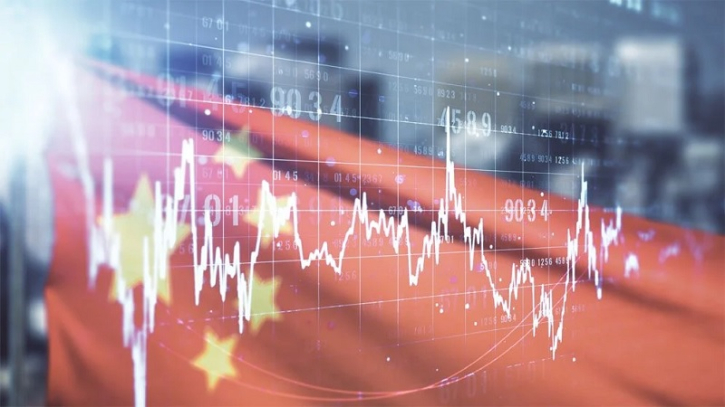
Growing concerns regarding the future of investments in the artificial intelligence (AI) sector have triggered a sell-off in technology stocks worldwide, with China’s stock market bearing the brunt of the impact.
The STAR50 index—a key benchmark for China’s technology sector—has shed nearly 40% of its value over the past six months, making it the worst-performing major technology index globally.
On Friday, the US Nasdaq index also fell by more than 2%. Investors are increasingly skeptical about whether the massive investments pouring into AI will eventually yield significant returns and profits. Consequently, many are shifting capital away from the technology sector and into stocks and bonds in other areas.
For China, the situation is particularly critical. The government views the stock market as a vital source of funding to bolster the nation’s technological capabilities and maintain a competitive edge in the global AI race. However, the decline in tech stocks is putting pressure on these strategic plans.
A 40% Drop in the STAR50 Index Over Six Months
Modeled after the US Nasdaq, China’s STAR50 index comprises shares of major companies within the country’s technology and innovation sectors. Between April and June of this year, the index surged by approximately 75%.
This rally was fueled by optimism surrounding the technological progress of Chinese firms and robust government support; at one point, the index even outperformed South Korea’s KOSPI index.
However, a rapid shift in investor sentiment has altered the landscape. Questions have emerged regarding the future demand for AI and the ability of these companies to generate profits commensurate with their investments—a shift that has weighed heavily on Chinese tech stocks.
When the STAR50 index reached its peak on June 30, it was trading at a valuation exceeding 80 times its projected future earnings. Even after the recent decline, the index remains valued at more than 40 times its projected future earnings. By comparison, the US Nasdaq 100 index trades at a multiple of 21 times, while South Korea’s KOSPI index trades at less than five times its projected future earnings. Along with the broader technology sector, shares of hardware companies have experienced a significant decline. During this period, China’s ChiNext index fell by 36 percent. The share prices of major chipmakers, such as MetaX Integrated Circuits (Shanghai) and Moore Threads Technology, have also plummeted—in some cases, losing nearly half their value.
**Increase in Foreign Capital Outflow**
The withdrawal of funds by foreign investors is a key factor behind the downturn in the Chinese stock market.
According to a report by Bloomberg Intelligence analysts Jason Liao and Marvin Chen, foreign investors poured substantial capital into China’s technology sector during the second quarter of this year. Subsequently, as selling pressure intensified for AI hardware stocks globally, the impact was felt most acutely in China’s domestic stock market.
Foreign investors gain access to China’s domestic stock market through a trading link with Hong Kong. In the third quarter, approximately 90 billion yuan ($13.5 billion USD) was withdrawn via this channel—the largest such outflow in a single year. This effectively wiped out more than half of the foreign investment that had entered the market between April and June.
The decline has also affected the shares of newly listed companies. The stock price of memory chipmaker CXMT Corporation, which went public in July, has fallen 27 percent from its post-listing peak. Meanwhile, shares of robotics firm Unitree Robotics (Yushu Technology) have dropped by nearly 50 percent since reaching their high in August.
**Chinese AI Companies Face Funding Challenges**
This year, Chinese companies have raised a total of $37 billion USD through initial public offerings (IPOs) on the domestic stock market. According to data compiled by Bloomberg, this marks the highest annual fundraising total in three years, with more than a third of this capital coming from the technology sector.
However, persistent weakness in the stock market could make it increasingly difficult for AI companies to secure new funding. Many Chinese technology companies prefer raising capital by selling shares rather than taking on debt. One reason for this is that issuing bonds in international markets is relatively more expensive.
Leonid Mironov, a portfolio manager at Gavekal Capital, notes that if technology stocks remain under pressure for an extended period, it will become difficult for China to realize its ambitions in the field of artificial intelligence (AI).
According to him, if this weakness persists for more than six months, it could create challenges for fundraising. Furthermore, it would signal that the stock market lacks the expected level of confidence in China’s technological advancement.
Mironov adds that the stock market serves as the primary source of funding for Chinese AI companies. Should the decline in share prices be prolonged, Beijing might need to accelerate financial sector reforms and bolster efforts—such as utilizing state-backed funds—to purchase shares and stabilize the market.
What are the prospects for a market recovery?
The situation could shift if the government intensifies efforts to revitalize the sluggish stock market. On Thursday, Chinese financial regulators held a meeting to discuss measures for market stabilization. During the meeting, the "National Team"—a group comprising state-backed investment funds—was urged to increase the pace of its share purchases.
Additionally, investor confidence could be restored if third-quarter financial reports deliver results that exceed expectations. However, even following the recent downturn, concerns persist regarding the high valuations of Chinese technology stocks.
Jian Shi Cortesi, a fund manager at GAM Investment Management...