
.png)
A ray of hope in cancer treatment: New injection can completely eradicate tumors
Published: 03:53 PM, 31 May 2026
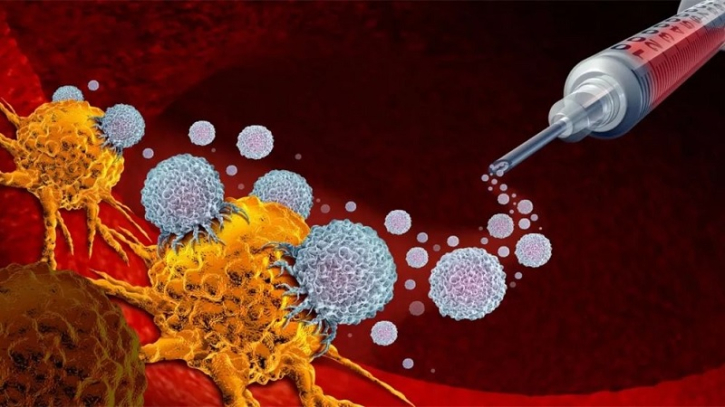
A new type of anti-cancer injection with three-way power has been shown to be able to completely eradicate tumors in patients' bodies in an international clinical trial. Doctors have called the results 'unprecedented'. It opens the door to new possibilities in cancer treatment.
According to The Guardian, this international trial (clinical trial) conducted in 11 countries was given to patients whose cancer had spread to other parts of the body or returned and had not shown any benefit from other conventional treatments.
The injection, called 'Amivantamab', was able to shrink tumors in more than a third of patients. In many cases, significant improvements were seen within a few weeks. In 15 of these patients, doctors saw that their tumors had completely disappeared.
Kevin Harrington, a professor of biological cancer medicine at the Institute of Cancer Research (ICR) in London, said: “This is an unprecedentedly strong response in patients whose cancer has become resistant to both chemotherapy and immunotherapy treatments.”
He said: “There are very limited treatment options for these patients. So this is really encouraging.”
Harrington, who is also a consultant oncologist at the Royal Marsden NHS Foundation Trust, added: “This treatment has the potential to benefit thousands of patients every year.”
The results will be presented at the annual meeting of the American Society of Clinical Oncology (ASCO), the world’s largest cancer conference, in Chicago on Sunday.
Promising results in head and neck cancer
The trial involved 102 patients with head and neck cancer, the sixth most common cancer in the world. In 43 of them, the tumors shrank or disappeared completely. In 28 of them, the tumors shrank significantly and in 15, the tumors were completely eliminated.
The researchers said that the injection showed similar positive results in patients with lung cancer.
Amivantumab, developed by Johnson & Johnson, is currently being evaluated in about 60 clinical trials. In addition to lung cancer, its effectiveness is being tested in colorectal, brain and stomach cancers.
How the injection works
This 'smart' injection works against cancer in three different ways.
First, it blocks a protein called EGFR (epidermal growth factor receptor), which accelerates tumor growth.
Second, it also blocks a pathway called MET, which cancer cells use to evade conventional treatments.
Third, it helps fight tumors by activating the immune system. Amivantumab is given as a small injection under the skin, rather than through a saline solution into a vein, like many other cancer treatments. This makes the treatment quick, easy, and convenient to administer on an outpatient basis.
Most of the side effects of the treatment, given once every three weeks, were mild or moderate. Fewer than one in 10 patients had to stop treatment.
A patient’s story of returning to normal life
One of the first patients to benefit from the treatment was 56-year-old Carl Walsh. He was diagnosed with cancer on his tongue in May 2024. Then, in July 2025, he joined the trial, called OrigAMI-4, at the Royal Marsden.
“I was initially given chemotherapy and immunotherapy, but unfortunately they were not successful. Then I was advised to take part in the OrigAMI-4 trial,” he said. I am now in my 17th cycle of treatment and I am very happy with the progress so far.
“I can now live an almost normal life,” says the Birmingham, England, resident. Before the trial started, I could not speak properly due to swelling and pain, and I had difficulty eating.
“After starting treatment, the swelling has reduced a lot and the pain has also reduced significantly. The life-threatening side effects that were experienced during chemotherapy are no longer there.”
Recalling his old days, he said that during the most difficult period of his illness, he had to eat soft foods such as soup, rice pudding, canned pasta and omelettes. Along with this, he had to drink nutritious milk drinks three times a day as prescribed by the doctor. This also helped him lose a lot of weight.
“However, after just two cycles of treatment, my eating habits started to normalize and within six months I was able to eat all kinds of food. The most joyful thing was eating my first big steak after a long time. My speech is now completely normal and I have no problem talking regularly at work using a headset,’ he said.
Positive progress even in difficult types of cancer
The researchers said that the trial focused on people with head and neck cancer, but did not include patients with human papillomavirus (HPV)-positive oropharyngeal squamous cell carcinoma.
They said this is particularly important because such cancers are usually more difficult to treat. So such progress is very significant for this group of patients.
Conventional treatments stop working
.png "Advertisement")