.png)
Who are the Houthis? Why are they attacking Saudi Arabia?
Published: 04:18 AM, 13 October 2026
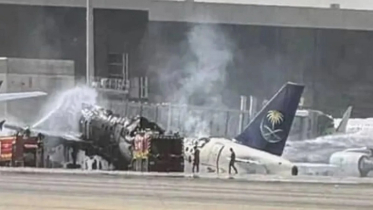
Yemen's Houthi rebels have claimed new ballistic missile attacks on King Khalid International Airport in the Saudi capital Riyadh, and a drone strike on the King Khalid air base in Khamis Mushait in the southwest of the country. However, there is no independent confirmation of the success of the Houthi claims.
Meanwhile, the Saudi-led military coalition said it intercepted and destroyed a Houthi ballistic missile fired towards Riyadh in the air, coalition spokesman Major General Turki al-Maliki said on social media.
Meanwhile, Saudi authorities have launched an investigation into the recent attacks, looking into why the country's air defenses failed to provide early warning of the attacks, a Saudi official told the Associated Press (AP) on condition of anonymity.
According to reports, missiles and drones launched from Yemen have traveled more than 1,000 kilometers to reach Riyadh. A series of recent attacks targeting Saudi airports have raised new questions about the weakness of the country's defenses.
The situation in the Middle East, which has been in conflict for more than seven months, has become more complicated, especially with the US and Israeli military operations surrounding Iran and the growing fear of a regional conflict spreading.
Who are these Houthis?
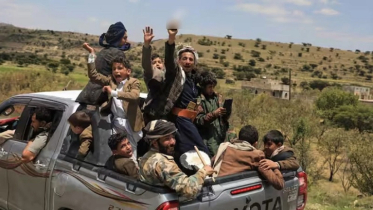
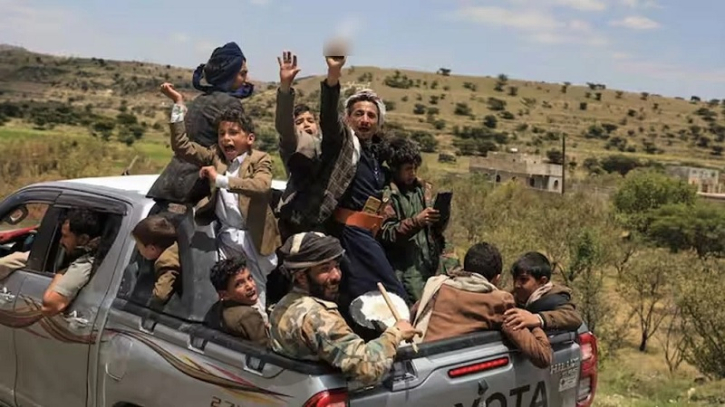
The Houthis are a military, political and religious movement in Yemen that controls large parts of the country's northwest. The group has also affected international trade and energy supplies by attacking cargo ships and oil tankers in the Red Sea.
The Houthis emerged in the 1990s as a revivalist movement of the Zaydi Shia sect in northern Yemen. The sect once ruled Yemen, but their historic homeland later fell into economic decline and political marginalization.
The Houthis initially engaged in several guerrilla battles with Yemeni government forces, and also had border clashes with neighboring Sunni-dominated Saudi Arabia.
The Houthis strengthened their position in northern Yemen after the 2011 uprising that ousted longtime Yemeni President Ali Abdullah Saleh. They also rejected the political transition process supported by Gulf countries.
At that time, with the support of Iran, the group's leader, Abdul Malik al-Houthi, transformed their fighters into a large armed force.In 2014, the Houthis captured Yemen's capital, Sanaa, forcing the internationally recognized government to retreat to Aden in the south.
The Houthis' own organization is called 'Ansar Allah', which means 'Helpers of Allah'. However, the group is known as the 'Houthi movement' after its founding leader, Hussein Badruddin al-Houthi.
Why the conflict with Saudi Arabia?
Concerned about Iran's growing influence in Yemen and instability in the border areas, Saudi Arabia launched a Saudi-led coalition military operation in early 2015 to oust the Houthis and restore the internationally recognized government and advance the political transition process.
But that campaign has only prolonged Yemen's civil war. Airstrikes by coalition members including Saudi Arabia and the United Arab Emirates and clashes between various parties have created a dire humanitarian crisis in the country.
Due to Yemen's rugged mountainous terrain, no side has been able to establish ultimate control. The Houthis retain control of the northwest, where most of the country's people live.
During this time, the group increased its capabilities in the use of missiles and drones. They also carried out attacks targeting oil installations and critical infrastructure in Saudi Arabia and the United Arab Emirates.
After a long conflict, a UN-brokered ceasefire between Yemen's warring parties was reached in 2022. However, tensions have risen again recently.
Attacks in the Red Sea, pressure on world trade
In November 2023, the Houthis began attacking ships in the Red Sea in protest of Israel's war on Gaza and expressing support for the Palestinians. At the same time, they also launched missile and drone attacks targeting Israel.
Houthi attacks have increased again in the wake of the US military campaign against Iran. Iran's blockade of the Strait of Hormuz has forced Saudi Arabia to rely more on its Red Sea ports and oil exports through the Bab al-Mandeb Strait.
This makes Saudi Arabia's energy infrastructure and maritime security even more important.
The report said that in September 2026, the Houthis captured the strategically important Perim Island and the port city of Mokha at the entrance to the Red Sea. The report stated that they took this step with the aim of increasing control over the Bab al-Mandeb Strait and assisting Iran.
The Red Sea and the waterways around the Bab al-Mandeb are crucial for international trade. If this route is disrupted, ships carrying goods between Europe and Asia will have to travel long distances around Africa. This increases transportation costs and time, and puts pressure on global energy supplies.
Saudi Arabia's importance in the global energy market
Saudi Arabia is one of the world's largest oil producers and exporters. The country's energy sector is one of the main pillars of the economy.
The report notes that Saudi Arabia accounts for about 11 percent of the world's total oil production. The country has an estimated 15 to 17 percent of the world's proven oil reserves. About half of Saudi Arabia's gross domestic product (GDP) and about 70 percent of its export earnings come from the oil and gas sector.
As a result, a major attack on the country's oil installations, ports, and transportation system could have an impact not only on the Saudi economy, but also on the international energy market.
How strong are the Houthis?
The Houthis control about a third of Yemen's territory, with reports indicating that about 70 percent of the country's population lives in areas under their control.
A 2019 report estimated the Houthis' armed forces at between 180,000 and 200,000. Their arsenal includes tanks, armored and other military vehicles, anti-tank missiles, and long-range ballistic missiles.
Their drones and missiles are capable of reaching targets far beyond Yemen. The group has demonstrated its ability to launch attacks as far as Israel. The targeting of airports and oil facilities in Saudi Arabia also demonstrates their military capabilities.
In addition, Yemen's geographical location creates an additional advantage for the Houthis. Their proximity to the Bab al-Mandeb Strait gives them the opportunity to exert pressure on important maritime trade routes.
How close are the Houthis' ties with Iran?
Iran supports the Houthis as part of a regional bloc in the Middle East known as the "Axis of Resistance," which also includes Lebanon's Hezbollah and several Shiite militias in Iraq.
However, Iran's relationship with the Houthis is not entirely the same as that with Hezbollah or those groups in Iraq. The Houthis do not recognize Iran's supreme leader as their ultimate religious authority. Yemen's internal interests also play a significant role in their political and military activities.
The United States alleges that Iran supports the Houthis with weapons, money and training, and that Hezbollah also plays a role in this. However, the Houthis dispute the description of themselves as an Iranian-controlled group, claiming that they produce their own weapons.
Why is it difficult to launch an operation against the Houthis?
There are several reasons why conducting a military campaign against the Houthis is difficult. First, Yemen's remote mountainous terrain and vast desert allow them to hide and change positions.
Secondly, they have various types of missiles and drones. They have shown the ability to use these weapons to attack distant targets. Although airstrikes were carried out targeting the Houthis' positions, they were not able to completely defeat them.
Third, the Houthis use a combination of drones and missiles of different speeds and types to confuse air defenses, making it difficult to detect attacks and intercept all weapons.
Their advanced weapons include the medium-range ballistic missile 'Palestine-2', which is a two-stage solid-fuel missile and is claimed to have hypersonic capabilities. In addition, the 'Tufan' missile is believed to be a modified name for Iran's 'Ghadar' missile.
An Al Jazeera report also said that the Houthis also have the 'Burkan' and 'Badr' series of short-range missiles, which are believed to have originated in Iran.
.png "Advertisement")