.png)
New US tariffs on goods from 60 countries, including Bangladesh
Published: 11:45 PM, 24 July 2026
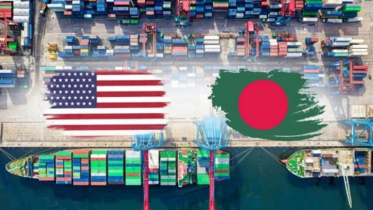
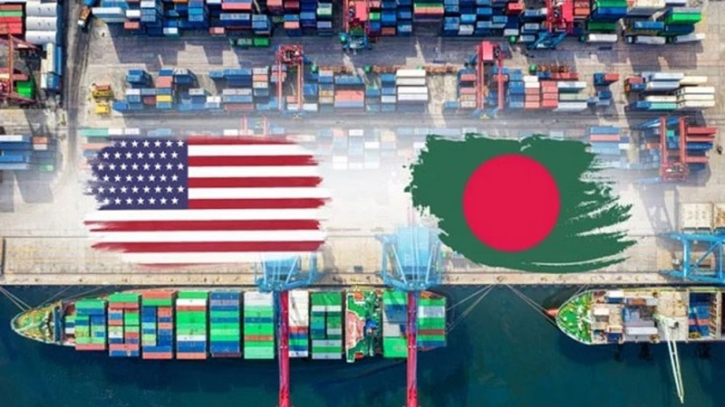
The United States is imposing new tariffs ranging from 10 to 12.5 percent on imports from about 60 major trading partners. The decision has been taken as part of President Donald Trump's restructuring of tariff policy. The decision has been taken at a time when the temporary 10 percent global tariff is expiring.
The notice published in the Federal Register on Thursday (July 22) said that the new tariffs will apply to about 99.4 percent of goods imported into the United States. However, oil and gas, fertilizers, certain food products and a few important sectors have been excluded from the tariff.
According to the administration, the legal basis for this action taken under Section 301 is stronger than the previous tariff. Because the section has survived court challenges in the past.
Following the Supreme Court ruling, the Trump administration imposed a temporary 10 percent tariff for 150 days, which will expire at 12:01 a.m. (EDT) on Friday. The new tariffs will take effect at the same time. However, goods in transit until 12:01 a.m. (EDT) on July 28 will not be subject to the new tariffs.
US Trade Representative Jamieson Greer said in a statement that the United States has been effectively enforcing restrictions on imports of goods produced using forced labor for nearly a century. Now is the time for trading partners to follow the same standards. In his words, this step will contribute to the welfare of workers while addressing human rights violations and distortive trade practices.
Greer also said that the new tariffs will not exceed the maximum limit of US tariffs for countries that have already set trade agreements with Washington. Because these agreements include anti-forced labor provisions.
According to the final decision, a 10 percent tariff will be imposed on goods from Argentina, Bangladesh, Britain, Cambodia, Canada, Ecuador, El Salvador, Guatemala, Honduras, India, Indonesia, Jordan, Malaysia, Mexico, Pakistan, Sri Lanka and Trinidad and Tobago.
On the other hand, the total tariff rate will be 10 or 12.5 percent, combined with the existing ‘most favored nation’ tariff for the European Union, Taiwan, Japan, South Korea and Switzerland. And the remaining 38 countries, including China, have been set at a 12.5 percent tariff.
Tim Brightbill, a trade lawyer at the Washington law firm Wiley Raine, said the new tariff is largely consistent with the current tariff structure set by various trade agreements and will replace the expired 10 percent tariff.
However, a senior Trump administration official disagreed with this interpretation. He claims that the new tariffs are not just a replacement for the previous tariffs. Rather, they are part of the US’s continued crackdown on forced labor. According to him, other countries are receiving an unfair trade advantage because they are in a relatively weak position in this regard.
He also said that both Democrats and Republicans in Congress have long called for the elimination of forced labor from global supply chains. The administration’s move reflects that call.
The official said that the Trump administration will use all commercial means, including tariffs, to achieve its policy goals if necessary.
Products that are already subject to national security duties under Section 232, such as oil and gas, fertilizers, certain food products and automobiles, steel, aluminum and copper, will be exempt from the new tariffs.
In addition, products that meet the conditions of the United States-Mexico-Canada Agreement (USMCA) will also be exempt from the new tariffs. Because these products are part of the integrated North American supply chain and use a significant amount of US materials.
The final tariff structure imposed under Section 301 essentially follows the forced labor tariff proposed on June 1. Countries with adequate laws against forced labor will be subject to a 10 percent tariff, and countries with inadequate laws or enforcement will be subject to a 12.5 percent tariff.
Meanwhile, several countries, including India, have recently amended their laws and taken new measures, and are now subject to a 10 percent tariff.
After a public hearing, the US Trade Representative's Office also added pig iron, certain sugar products, livestock and seed products, and some chemicals to the list of exemptions from the new tariffs.
Source: Reuters
.png "Advertisement")