Mass Gold Production from Mercury in a US Lab—Could Prices Fall?
Published: 10:10 AM, 24 October 2026
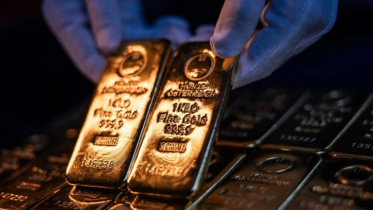
Marathon Fusion, a San Francisco-based startup, claims to have produced gold from mercury. The company asserts that it is possible to transform mercury into gold by utilizing neutrons generated through a nuclear fusion process. If this technology proves commercially viable, it could open up new possibilities for gold production. However, it remains uncertain whether this would lead to a decline in global gold prices.
According to a report by the Indian media outlet *The Economic Times*, Marathon Fusion announced this achievement on the social media platform X on October 21. The company claims that its experimental yield—the rate at which gold is produced from mercury—is ten times higher than the previous record set by the European research organization CERN.
Nevertheless, the company has not disclosed the exact quantity of gold produced, nor has it released full data regarding the experiment. Consequently, the effectiveness and commercial potential of this technology remain uncertain.
This process is known as "nuclear transmutation," which involves altering the nucleus of an atom to transform one element into another.
Marathon Fusion’s approach involves using high-energy neutrons—generated through the fusion of deuterium and tritium—to modify specific isotopes of mercury. Through subsequent radioactive decay, these isotopes would eventually transform into stable gold-197.
However, this process may generate radioactive byproducts. To eliminate these, the produced gold might need to be stored for an extended period.
The concept of creating gold in a laboratory is not entirely new. Between 2015 and 2018, researchers at CERN’s Large Hadron Collider successfully created gold nuclei by colliding lead nuclei.
According to the researchers, approximately 86 billion gold nuclei were produced during that experiment. However, in total, their mass amounted to only 29 picograms. Furthermore, the gold nuclei produced decayed within an extremely short period, making it impossible to obtain any usable gold.
Marathon Fusion is now exploring the possibility of producing gold on a relatively larger scale by utilizing the neutrons generated during fusion reactions. A research paper from the company estimates that a facility with a thermal capacity of one gigawatt could potentially produce approximately two tonnes of gold annually on a commercial scale. Nevertheless, the infrastructure required to achieve such production levels has not yet been established.
The report notes that the fusion capacity of the reactor mentioned on Marathon Fusion’s website is only one kilowatt, whereas the commercial production estimate is based on a facility with a thermal capacity of one gigawatt. Additionally, due to the presence of radioactive isotopes, the gold produced might need to be stored for a period ranging from approximately seven to 17 years before it becomes suitable for sale.