Qatar—Once a Major Exporter—Now Buys LNG from the United States
Published: 10:04 AM, 24 October 2026
Before the onset of the conflict involving Iran, Qatar was one of the world’s largest exporters of liquefied natural gas (LNG). Yet, in a span of just eight months, the Gulf nation now finds itself purchasing gas from its primary competitor: the United States.
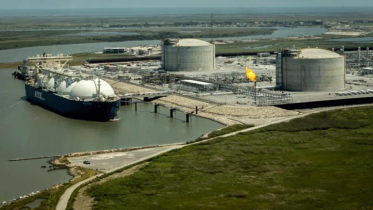
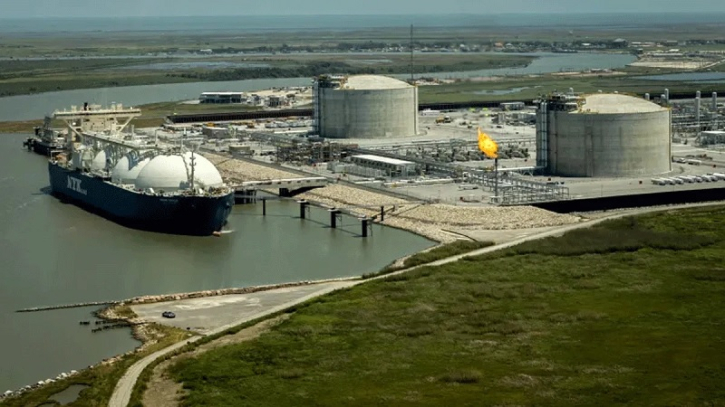
Last Thursday (October 22), QatarEnergy entered into a long-term agreement with the U.S.-based LNG exporter, Cheniere Energy.
Under the terms of the deal, Qatar will purchase 4 million tonnes of liquefied natural gas annually until 2054. The price of the gas will be determined based on the market rate at the U.S. Henry Hub, plus a specified fee. Deliveries are expected to commence in the 2030s.
In a statement, Jack Fusco, CEO of Cheniere, said, "We look forward to reliably supplying QatarEnergy with gas from both our Sabine Pass and Corpus Christi facilities through the second half of this century." While this purchase represents less than 1% of the global LNG trade—which exceeds 400 million tonnes—analysts view it as a significant individual contract within the U.S. market.
Alex Munton, Director of Global Gas and LNG at the Houston-based firm Rapidan Energy, noted, "In terms of the size of an individual deal, this is one of the largest seen in the United States."
This agreement underscores how the conflict involving Iran is reshaping the global energy landscape, to the benefit of U.S. companies. Simultaneously, it further cements the dominance of U.S. LNG exporters in the global market. Since the conflict began, the share prices of Cheniere and another independent U.S. LNG exporter, Venture Global, have risen by 26% and 40%, respectively.
A Major Blow to Qatar’s Production Capacity
Prior to the conflict involving Iran, Qatar ranked second only to the United States in LNG exports. However, exports have dropped significantly over the past eight months following an Iranian bombing attack on Ras Laffan, a key production hub in the country. The attack severely damaged two production lines, effectively shutting down approximately 17 percent of Qatar’s total LNG export capacity.
Qatar’s Minister of State for Energy Affairs, Saad Sherida al-Kaabi, stated that it would take about three years to repair the damage at Ras Laffan. Since the attack in March, the Gulf nation has repeatedly invoked "force majeure"—a legal provision used when unforeseen circumstances beyond one's control make it impossible to fulfill contractual obligations—citing its inability to meet agreed-upon gas supply commitments.
In an interview on the sidelines of the United Nations General Assembly session last September, Al-Kaabi remarked, "This has dealt a major blow to our production capacity for the next few years."
He further noted that, due to the inability to export via the Strait of Hormuz, Qatar’s current LNG export volume is minimal.
"Only a very limited number of vessels are passing through the Strait," Al-Kaabi explained. "The volume is so small that it is not even significant in percentage terms."
Concerns Regarding the Security of the Strait of Hormuz
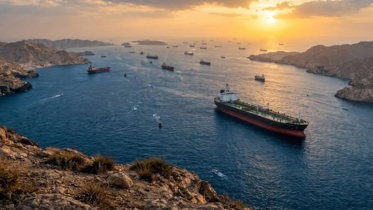
Even once repairs at the Ras Laffan facility are complete, uncertainty remains regarding the security situation in the Strait of Hormuz. Analysts suggest that Qatar is concerned about whether safe, unimpeded maritime traffic through the Strait can be restored, given Iran’s continued attacks on tankers.
According to Alex Munton, a long-term agreement with Cheniere suggests that Qatar is formulating its long-term strategy with the understanding that there is a persistent risk that shipping through the Strait of Hormuz may not return to normal.
Finding an alternative to the Strait of Hormuz for LNG transport is also difficult, as LNG must primarily be transported by sea. "Gas is liquefied specifically to be transported by ship, which necessitates access to maritime routes," Munton said, adding, "They have no choice but to use the Strait of Hormuz." ‘There is no other way for the LNG to reach the market. It is effectively stranded.’
Munton believes that QatarEnergy is expanding its LNG trade through an agreement with Cheniere due to damage at its own production facilities and an inability to utilize the Strait of Hormuz.
Meanwhile, earlier this month, QatarEnergy secured a $3 billion loan from several Chinese banks. In a note sent to clients on Thursday, UBS analyst Manav Gupta suggested that this financing could enable the company to purchase more U.S. LNG to fulfill its supply commitments to international buyers.
Source: CNBC | ‘Once an Exporter,’ Qatar Now Buys LNG from the U.S.
Before the onset of the war involving Iran, Qatar was one of the world’s largest exporters of liquefied natural gas (LNG). Yet, in the span of just eight months, the Gulf nation now finds itself purchasing gas from its primary competitor—the United States.
Last Thursday (October 22), QatarEnergy entered into a long-term agreement with the U.S. LNG exporter, Cheniere Energy.
Under the terms of the deal, Qatar will purchase 4 million tonnes of liquefied natural gas annually until 2054. The price of the gas will be determined based on the U.S. Henry Hub market rate, plus a specified fee. Deliveries are expected to commence in the 2030s.
In a statement, Cheniere CEO Jack Fusco said, “We look forward to reliably supplying QatarEnergy with gas from both our Sabine Pass and Corpus Christi facilities through the second half of this century.” While this purchase represents less than 1% of the global LNG trade—which exceeds 400 million tonnes—experts view it as a significant individual agreement within the U.S. market.