Xi-Putin take on the West during Trump’s China visit
Published: 08:53 AM, 18 November 2026
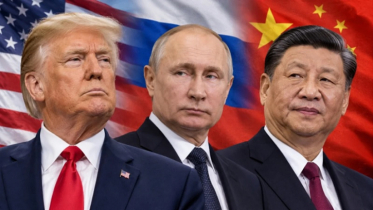
Chinese President Xi Jinping and Russian President Vladimir Putin have sharply criticized Western trade protectionism and economic sanctions, amid US President Donald Trump's visit to China. They made the remarks during speeches at the Asia-Pacific Economic Cooperation (APEC) summit in the southern Chinese technology city of Shenzhen on Wednesday (November 18).
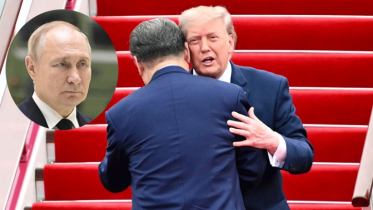
Trump also arrived in China on the same day. Earlier this week, he met with regional allies in Manila. Upon arriving in China, Trump was welcomed by Xi Jinping at the airport. This was the first time he went to the airport to welcome a foreign leader since becoming Chinese president. Trump had also welcomed him during his last meeting with Xi at the US Joint Base Andrews in September.
The two leaders exchanged brief hugs and chatted for a while at the airport. Xi said, "China is a country of courtesy and has a tradition of returning courtesy," according to China's state news agency Xinhua. He also expressed hope for discussions on China-US relations, Asia-Pacific cooperation and the global situation.
According to the Xinhua report, Trump said that every meeting with Xi was "very pleasant."
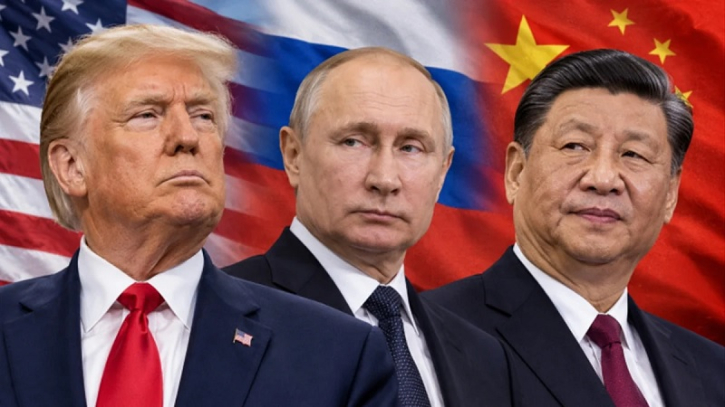
The two leaders will take part in a joint photo session at the APEC summit and join other leaders for dinner. They are scheduled to hold a trilateral meeting with Putin on the sidelines of the summit on Thursday. The meeting is expected to discuss important issues such as Russia's war in Ukraine, the US war in Iran, as well as trade, artificial intelligence and nuclear weapons.
Comparison with the Yalta Conference of 1945
The potential meeting of the three leaders is being compared to the Yalta Conference of 1945. At the end of World War II, the leaders of the United States, the United Kingdom, and the Soviet Union met to lay the foundations for the post-war world order and determine their spheres of influence.
However, the potential meeting has raised concerns in some European and Asian capitals that leaders of the world's most powerful militaries could ignore the interests of smaller countries for their own benefit.
In his opening speech at the APEC summit, Xi Jinping called for a stand in favor of "free and open trade." He sought to portray China as a stable partner in the global arena, in contrast to the additional tariffs imposed by the United States and its tough foreign policy under Trump.
Attempts to gain support from countries of the 'global south'
Xi's remarks came as the United States announced further restrictions on China's access to advanced artificial intelligence chips. The restrictions on chips made by companies like Nvidia could further complicate Washington's fragile trade deal with Beijing. China has vowed to retaliate.
Addressing business leaders, Xi said, "We must firmly uphold the rules-based multilateral trading system centered on the World Trade Organization. We must support free and open trade and investment."
Western trading partners accuse China of running a trade surplus of more than $1 trillion annually by favoring its own manufacturing sector, at the expense of consumers.
But Beijing claims its growth model is appropriate for a country trying to close the gap with the world's richest economies. On the other hand, some parties, including the United States and the European Union, worry that China's dominance of supply chains is giving the country geopolitical influence and posing a threat to their industries and jobs.
Xi said China will continue to invest in its industrial sector and new technologies. The world's second-largest economy will lower tariffs and further open up its markets, while also taking a stand against protectionism and unilateralism.
George Chen, head of digital at Asia Group, said Xi's message could resonate with many countries in the "global south" and would reinforce Beijing's efforts to counter Washington's technology strategy.
Trump's Asia trip, his first foreign trip since his Republican Party's midterm election defeat, has been fueled by allegations surrounding Nvidia founder Jensen Huang and a suspected Chinese spy.
There was no ceremony to welcome Takaichi.
Leaders from countries including Australia, Canada and South Korea were welcomed at the airport by dancers and armed soldiers, but Japanese Prime Minister Sanae Takaichi was driven to the airport without any formalities.
Takaichi's visit to China comes amid a year-long diplomatic standoff between China and Japan, sparked by a statement he made that suggested Tokyo could use military force if any Chinese moves around Taiwan threatened Japanese territory.
On Tuesday, Taiwan and Japan reported the intrusion of Russian military aircraft near their airspace.
Putin calls Western sanctions ineffective
Putin was speaking at the APEC summit after a Ukrainian attack damaged the vital Kerch road bridge linking Russia to Crimea, a major blow to Russia in the four-year war in Ukraine.
After Xi took the stage, Putin called Western powers "former hegemons." He also said that Europe was heading for a "humiliating decline." Putin claimed that Western sanctions imposed on Moscow after Russia's military operation in Ukraine had backfired.
He said, "Experience has shown that the effectiveness of the traditional tools of economic dominance and de facto coercion has largely ended. Their ability to create fear has also greatly diminished."
Putin added, "Sanctions, tariffs and export restrictions can still create some obstacles. But they cannot stop growth, let alone destroy the economies of rival countries."
Earlier in Manila, Trump pledged to strengthen defense cooperation with the Philippines amid tensions with Beijing over disputed waters in the South China Sea. He also hinted at the possibility of meeting North Korean leader Kim Jong Un during his visit to China. However, there has been no confirmation on this yet.
The Kremlin dismissed comparisons of the potential trilateral meeting this week to the Yalta conference as "a game of political analysts," but said the meeting would have a major impact on the global situation. Beijing claims that the meeting will contribute to establishing world peace.
Putin described the current world as "unstable" but said that differences could be resolved at the negotiating table. "Therefore, I see the potential for great benefits from the upcoming trilateral meeting," he said.
Source: Reuters