World on brink of nuclear disaster, warns US professor
Published: 12:15 PM, 17 November 2026
The world is closer to nuclear catastrophe than ever before, American University history professor and director of the Institute for Nuclear Studies Peter Kuznick warned in an interview with Iranian media outlet Mehr News Agency. The ongoing war between the United States and Israel against Iran poses a huge nuclear threat.
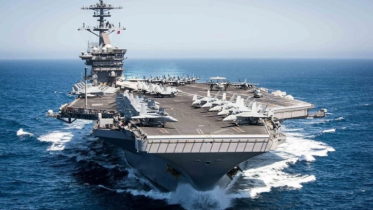
The recent arrival of another US warship, the USS Theodore Roosevelt, in West Asia has brought the total number of US aircraft carriers to three. This increase in military power has further complicated the situation amid ongoing tensions. Tehran has also made it clear that it will not sit back and wait for new attacks from Washington, and will respond at the appropriate time. However, US President Donald Trump has been sending mixed messages. He has said that he is considering stopping the attacks for now unless Iran and Yemen's Ansarullah cause new trouble. All in all, there are no signs of peace returning due to the clash of weapons on the one hand and the uncertainty over the next steps of the US on the other.
Where there is reason to fear
Professor Kuznick believes that even the slightest threat that the United States or Israel could drop a nuclear bomb on Iran is a terrible thing for the world. Israeli intelligence believes that Iran's nuclear laboratory is protected under granite rocks 300 feet underground, which is impossible to destroy with any ordinary weapon. And for this reason, he expressed concern that the United States or Israel could use nuclear weapons. In addition, the danger is further increased by the fact that Trump's close advisers are also extremely war-like.
History education and US intervention
Historically, the United States has been meddling in the Middle East for centuries to maintain control over its oil resources. In 1953, the CIA overthrew Iran's then-popular Prime Minister Mohammad Mossadegh because he wanted to protect the country's oil resources from foreign companies and establish the rights of the people. Since then, Washington has continued to act hostilely towards Iran.
However, according to Kuznick, in this modern era of drones and technology, war is obsolete and extremely foolish. Despite nine long months of attacks, the United States has not been able to suppress Iran, which has also put a major limit on their military power.
The future of bilateral policies and agreements
The professor commented that there is a strange disparity in the Middle East regarding nuclear weapons. Although Israel secretly has more than 90 to 150 nuclear weapons, Western countries keep their mouths shut about it. However, Iran, despite complying with the rules of the international nuclear agreement, is repeatedly bombed and subjected to severe sanctions. Due to such a two-pronged policy, the credibility of nuclear agreements around the world is completely destroyed. As a result, many countries are now thinking of making nuclear weapons themselves for their own security, which is making the whole world more insecure.
The only way to survive
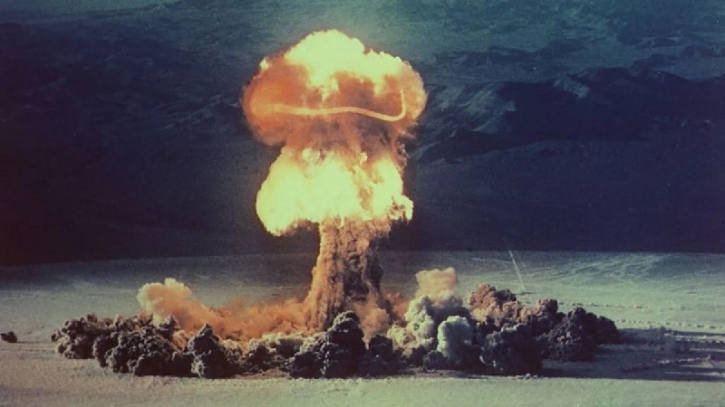
Recalling the horrors of Hiroshima, Kuznick said, "The bomb that day was much lighter than today's weapons, yet its radiation is still killing people one by one. Today's nuclear weapons are a thousand times more destructive than that. In addition, the key to the survival of Middle Eastern countries is the desalination plants. If these are destroyed in war, the entire region will become uninhabitable."
So now is the time to put aside the language of weapons and sit down at the diplomatic table. Russian President Putin, Chinese President Xi Jinping, and US President Donald Trump should hold an emergency meeting and take the historic step of eliminating all nuclear weapons from the world forever, just like those peace talks in 1986.