New tariffs: Are US-China relations heading towards conflict again?
Published: 09:17 AM, 26 November 2026
US President Donald Trump is moving towards a new tariff policy to further consolidate his dominance in global trade by reducing economic dependence on China. Washington is taking a tough stance on China as well as other trading partners to keep pressure on the economic capacity of one of the world's largest manufacturing centers.
The Trump administration's new initiative threatens to reignite the long-running trade dispute between the United States and China, with implications not only for the two countries but also for trade relations with the European Union, Japan, and several Southeast Asian countries.
Currently, the new US tariff measures are within the framework of the existing trade agreement between Washington and Beijing, but the Trump administration has left the door open to imposing more tariffs if necessary.
According to analysts, the new tariff policy has special significance in the context of the fourth meeting between the leaders of the two countries in Miami next month and the expiration of the trade agreement on January 10. In this situation, new discussions have arisen about the direction in which trade relations between the United States and China will turn.
The Trump administration plans to impose another 20 percent tariff on Chinese goods, adding to the 25 percent tariff imposed during Trump's first term. This limit was set in a temporary agreement between the two countries. If the agreement breaks down, the total US tariff rate on Chinese goods could reach 40 percent in a second term.
Mark Williams, chief Asia economist at Capital Economics, said the new measures would serve as a leverage tool for the US if the trade war flares up again. The Trump administration's emphasis on China in third-country trade reports echoes previous efforts to encourage other countries to strengthen trade protectionism against China and reduce their reliance on the country.
The United States has been investigating unfair trade practices around the world for eight months before imposing the new tariffs. It reviews the issue of excess industrial production capacity in various countries. Washington is also putting pressure on countries that have trade agreements with China or are in talks with them. China is mentioned more than 250 times in the US Trade Representative's report on Vietnam and more than 300 times in the report on the European Union.
Are China-US relations heading towards conflict again?
In April 2025, the US Supreme Court declared Trump's 'Liberation Day' tariff policy illegal. The Trump administration has since taken steps to reshape the global trading system. At that time, tariffs were increased on almost all trading partners, but China responded most strongly. Reciprocal tariffs between the two countries reached triple digits. In addition, Beijing has used its dominance in rare earth refining to pressure various global sectors, including the auto and defense industries, by controlling exports.
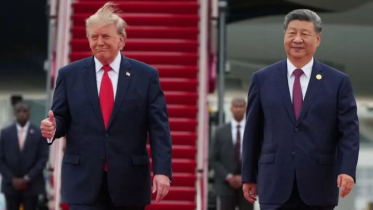
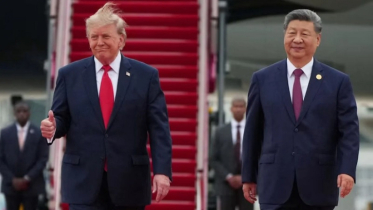
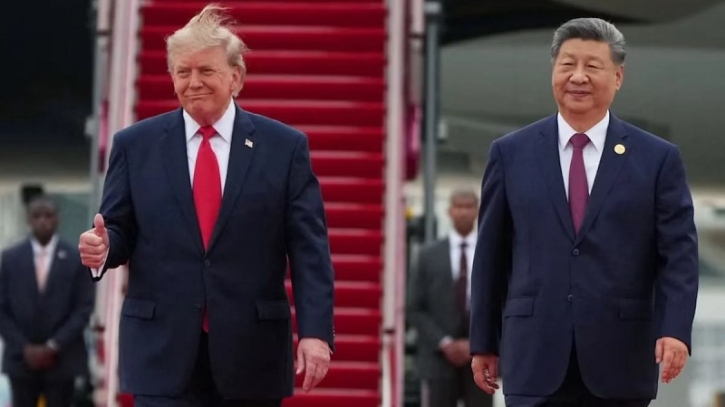
The situation has since stabilized somewhat after a meeting between the two countries' top leaders. This month, Chinese President Xi Jinping gave Trump a warm welcome. Xi broke protocol and greeted him with a hug at the airport. Analysts believe that the arrangement sent a positive message about the relationship between the two countries.
Beijing this week extended a suspension of controls on rare earth exports to the United States, while China Southern Airlines said its subsidiary Xiamen Airlines had signed a deal to buy 50 Boeing 737 Max 8 jets, a sign that the two countries' trade deal is working.
However, while there is scope for tariff increases, the United States is wary of their inflationary impact. The rising cost of living emerged as one of the main discontents among voters behind Trump's Republican Party's major defeat in the recent midterm elections.
"China doesn't want to get into another trade war with the United States, and neither does Washington," said Chen Bo, a researcher at the National University of Singapore. "Both sides are eager to reach a compromise."
Fears of rising tensions with China and other countries
Analysts say that if the United States increases tariffs on China, Washington's trade deficit with Beijing will decrease. However, at the same time, China's trade deficit with other countries could increase, putting pressure on the countries concerned to protect their industries and jobs.
Critics say China's economic growth is putting pressure on other countries, as its weak domestic consumption and growing dependence on exports weigh on the country.
Victor Shevets, global strategist at Macquarie Capital, said that China's failure to restructure its economy will be a bigger factor in escalating trade tensions in the future, rather than the US's inconsistent trade policies. According to him, while the European Union is currently under the most pressure from China's trade imbalance, other countries will face the same situation in the future. As a result, tariffs and non-tariff trade restrictions may increase.
The European Union has already persuaded Beijing to impose quotas on some Chinese car imports, and Brussels is planning to take further trade action.
According to Bo Zhengyuan, a partner at research firm Plenum, China cannot always maintain its position in all trade areas. Beijing may have to make more concessions to reach an agreement with partner countries. As a result, Trump's new tariff policy could create new polarization not only in the US-China relationship, but also in the entire global trading system.
Source: Reuters