Will the wounds in US-Israeli relations heal or worsen?
Published: 01:39 PM, 16 November 2026
The incident occurred on the day of the US midterm elections. US President Donald Trump suddenly announced, 'America will no longer help Israel.' Two days later, he said on a live show, 'Israel will have to pay for all the costs of the Iran war.' The world was somewhat shocked by that.
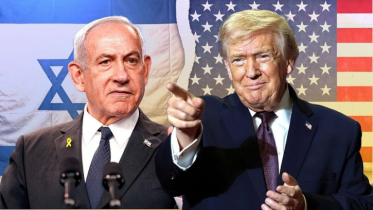
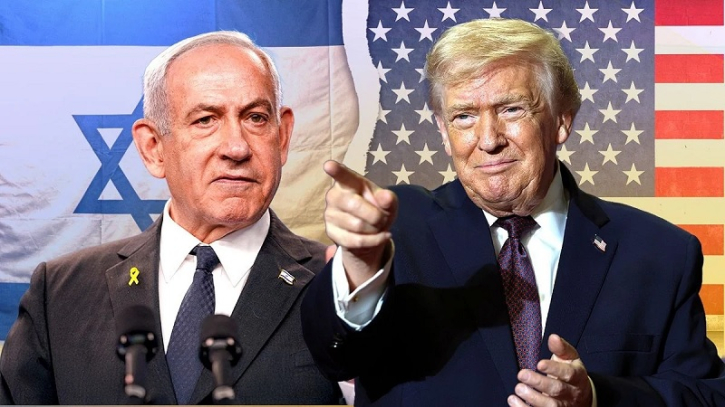
International analysts have drawn a conclusion by analyzing these two statements in detail. All of which is bad news for Israel. Not only those two statements by Trump, but also several recent events prove that the sweet relationship between Israel and the United States is not good. A rift has appeared. A big rift.
And Israeli Prime Minister Benjamin Netanyahu is being directly blamed for this rift. The future Prime Minister of the occupying country, Gadi Eisenkot, and his team are keeping all avenues clear to remove Netanyahu. A report by the news agency Reuters says that Gadi has asked the outgoing Israeli government for intelligence information. At the same time, he has warned Netanyahu not to overdo it in the interim.
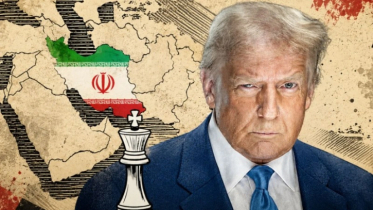
Netanyahu is being directly attacked after his defeat in the Israeli elections. According to the country's opponents, the Netanyahu government's hardline stance is responsible for the deterioration of US relations with Israel. One name is constantly coming to the fore - Iran.
The United States provides Israel with $4 billion in military aid annually. According to an analysis by the Middle East-based media outlet Middle East Monitor, even those who have long been vocal in demanding an end to US aid to Israel were not convinced by Trump's announcement. They believe that he made such a statement to prevent electoral losses for Republicans.
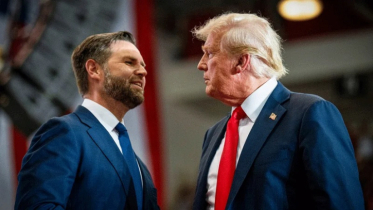
The issue came into focus after the Republicans suffered a major defeat in the midterm elections. Democrats took control of both houses of Congress. Trump also acknowledged the impact of the Iran war as a reason for the defeat. Vice President J.D. Vance said that the war was the reason for their defeat. He also called for a reconsideration of the US-Israeli relationship.
There is also a shift in American public opinion regarding over-support for Israel. According to a Quinnipiac University poll, 48 percent of registered voters now believe the United States is over-supporting Israel, up from 16 percent in 2017.
However, analysts say Trump's announcement is unlikely to completely halt US military funding for Israel. It is possible that funding will continue in areas such as missile defense, military research and technology cooperation, beyond traditional aid.
Israel has received more than $300 billion in aid from the United States since 1948. The Biden administration also approved an additional $8.7 billion in military aid for the country in 2024.
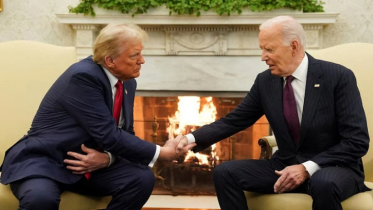
The two countries have not been doing well recently. Collected photos
Democratic control of Congress could hinder some efforts to help Israel, but many party leaders remain pro-Israel. As a result, while Trump's announcement has a political message, it remains uncertain how much the Washington-Tel Aviv military relationship will actually change.
Analysts say Trump's announcement does not mean that US military funding for Israel will be completely cut off. Rather, there is an opportunity to continue funding as before by changing the type and sector of aid. Israel has been the largest recipient of foreign aid from the United States since 1948.
According to the Council on Foreign Relations, the amount of US aid to Israel so far, adjusted for inflation, is more than $300 billion.
However, this figure does not include all of Washington's military spending for Israel. The United States has provided additional funds at various times in addition to regular annual military aid.
While traditional foreign aid funding has been cut, there is still room for Israel to continue funding through other forms of military assistance. Analysts say Trump's announcement could be a strategy to maintain military ties by removing the politically controversial "aid" designation.
With both houses of Congress under Democratic control, some efforts to provide military aid to Israel could face obstacles. However, many Democratic leaders remain pro-Israel. In addition, the influential pro-Israel lobbying organization AIPAC (AIPAC) could continue to spend heavily to maintain its influence in congressional elections.
While closeness to the pro-Israel lobby has become a political liability for some candidates, the organization is expected to seek alternative strategies and political alliances to maintain its influence.
While the midterm election results offer the possibility of a shift in US foreign policy, they do not guarantee immediate and lasting change. The country's politics are currently witnessing a growing conflict between progressive Democrats and party leadership on the one hand, and pro-Trump and frustrated Republicans on the other.
Overall, as big a political message as the announcement of the end of US aid to Israel is, it remains to be seen how intact that relationship will be through changes in the military funding structure.