ICJ’s historic ruling in favor of Rohingya, but return to Myanmar
Published: 08:54 AM, 21 November 2026
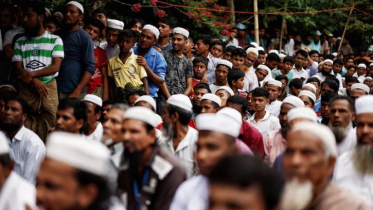
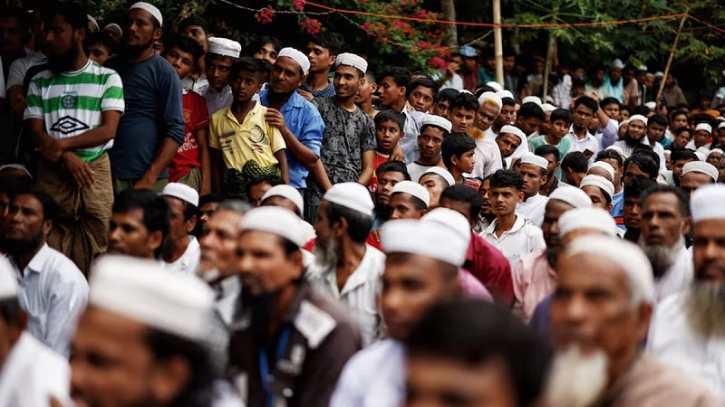
Thousands of Rohingya in vast refugee camps in Bangladesh have expressed joy over a historic ruling by the International Court of Justice (ICJ), the UN's highest court, that Myanmar committed genocide in its military campaign against the minority Rohingya Muslims in 2017.
However, the big question remains how easy it will be for them to return to their Buddhist-majority homeland. The ruling comes amid a civil war in Myanmar that has been raging since a military coup in 2021.
Around 1.2 million Rohingya live in the southeastern part of Bangladesh, near the Myanmar border. While Bangladesh is struggling to sustain this large population as international aid has dwindled, the Bangladeshi foreign ministry says the ruling could act as a catalyst for the repatriation of the Rohingya, saying "repatriation is the only realistic solution to this crisis."
In an interview with Reuters on Friday (November 20), Bangladesh's State Minister for Foreign Affairs Humayun Kabir hinted at a possible timeline for the first time since the verdict. "It won't happen tomorrow or very soon. We will apply multilateral pressure with other agencies to ensure safe repatriation, so that it (repatriation) can be done within 1 to 1.5 years," he said.
But analysts say years of attempts to repatriate the refugees have failed. The Myanmar government, backed by the military, which the ICJ has condemned for crimes including mass killings, sexual violence and arson, will not easily agree to repatriate the Rohingya.
"The orders include ensuring safe repatriation to their homeland. But in reality, that remains unlikely to happen," said Say Kyi Jin Soe, an independent Myanmar analyst, referring to the civil war that broke out after the overthrow of Aung San Suu Kyi's elected government in February 2021.
On Friday (November 20), the Myanmar government claimed that the ICJ's decision was not unanimous and was unfair; they also commented that Myanmar had been unfairly accused.
Conflict and changing realities in Rakhine State
The genocide case was centered around a military crackdown in 2017, during which nearly 750,000 Rohingya fled for their lives. Six years later, in late 2023, fighting broke out again in Rakhine State between Myanmar's military and the rebel group Arakan Army, prompting more people to flee to Bangladesh, and the number of refugees swelled.
The Arakan Army, one of Myanmar's most powerful armed groups, has already wrested almost complete control of Rakhine State from the military—the areas to which most Rohingya are supposed to return.
However, the group, which has been accused of atrocities against the Rohingya, has not commented publicly on the ICJ ruling, and no spokesperson responded to Reuters' questions.
Myanmar said in August that it had verified 388,797 people in camps in Bangladesh as former residents of Rakhine state; however, repatriation would only begin once the security situation there improved.
According to multiple estimates, there were about 1.1 million Rohingya in Myanmar before 2017, but currently there are only about 600,000 in Rakhine, of which 140,000 are confined to camps for displaced people.
Myanmar has long viewed the Rohingya as illegal immigrants from neighboring Bangladesh and has not granted them citizenship—even though Rohingya families have lived in the Southeast Asian country for generations.
"Without citizenship, rights and real security, it is not possible for the Rohingya to return," said Chris Liwa, director of the Arakan Project, an organization that monitors the Rohingya crisis.
Expressing deep concern about the Rohingya in the internally displaced persons (IDP) camps in Sittwe, the capital of Rakhine, he said they are besieged, dependent on the military for movement and relief, and at risk of counter-attacks.
Equations and regional initiatives ahead of Bangladesh
Bangladesh, a country of about 180 million people, is itself under economic pressure. There is no opportunity for the Rohingya to earn a living there, and Bangladesh also wants them to return to their own country. However, Bangladesh has repeatedly said that the Rohingya will return to their own country only if a favorable environment is created in Myanmar.
While the ruling has strengthened Dhaka's position to apply diplomatic pressure and send Rohingyas back in the future, it has also raised doubts for Bangladesh.
"Dhaka must continue to negotiate repatriation with the state that the court has now found responsible for the genocide, and increasingly with the Arakan Army," said Richard Horsey, senior adviser for Asia at the International Crisis Group.
Bangladesh has been holding the presidency of the United Nations General Assembly for a year since last September.
State Minister Humayun Kabir said Dhaka will strengthen multilateral efforts with the United Nations and other organizations to create an environment for repatriation. However, funding to sustain the Rohingya in Bangladesh has become a major crisis; according to the United Nations, only about 69 percent of the $710 million humanitarian assistance needed for 2026 has been collected so far.
Malaysia is also trying to send Rohingya refugees back to Myanmar amid rising tensions with the local population. The country's home minister, citing UN data, said that by the end of September, the number of registered Rohingya refugees and asylum seekers in Malaysia was about 133,400. Meanwhile, Malaysia announced on Friday that it would resettle 10,000 Rohingya refugees to Turkey under a structured skills development program, a major resettlement initiative.
Meanwhile, the ICJ ruling has brought new inspiration to Mohammad Zubair, a 24-year-old living in a crowded camp in Bangladesh. "As a Rohingya, this moment gives me new strength," he said. "My biggest dream is not just for the world to acknowledge what happened to us; but to see the day when we can walk freely on the land of our ancestors."