.png)
The United Arab Emirates is moving in step with China while keeping the US close
Published : 11:36 PM, 6 December 2025
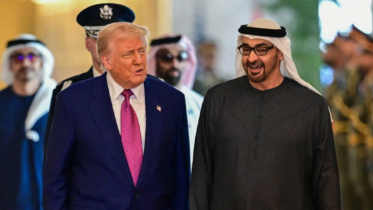
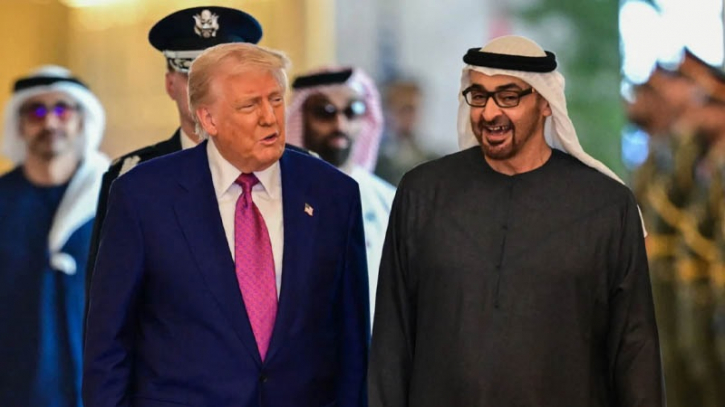
United Arab Emirates President Sheikh Mohammed bin Zayed Al Nahyan (right) welcomes US President Donald Trump after his arrival at the Presidential Terminal in Abu Dhabi. The photo was taken on May 15 this year.
The United Arab Emirates (UAE) is pursuing sensitive projects with China while maintaining close relations with the US. In addition, this Middle Eastern country has also created its own position in various regional conflicts from Yemen to Sudan - which in many cases contradicts the policies of Arab allies like Saudi Arabia and Qatar. This rare balance in the Middle East has been possible mainly due to skillful diplomacy and strong financial capabilities. This is what various analyses say.
The media outlet Middle East Eye says that the United Arab Emirates has created a rare balance of keeping the US close while maintaining a safe distance. On the one hand, they are procuring high-quality AI chips and on the other hand, they are also playing a role in various crises from Yemen to Sudan. The UAE is also pursuing several sensitive projects with China. Although China is essentially the United States' main rival, the Emirates is not paying much for this, US and Arab officials have said.
A previous report by Middle East Eye (MEE) said that US intelligence believes that members of the Chinese People's Liberation Army (PLA) are stationed at a key military base in Abu Dhabi. Even after the publication of that report, officials in charge of monitoring China affairs at the US embassy are still hesitant about Beijing's activities in the Khalifa Port area. Basically, the Chinese state-owned company COSCO operates a terminal here and the intelligence has indicated that PLA members are present there.
Cinzia Bianco, a Gulf expert at the European Council on Foreign Relations, said, "The United Arab Emirates (UAE) has stepped back somewhat, but has not completely stopped cooperation with China. This suggests that they believe they can handle US pressure.’
During the Biden administration, some senior US officials became so concerned about the UAE’s increasingly independent stance that they initiated a review of relations with the country. The initiative was led by Barbara Leaf, the US State Department’s Middle East affairs chief. However, the review ultimately failed, a former US official told MEE. “The report ended up being very brief. It did include some of the UAE’s role in Libya, but it avoided sensitive issues related to China,” he said.
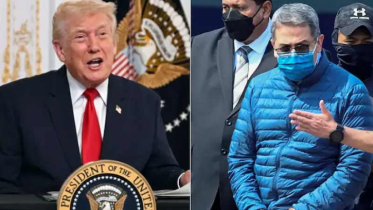
And earlier this year, Donald Trump’s first foreign trip since returning to power for a second term as US president included the Gulf region. Many observers noted that, despite state banquets in Saudi Arabia and Qatar, his visit to the UAE was brief. Some US officials said that Trump’s brief visit was due to tensions between the two countries over the UAE’s technological cooperation with China.
But last month, the UAE’s state-owned AI giant G42 received approval from Washington to buy thousands of advanced Nvidia chips. It has also received the same approval, as has Saudi Arabia’s state-owned rival, Humane. The equal weighting of the two countries has particularly caught the eye of analysts.
“The way the UAE has protected itself from US anger by building relationships with China is unimaginable for any other country,” said Anna Jacobs of the International Crisis Group.
Benefits without further announcements
The gap between the US relationship with the UAE and its neighbour Qatar and Saudi Arabia has become clearer this year.
When Israel attacked Hamas leaders in Doha, Qatar leaned more towards the US and worked to defuse tensions. The country was already a “major non-NATO ally” of the US; Qatar then increased military cooperation and secured a promise from the US to counter future attacks.
Saudi Crown Prince Mohammed bin Salman recently visited Washington, where his country also achieved the status of a “major non-NATO ally” of the United States. At the same time, a defense cooperation agreement was signed between Washington and Riyadh. US officials said that the agreement will accelerate US arms sales to Saudi Arabia.
Now, almost every country in the Gulf region except Yemen, Oman and the United Arab Emirates has this special status. “The UAE feels that this kind of status is not for them. They don’t play these games,” said a Western official in the Gulf.
All three countries have US military bases, but the United Arab Emirates allows the US to operate there under the strictest conditions. The US 380th Air Expeditionary Force is based at Al Dhafra base near Abu Dhabi.
As a result, a clear comparison has been made between the independent and independent policy of the UAE and that of Saudi Arabia. Saudi Arabia has already received approval from the United States to buy state-of-the-art F-35 fighter jets, although Riyadh has not yet normalized relations with Israel. On the other hand, the United Arab Emirates was promised F-35s in exchange for establishing relations with Israel in 2020, but this has been held up by US concerns about military ties with China. Later, the United Arab Emirates also said that it would not accept the US's strict conditions.
.png "Advertisement")